










BLOG
What Should OEMs Record When Approving a Power Adapter Golden Sample?
QUICK LINKS
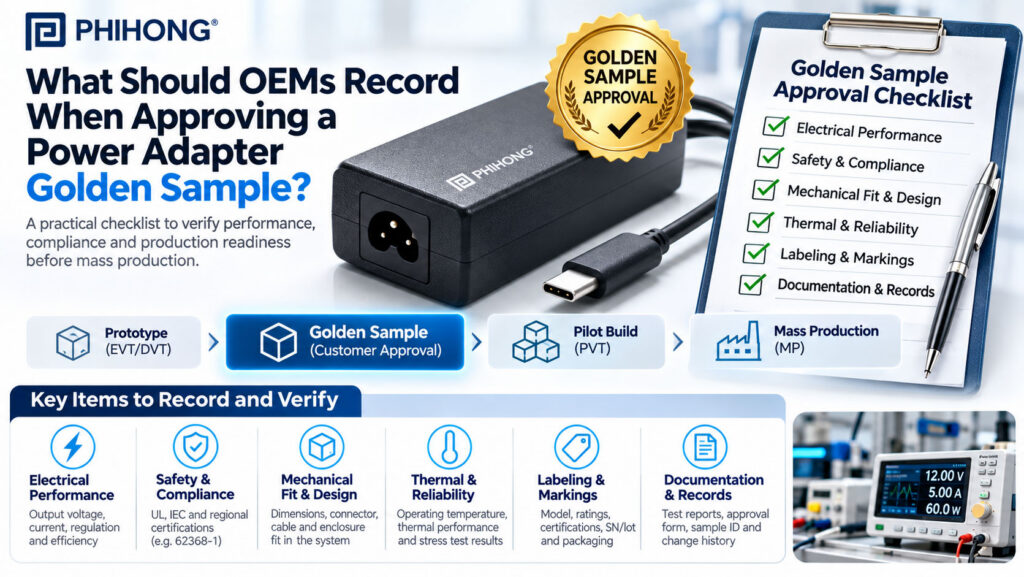
Quick Answer: A power adapter golden-sample record should identify the exact physical sample, supplier model, configuration documents, test setup, results and approval scope. Retain the sample with controlled records and define how later lots and design changes will be compared. A golden sample is a reference for an agreed baseline, not proof that every production unit will behave identically.
OEM teams often keep a working adapter from development and call it the approved sample. Months later, a buyer, engineer or contract manufacturer may need to know which cable, connector and hardware configuration was actually evaluated. If the information exists only in an email or on a handwritten label, the retained unit can be difficult to use as a reliable reference.
This checklist focuses on sample identity and release evidence for external power adapters. It complements supplier qualification and product selection without replacing equipment testing, receiving inspection or compliance review. The record should remain useful to a person who did not attend the original bench evaluation.
Give the golden sample a traceable configuration identity
Assign an internal sample identifier and link it to the full supplier model, OEM part number and available lot or serial information. Record when the sample was received and whether it came from engineering development, a pilot build or normal production. Ask the supplier to identify differences from the intended production build rather than assume all evaluation units are representative.
Attach the controlled drawings and document revisions used during evaluation. Include the output connector, cable assembly, AC interface, label and any agreed options. Photographing the physical label can help identification, but it does not replace the document baseline. Make the sample’s storage location and custodian visible in the record.
Use separate fields for observed information and supplier confirmation. For example, an engineer can record the markings seen on the unit while a supplier confirms the production cable drawing. If the two do not match, open a deviation. This distinction prevents a visual inspection from being mistaken for confirmation of internal construction.
| Field | What to record | Reason |
|---|---|---|
| Sample ID | Unique internal reference and custodian | Locate the actual evaluated unit |
| Build origin | Engineering, pilot or production | Understand representativeness |
| Configuration | Model, options and controlled drawings | Define comparison baseline |
| Traceability | Available lot, serial and received date | Connect evidence to supplied hardware |
Why This Matters
- A retained unit cannot explain an undocumented configuration change.
- Sample provenance helps reviewers decide how much production evidence it represents.
What OEMs Should Do Now
- Assign a sample ID and record the build origin before testing.
- Link the sample to drawings and log every mismatch as an open deviation.
Record mechanical fit and electrical interfaces together
A connector that appears to fit is not a complete interface check. Compare the mating drawing, polarity, insertion arrangement and cable routing against the device design. Have the responsible engineer define what should be inspected and measured. Do not infer contact suitability or current capability from appearance alone.
Check the installed arrangement, including the inlet position, cord bend, strain relief and any enclosure features that affect access or cable movement. Record the mating part and equipment revision used. A successful check with an early prototype may need review when the enclosure or connector changes before release.
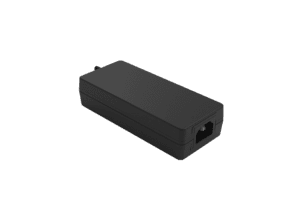
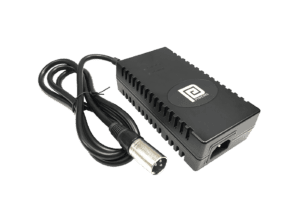
The AA240U-200A-R datasheet lists a barrel-plug output cord, making it a useful example of why a full connector drawing belongs in the sample record. Confirm the released assembly with Phihong rather than assuming that a broadly similar barrel connector is interchangeable. Keep the drawing and the physical check connected to the same sample ID.
| Interface | Record | Avoid assuming |
|---|---|---|
| DC connector | Drawing, polarity and mating part | Similar appearance means equivalent contact |
| Cable routing | Installed path and strain-relief arrangement | Bench routing represents the enclosure |
| AC inlet | Access and cord-set configuration | Every regional cord set is interchangeable |
| Device revision | Hardware and enclosure identifiers | Prototype results cover a changed design |
Why This Matters
- Mechanical interchangeability does not establish electrical suitability.
- A recorded mating configuration helps explain later fit or heating differences.
What OEMs Should Do Now
- Have engineering approve the exact mating interface and polarity.
- Repeat affected fit checks when the device enclosure or cable assembly changes.
Attach test evidence that another engineer can reproduce
Link results to the sample and system configuration. Record input conditions, load cases, ambient conditions, measurement locations and instrumentation. Identify the device hardware and firmware used. A pass entry should reference the approved acceptance criterion so another reviewer can distinguish a measured result from a subjective assessment.
For dynamic events, keep waveform captures with the load description and measurement setup. Texas Instruments AN-1733 is useful background on load transient testing and measurement practice. It does not provide an equipment-specific pass limit. The OEM must define which events and limits matter to the receiving circuit.
Include abnormal or recovery behavior when it is relevant to the project test plan. If a device resets during an event, record the event and recovery sequence rather than summarize the session as normal operation. Similarly, a successful test under one condition should not be expanded into an unsupported claim about all line, load or environmental conditions.
Keep raw data and the interpretation together. The reviewer should be able to find the capture, identify the setup and understand the conclusion without reconstructing a conversation. If a test was deferred, name it as deferred and state which release decision it affects. Do not use an empty result field to mean both not tested and passed.
Why This Matters
- Repeatable records make differences between samples easier to investigate.
- Explicit deferred tests prevent an incomplete evaluation from appearing complete.
What OEMs Should Do Now
- Save the setup, raw result and acceptance criterion under the sample ID.
- Separate passed, failed, deferred and not-applicable checks in the record.
Write the approval scope and future comparison rules
State whether approval covers fit evaluation, engineering tests, a limited pilot build or production release. Identify the approvers and outstanding actions. Avoid a single approved checkbox that hides different responsibilities. The sample can pass mechanical review while electrical or documentation review remains open.
Define how receiving inspection will use the reference. The quality team should decide which characteristics belong in routine inspection and which require engineering review. Do not ask receiving staff to infer internal design equivalence from a retained unit. Give them current drawings, permitted variations and an escalation route for discrepancies.
Discuss change notification with the manufacturer before production release. Ask which proposed changes will be communicated, what evidence accompanies them and when OEM approval is needed. Cable, connector, manufacturing and component changes may affect different parts of the evidence. The response should be recorded as an agreed process, not presented as a universal supplier obligation.
Keep the golden sample under controlled custody. Record damage, replacement, rework or further testing that may alter it. If a replacement reference is approved, retain the transition record. Otherwise the team may compare new production with a sample whose condition no longer represents the accepted baseline.
| Review | Possible outcome | Next action |
|---|---|---|
| Mechanical | Accepted for stated device revision | Retain mating drawings |
| Electrical | Accepted under recorded test conditions | Close or assign deferred cases |
| Documentation | Reports reviewed or clarification pending | Resolve scope questions |
| Production release | Authorized or withheld | Use only the released configuration |
Why This Matters
- Approval language determines which project decisions the sample supports.
- Controlled custody protects the meaning of future comparisons.
What OEMs Should Do Now
- Record approval by discipline and retain unresolved actions.
- Define when discrepancies or supplier changes trigger engineering review.
How Phihong supports a model-specific sample discussion
Start with a verified product reference and ask Phihong to confirm the exact evaluation configuration. The AA240U-200A-R product page identifies the model used here as a documentation example. It does not establish suitability for an unspecified device or the availability of a particular customized assembly.
Bring the proposed sample record, interface drawings and test questions to the discussion. Ask which documents describe the supplied hardware and what differences remain between the sample and intended production. Keep unresolved questions visible instead of filling them with assumptions from a related model.
For the separate task of choosing an adapter family, consult the published high-wattage adapter selection guide. For continuity planning, the alternate-component guide addresses broader sourcing considerations. Neither removes the need to document the actual sample and approved configuration.
Why This Matters
- A model-specific question helps the supplier locate the relevant documentation.
- Separating selection from sample approval keeps each decision’s evidence clear.
What OEMs Should Do Now
- Request configuration confirmation for the exact unit supplied.
- Resolve document and interface questions before authorizing the production baseline.
CTA: Contact Phihong with your equipment requirements and sample documentation questions. Use the response to complete the review record and determine the remaining qualification work.
Frequently Asked Questions
Is a golden sample a production quality guarantee?
No. It documents a reference configuration and the evidence associated with that unit. Production quality also depends on the agreed specification, manufacturing controls and inspection process. State what the sample represents and avoid treating its successful evaluation as proof about every future unit or every operating condition.
Should the sample be sealed after approval?
Use a custody method appropriate to the organization’s quality process. The important point is to identify the reference and record access, damage or changes that could affect comparison. If further testing alters the sample, document it and decide whether another controlled reference is needed.
Can one sample represent multiple regional variants?
Only to the extent supported by the configuration and evidence review. Regional variants can differ in interfaces, labeling or documentation. Record which characteristics are shared and which require separate checks. Do not use one retained unit to imply approval of variants the team has not assessed.
What if the delivered cable differs from the approved sample?
Record the discrepancy and compare the delivered assembly against the released drawing. Ask the supplier to explain the difference and route the response to engineering and quality. Avoid accepting it solely because the device turns on. Determine whether the change affects fit, electrical behavior, documentation or other project requirements.
When should the golden-sample record be updated?
Review it when the approved configuration changes, the reference is replaced or new evidence changes its approval scope. Preserve earlier decisions and identify the new revision rather than overwriting the history. Receiving inspection and procurement should be able to identify which baseline applies to each production order.