









BLOG
USB-C Adapter Protection: What Should OEMs Validate After Overcurrent Protection Trips?
QUICK LINKS

Quick Answer: After a confirmed overcurrent-protection event, validate the complete adapter, cable and receiving-device sequence. Confirm the model’s protection type and required reset conditions, then distinguish restored output from restored device operation. Phihong’s AQ65R documentation describes latching overcurrent protection, so removing the excessive load should not be treated as a universal automatic-retry guarantee.
A monitor or network device may become unavailable during an abnormal power event. The immediate temptation is to replace the adapter or assume the device will recover as soon as the initiating condition disappears. A useful OEM review first establishes what happened and which part of the system must return to an acceptable state.
The AQ65R-59FKA-R provides a model-specific example for this discussion. The goal is an equipment acceptance record covering the observed event and recovery sequence, without turning a listed protection function into a promise about every connected device.
For the complete equipment review, see the 65W OEM qualification guide.
Which protection function and conditions apply to the event?
Start with the exact model documentation. The AQ65R datasheet describes latching overcurrent, short-circuit and overvoltage functions, while its overtemperature entry describes an automatic function. Keep those types separate. A statement about one protection mode should not be used to predict the behavior of another.
Retain the output profile and conditions attached to a protection statement. AQ65R’s overcurrent entry includes a defined percentage band and input conditions, with different current references for the listed output options. These are protection specifications. They are not an allowance for the equipment’s normal load to exceed its intended operating requirement.
Confirm that the observed event actually supports an overcurrent diagnosis. A device reset or missing output observation by itself may not identify the initiating cause. Keep the adapter, cable, receiving-device revision, operating profile and relevant measurements connected to the event record.
Where the application depends on a protection detail not fully specified in the available document, ask Phihong for clarification. The supplier discussion should identify the exact model and equipment requirement, rather than requesting a general guarantee that every abnormal condition will recover in the same way.
| AQ65R documented function | Documented type | Separate equipment question |
|---|---|---|
| Overcurrent protection | Latching | What reset conditions and device sequence apply? |
| Short-circuit protection | Latching | Which event and recovery evidence is required? |
| Overvoltage protection | Latching | What equipment response is acceptable? |
| Overtemperature protection | Automatic function | Does the complete device return to its required state? |
Why This Matters
- Different protection modes can have different recovery behavior.
- A protection threshold is not normal operating headroom for the receiving equipment.
What OEMs Should Do Now
- Identify the model-specific protection type and retain the conditions attached to the specification.
- Confirm the initiating event from supporting observations before assigning an overcurrent cause.
FEATURED PRODUCTS

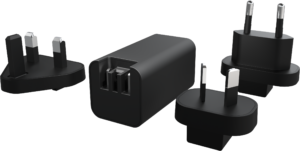
AQ65R-59FKA-R
- Output Power - 65W
- Output Volt - 5V/9V/15V/20V
- Output Current - 3A/3A/3A/3.25A
- # of ports - 1
- Features - GaN Technology, Interchangeable USB Type-C ,DoE Level VI Compliance, 5,000 Meters Operating Altitude, Suitable for commercial and consumer electronic products
- Note: Clips are sold separately
Why are fault removal, output restoration and device recovery separate?
Removing an initiating condition is one event. The adapter output becoming available again is another. The receiving device restoring its intended operating state is a third. Keep these observations distinct so a successful result at one stage is not presented as proof that the entire equipment sequence completed acceptably.
For a latching protection mode, confirm the required reset conditions with Phihong. The term describes a different behavior from an assumed continuous automatic retry. Do not invent a universal power-disconnection interval or a reset method when the model documentation does not fully define it for the intended evaluation.
The receiving device may also have its own power-management and software response. Restored adapter output does not automatically establish the intended input profile, device restart or functional readiness. Define the equipment acceptance criteria for each relevant stage and retain observations at the appropriate measurement boundary.
This distinction is useful when evaluating monitors and networking equipment because a visible symptom can persist after the source condition changes. Record the actual sequence instead of using recovered as an undefined final label. A clear timeline helps engineering determine which remaining question belongs to the adapter, connection or receiving device.
Why This Matters
- A cleared initiating condition does not, by itself, establish complete equipment recovery.
- A defined sequence makes the acceptance decision more precise and reproducible.
What OEMs Should Do Now
- Define separate acceptance observations for fault removal, output availability and functional readiness.
- Obtain model-specific reset clarification rather than assuming a general retry sequence.
What should an OEM protection-and-recovery evaluation retain?
Use an equipment evaluation plan with defined conditions and acceptance criteria. Identify the model, cable, receiving-device revision, intended power arrangement and relevant operating case. The responsible team should determine the appropriate controlled evaluation method using the applicable supplier information and equipment requirements.
Retain the observations needed to identify the event and recovery stages. These can include the established profile, device-side input behavior, relevant operating demand and the equipment’s reported state. Label which events were measured directly and which remain uncertain. Avoid reconstructing an entire sequence from one final error message.
The device-side cable review explains why measurement location and cable identity matter. Keep those details in the protection record as well. A source observation and the receiving circuit’s experience through the installed connection are related but different pieces of evidence.
Separate supplier specification checks from complete-equipment acceptance. A confirmed adapter protection response may satisfy one question while leaving a device-recovery requirement unresolved. Record both conclusions clearly so an individual component result does not become an unsupported approval of the complete product configuration.
Why This Matters
- A repeatable configuration and defined observations make event records interpretable.
- Component protection evidence and equipment acceptance address different requirements.
What OEMs Should Do Now
- Retain the evaluated configuration, method, measurement boundaries and acceptance criteria.
- Record component behavior and complete-device recovery as distinct evidence entries.
How should repeated or unexplained recovery failures be investigated?
Identify the first confirmed difference from the expected sequence. Determine whether the initiating condition was understood, whether the required reset conditions were met and which device-side events were observed. A repeated unavailable-device symptom is not enough to establish that the adapter has the same initiating fault every time.
Review normal operating demand separately from the abnormal event. If an intended operating mode repeatedly enters a protection region, the equipment power requirement remains unresolved. A protection function should not become the normal control strategy for an inadequately defined load or unsupported power arrangement.
Keep configuration comparisons controlled and recorded. Changing an adapter, cable and device revision together can make a different outcome difficult to attribute. State the limits of the comparison and retain the exact parts and conditions used. A useful supplier report describes the observed sequence rather than only requesting a replacement unit.
Phihong’s datasheet interpretation guide provides broader parameter-reading context. Return to the current AQ65R document for model-specific conditions, and ask Phihong to clarify any detail that controls the equipment decision. Do not transfer a reset behavior from another adapter family without supporting evidence.
Why This Matters
- A recurring symptom needs evidence identifying its actual initiating sequence.
- Normal equipment demand should be reviewed independently of protection-event recovery.
What OEMs Should Do Now
- Investigate the earliest confirmed difference rather than assigning the cause from the final symptom.
- Provide Phihong with the exact configuration, operating case and observed recovery sequence.
What belongs in the final equipment recovery approval?
Identify the protection cases covered by the evaluation and the equipment configuration to which the results apply. Retain the required reset conditions, observations, acceptance criteria and unresolved limitations. A final approval should make clear whether the receiving device returned to its required state and which evidence supports that conclusion.
Keep latching and automatic protection modes as separate entries. An acceptable thermal-recovery result does not establish acceptable recovery after a different protection event. Similarly, a result at one output arrangement should not silently become evidence for every permitted device operating mode.
Review later changes to the adapter, cable, receiving-device hardware or relevant software. Determine which earlier evidence remains representative and why. Retain the decision rather than carrying an old recovered label into an altered equipment package without a configuration review.
Bring remaining questions to Phihong with a concise event record and the exact model requirement. Confirm the current documentation and supplied sample configuration, then retain the supplier response with the equipment revision it addresses. The objective is a traceable device-recovery decision rather than a broad claim that protection guarantees uninterrupted service.
Why This Matters
- A complete approval identifies both the covered event and the device configuration.
- Later equipment changes can affect whether earlier recovery evidence remains representative.
What OEMs Should Do Now
- Retain event-specific recovery conclusions and their supporting configuration records.
- Review changes before carrying previous protection and recovery approvals into a revised package.
Frequently Asked Questions
Will AQ65R automatically restart after overcurrent protection?
Do not assume an automatic-retry behavior. The datasheet describes overcurrent protection as latching. Confirm the required reset conditions with Phihong where they are not fully defined for the intended evaluation, then verify the complete adapter, cable and receiving-device sequence against the equipment acceptance criteria.
Is overtemperature recovery the same as overcurrent recovery?
No. The AQ65R document describes different protection types for those functions. Keep their conditions and equipment evaluation results separate. An acceptable result after one type of event does not automatically establish acceptable recovery after another, or prove that every connected device returns to its required operating state.
Does a protection threshold provide extra normal operating capacity?
No. Treat the threshold as a protection specification with its stated conditions. Define the receiving equipment’s normal operating requirement independently. If a required operating mode depends on entering protection, review the power arrangement and load rather than treating protection behavior as ordinary usable headroom.
Does restored adapter output mean a network device has recovered?
Not necessarily. The receiving device may still need to establish its intended input arrangement, restart electronics or complete software and interface stages. Define functional readiness separately from source output availability, then retain device-side observations and the actual configuration used for the evaluation.
What information helps Phihong review a recovery problem?
Provide the exact adapter, cable and device revisions, established operating profile, initiating event, relevant measurements and observed recovery sequence. Identify the reset conditions used and the equipment acceptance criterion that was missed. Clearly mark uncertain observations so the supplier can distinguish evidence from an assumed cause.