










BLOG
What Can a 240W USB-C PD 3.1 Adapter Power That 100W and 140W Chargers Cannot?
QUICK LINKS
Why does 240W USB-C PD 3.1 change what USB-C adapters can power?
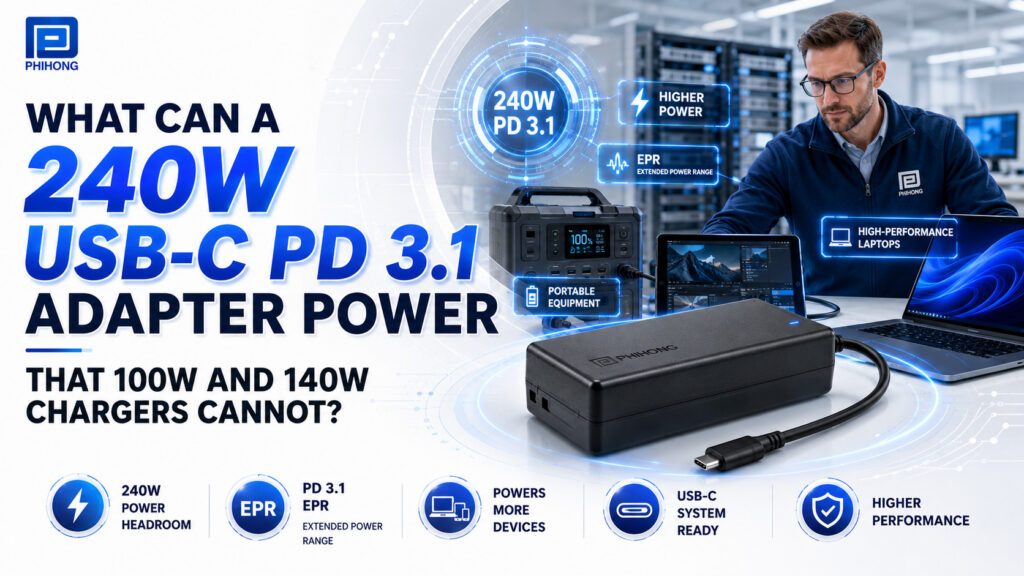
A 240W USB-C PD 3.1 adapter changes the power conversation because it moves USB-C beyond the power range that many OEM teams previously associated with standard laptop charging. Older USB-C PD systems were commonly planned around lower power classes, while many newer commercial laptops, portable workstations, field devices, docking systems and USB-C powered platforms need more headroom. For engineers and product managers, the question is no longer whether USB-C can charge a lightweight laptop. The better question is whether USB-C can become the main power input for higher-performance systems.
USB-C PD 3.1 EPR, or Extended Power Range, introduces higher voltage levels that allow USB-C to reach up to 240W when the adapter, cable and device are all designed for that power level. That matters because 100W and 140W chargers may be enough for many mainstream devices, but they can fall short when the product needs higher sustained power, faster charging under load, or power delivery to multiple internal subsystems. A 240W adapter gives OEM teams more room to design around demanding workloads and advanced portable equipment.
| Power Class | Typical Fit | What It May Not Support Well |
|---|---|---|
| 100W USB-C PD | Mainstream laptops, tablets, compact commercial devices and smaller docking setups. | High-performance systems under load, larger batteries, power-hungry peripherals or sustained workstation use. |
| 140W USB-C PD | More capable laptops, creator devices and higher-end portable systems. | Some mobile workstations, larger performance laptops, multi-device docking and high-load charging needs. |
| 240W USB-C PD 3.1 EPR | High-performance laptops, portable workstations, field equipment, USB-C systems and larger power budgets. | Still requires the correct EPR cable, device sink design, controller support and thermal validation. |
Why This Matters
• 240W USB-C PD 3.1 gives OEMs more power headroom for devices that exceed traditional 100W and 140W charging expectations.
• Higher USB-C power can reduce the need for proprietary charging connectors when the full system is designed for EPR operation.
What OEMs Should Do Now
• Compare the device’s real power budget against 100W, 140W and 240W charging scenarios before selecting the adapter class.
• Confirm that the adapter, cable, USB-C connector, PD controller, firmware and device-side power path can support the intended EPR profile.
Useful Links
AA240U-59FKEA-R Product Page: www.phihong.com/products/aa240u-59fkea-r-2/
AA240U-59FKEA-R 240W USB-C PD 3.1 Datasheet: www.phihong.com/wp-content/uploads/AA240U-59FKEA-R.pdf
USB Power Delivery Specification: www.usb.org/usb-charger-pd
Related Links
Best Guide to GaN Power Adapters: What Modern Devices Need From Compact, High-Density Power: www.phihong.com/best-guide-to-gan-power-adapters-what-modern-devices-need-from-compact-high-density-power/
How 330W GaN Power Adapters Support Gaming Laptops and Mobile Workstations: www.phihong.com/how-330w-gan-power-adapters-support-gaming-laptops-and-mobile-workstations/
Why 65W GaN Power Adapters Are Becoming the New Standard for Commercial Laptops: www.phihong.com/why-65w-gan-power-adapters-are-becoming-the-new-standard-for-commercial-laptops/
FEATURED PRODUCTS
AM250U-540AP-R
AA240U-200A-R
AA240U-200B-R
AA280U-200B-R
AA240U-59FKEA-R
AA36U-240B-R

What high-performance laptops need more than 100W or 140W charging?
High-performance laptops are one of the clearest examples of where 100W or 140W charging may not be enough. A mainstream business notebook may operate comfortably within those ranges, but performance laptops, mobile workstations, AI-ready notebooks and creator systems can require more power when the CPU, GPU, display, memory, storage and cooling system are all active. In those cases, a lower-watt charger may still charge the battery, but it may not fully support charging while the system is under heavy load.
A 240W USB-C PD 3.1 adapter gives laptop OEMs more room to design around real usage instead of only idle or light-duty charging. This matters for users who run 3D rendering, CAD, video editing, AI development, gaming, engineering tools, simulation software or multi-display workflows. The adapter alone does not guarantee performance, but it can help support a cleaner power architecture when the device, cable and system firmware are built to negotiate and manage higher EPR power levels.
| Laptop Use Case | Why 100W or 140W May Fall Short | Why 240W Can Help |
| Mobile workstation | CPU, GPU and display loads can exceed mainstream charging assumptions. | Provides more headroom for sustained operation and charging under load. |
| Creator laptop | Video editing, rendering and color-accurate displays may increase power demand. | Supports larger power budgets without defaulting to proprietary adapters. |
| AI-ready notebook | Local AI workloads can increase sustained processor and accelerator demand. | Gives OEMs more room for future platform power requirements. |
| Gaming laptop | High GPU load and thermal behavior can push charging needs higher. | May support more practical USB-C power architecture for selected high-performance designs. |
Why This Matters
• 240W USB-C PD 3.1 can help laptop OEMs support heavier workloads than 100W and 140W chargers typically target.
• Higher power delivery is most valuable when the laptop is designed for charging under real workload conditions, not only standby or light use.
What OEMs Should Do Now
• Model charging behavior under real workloads such as rendering, AI acceleration, gaming, multi-display use and docking.
• Define fallback behavior clearly so lower-watt USB-C chargers do not create confusing performance or charging expectations.
Useful Links
AA240U-59FKEA-R Product Page: www.phihong.com/products/aa240u-59fkea-r-2/
AA240U-59FKEA-R 240W USB-C PD 3.1 Datasheet: www.phihong.com/wp-content/uploads/AA240U-59FKEA-R.pdf
Power Adapter Product Line: www.phihong.com/products/adapters/
Related Links
How 330W GaN Power Adapters Support Gaming Laptops and Mobile Workstations: www.phihong.com/how-330w-gan-power-adapters-support-gaming-laptops-and-mobile-workstations/
Why 65W GaN Power Adapters Are Becoming the New Standard for Commercial Laptops: www.phihong.com/why-65w-gan-power-adapters-are-becoming-the-new-standard-for-commercial-laptops/
Top 10 Reasons Edge AI Devices Need High-Density GaN Power Adapters: www.phihong.com/top-10-reasons-edge-ai-devices-need-high-density-gan-power-adapters/
What portable equipment and USB-C systems can benefit from 240W power?
Portable equipment and USB-C systems can benefit from 240W power when they need more than basic charging. This can include field devices, diagnostic tools, commercial docking stations, portable displays, compact workstations, robotics support equipment, industrial tablets, battery-powered instruments and specialized systems that operate away from fixed infrastructure. These products often need a balance of power, portability, serviceability and user-friendly connector strategy.
A 240W USB-C PD 3.1 adapter can be useful when the product needs enough power for both operation and charging. A field device may need to run processors, sensors, displays, communication modules and battery charging at the same time. A docking system may need to allocate power across the host device and connected peripherals. A portable workstation may need to support demanding workloads without requiring a proprietary charging brick. In these cases, 240W USB-C power can provide design flexibility that 100W and 140W chargers may not offer.
| Device Category | What 100W or 140W May Limit | What 240W USB-C PD 3.1 Can Support |
| Field equipment | Limited ability to operate and charge under heavier load. | Higher operating power plus battery charging in one adapter strategy. |
| Docking systems | Less headroom for host charging and connected peripherals. | More power allocation for laptop, display, hub and peripheral workflows. |
| Portable workstations | Lower charging power during sustained compute workloads. | Higher external power for mobile professional systems. |
| Industrial USB-C systems | Less flexibility for devices with processors, sensors and displays. | Higher-power USB-C architecture for more demanding portable platforms. |
Why This Matters
• 240W USB-C PD 3.1 can expand USB-C into portable equipment categories that need more than standard laptop charging.
• Higher power over USB-C can simplify adapter strategy when the product is designed around the correct EPR profile.
What OEMs Should Do Now
• Identify whether the device needs 240W for operation, charging, connected peripherals, or all three.
• Validate the adapter with the real device load, approved EPR cable, thermal profile, user workflow and support documentation.
Useful Links
AA240U-59FKEA-R Product Page: www.phihong.com/products/aa240u-59fkea-r-2/
AA240U-59FKEA-R 240W USB-C PD 3.1 Datasheet: www.phihong.com/wp-content/uploads/AA240U-59FKEA-R.pdf
Power Adapter Product Line: www.phihong.com/products/adapters/
Related Links
Best Guide to GaN Power Adapters: What Modern Devices Need From Compact, High-Density Power: www.phihong.com/best-guide-to-gan-power-adapters-what-modern-devices-need-from-compact-high-density-power/
Top 10 Reasons Edge AI Devices Need High-Density GaN Power Adapters: www.phihong.com/top-10-reasons-edge-ai-devices-need-high-density-gan-power-adapters/
Top 10 Thermal Design Mistakes OEMs Make When Using High-Density Power Adapters: www.phihong.com/top-10-thermal-design-mistakes-oems-make-when-using-high-density-power-adapters/
CLIENT'S QUOTE
Phihong’s custom OEM power solutions have transformed our product development, boosting performance and reducing overhead. Their expert engineering support has simplified both the design and manufacturing phases.
What should OEMs verify before replacing 100W or 140W chargers with 240W USB-C?
OEMs should not move from 100W or 140W charging to 240W USB-C simply because the larger number looks better. A 240W USB-C PD 3.1 adapter only adds value when the device can use that power safely and predictably. The adapter, cable, USB-C port, PD controller, firmware, battery system, thermal design and compliance plan all need to support the intended EPR power profile.
This is where many product teams can make a costly mistake. A device may physically use USB-C, but that does not mean it can accept 240W. If the product is designed for 100W or 140W, a 240W adapter may only negotiate a lower profile. For OEMs, the goal is to design the full charging system around the real power need, then select the adapter that matches the device architecture. That includes testing fallback behavior with lower-power chargers so users do not assume every USB-C adapter will deliver the same result.
| Verification Area | Why It Matters | What OEM Teams Should Review |
|---|---|---|
| Device sink capability | The device must support the required EPR power profile. | PD controller, firmware, input path, voltage range and current limits. |
| Cable compatibility | Not every USB-C cable supports 240W EPR operation. | EPR cable rating, labeling, approved accessory list and user instructions. |
| Thermal behavior | Higher power can increase heat across the adapter, cable, connector and device. | Full-load charging, surface temperature, airflow, battery temperature and enclosure design. |
| Fallback behavior | Users may plug in 100W or 140W chargers and expect full performance. | Lower-power charging behavior, system messages, support notes and safe operating modes. |
Why This Matters
• 240W USB-C PD 3.1 requires the full power chain to support EPR operation, not just the adapter.
• Poor fallback planning can create user confusion when lower-watt chargers work differently than the approved 240W adapter.
What OEMs Should Do Now
• Build a USB-C EPR readiness checklist before finalizing the adapter, cable and device-side power path.
• Validate 240W operation and lower-watt fallback behavior under real workloads, not only idle charging conditions.
Useful Links
AA240U-59FKEA-R Product Page: www.phihong.com/products/aa240u-59fkea-r-2/
AA240U-59FKEA-R 240W USB-C PD 3.1 Datasheet: www.phihong.com/wp-content/uploads/AA240U-59FKEA-R.pdf
USB Power Delivery Specification: www.usb.org/usb-charger-pd
Related Links
How 330W GaN Power Adapters Support Gaming Laptops and Mobile Workstations: www.phihong.com/how-330w-gan-power-adapters-support-gaming-laptops-and-mobile-workstations/
Best Guide to GaN Power Adapters: What Modern Devices Need From Compact, High-Density Power: www.phihong.com/best-guide-to-gan-power-adapters-what-modern-devices-need-from-compact-high-density-power/
Why 65W GaN Power Adapters Are Becoming the New Standard for Commercial Laptops: www.phihong.com/why-65w-gan-power-adapters-are-becoming-the-new-standard-for-commercial-laptops/
How Phihong supports 240W USB-C PD 3.1 adapter selection for OEM systems
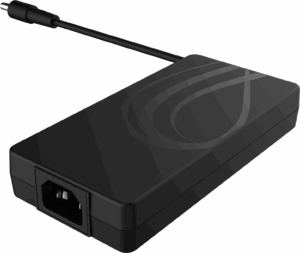
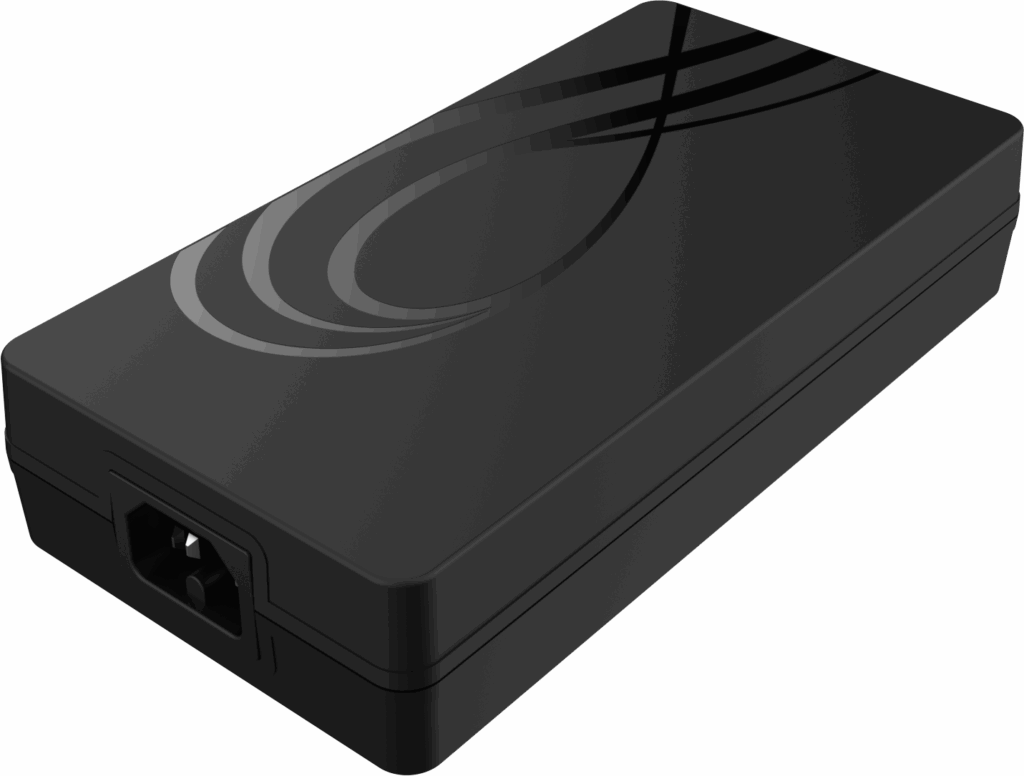
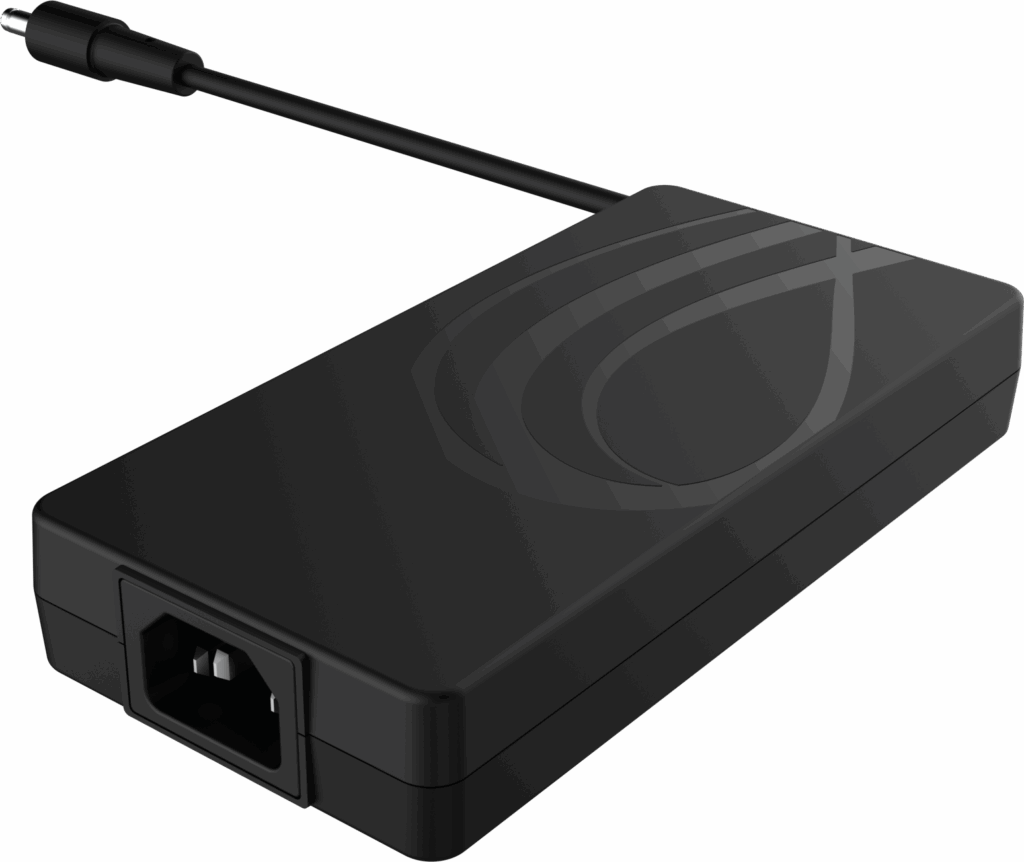
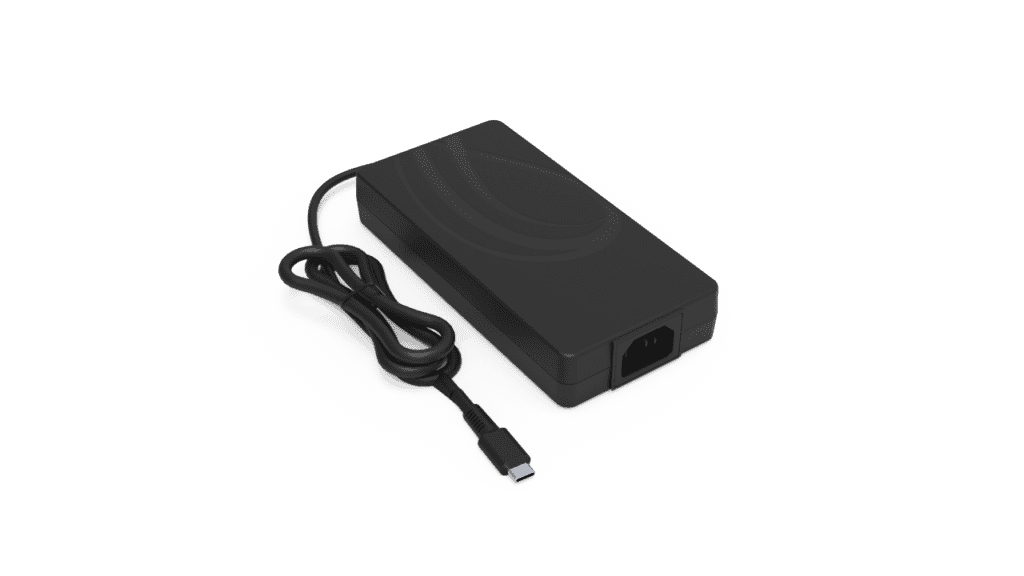
For OEM teams evaluating what 240W USB-C power can support beyond 100W and 140W chargers, Phihong’s AA240U-59FKEA-R provides a product-specific reference point. It is a 240W USB-C Power Delivery 3.1 desktop adapter designed around higher-power USB-C output modes, including 5V, 9V, 15V, 20V, 28V, 36V and 48V. That range makes it relevant for teams evaluating high-performance laptops, portable equipment, docking systems, USB-C commercial devices and advanced power platforms.
The strongest fit is not every USB-C product. The better fit is a system designed for higher power operation, EPR negotiation and approved cable use. OEM teams should compare the adapter’s voltage modes, output current, C14 input format, protection features, EMI requirements, safety documentation, thermal profile and operating environment against the actual device plan. When those details align, a 240W USB-C PD 3.1 adapter can help support cleaner power architecture for devices that outgrow 100W and 140W chargers.
| Phihong Product Area | Why It Helps OEM Teams | What Teams Should Review |
|---|---|---|
| AA240U-59FKEA-R | Provides a 240W USB-C PD 3.1 adapter reference for high-power systems. | Output modes, EPR support, current limits, protections and documentation. |
| USB-C PD 3.1 support | Helps teams evaluate higher-power USB-C architecture beyond 100W and 140W. | Device sink capability, cable rating, firmware and voltage negotiation. |
| Desktop adapter format | Supports higher-power external charging with a C14 AC input format. | AC cord strategy, adapter placement, user access and service model. |
| Product-led evaluation | Keeps the decision tied to real datasheet values and device requirements. | Load profile, thermal behavior, EMI, safety and compatibility plan. |
Why This Matters
• Product-specific adapter evaluation helps OEMs decide whether 240W USB-C PD 3.1 is truly needed.
• A 240W adapter can support higher-performance devices only when the complete USB-C power system is designed for it.
What OEMs Should Do Now
• Start with the AA240U-59FKEA-R datasheet and compare its output modes against the device’s real power requirements.
• Validate adapter, cable, connector, PD controller, firmware, battery, thermal behavior and user instructions before launch.
Useful Links
AA240U-59FKEA-R Product Page: www.phihong.com/products/aa240u-59fkea-r-2/
AA240U-59FKEA-R 240W USB-C PD 3.1 Datasheet: www.phihong.com/wp-content/uploads/AA240U-59FKEA-R.pdf
Power Adapter Product Line: www.phihong.com/products/adapters/
Related Links
Best Guide to GaN Power Adapters: What Modern Devices Need From Compact, High-Density Power: www.phihong.com/best-guide-to-gan-power-adapters-what-modern-devices-need-from-compact-high-density-power/
How 330W GaN Power Adapters Support Gaming Laptops and Mobile Workstations: www.phihong.com/how-330w-gan-power-adapters-support-gaming-laptops-and-mobile-workstations/
Top 10 Reasons Edge AI Devices Need High-Density GaN Power Adapters: www.phihong.com/top-10-reasons-edge-ai-devices-need-high-density-gan-power-adapters/
A 240W USB-C PD 3.1 adapter can power higher-demand systems that may outgrow 100W and 140W chargers, but wattage alone is not the full answer. The device must be designed to negotiate, receive and manage the right EPR voltage and current safely.
For high-performance laptops, portable equipment, docking systems and advanced USB-C platforms, the move to 240W power can simplify connector strategy and reduce dependence on proprietary adapters. The best results come when OEM teams design the adapter, cable, device-side electronics, firmware, thermal system and support documentation together.

CONTACT US TODAY
From concept to production, Phihong delivers custom OEM power solutions tailored to your specifications.
FAQ
What can a 240W USB-C PD 3.1 adapter power that a 100W charger cannot?
A 240W USB-C PD 3.1 adapter can support higher-power devices that need more headroom than a 100W charger can provide. This may include selected high-performance laptops, portable workstations, docking systems, field equipment, commercial USB-C devices and platforms that need to operate and charge at the same time. The device must support the correct EPR power profile, so a 240W adapter does not automatically deliver 240W to every USB-C product.
Is 240W USB-C better than 140W USB-C charging?
It depends on the device. A 140W charger may be enough for many laptops and portable systems. A 240W USB-C PD 3.1 adapter becomes more useful when the product has a higher power budget, larger battery, heavier sustained workloads, or multiple internal subsystems that need more power. OEMs should compare real system demand against 100W, 140W and 240W scenarios before choosing the adapter class.
Can every USB-C cable support 240W charging?
No. 240W USB-C charging requires the correct EPR-capable cable and a compatible device. A standard or lower-rated USB-C cable may limit charging to a lower power level. For OEMs, cable compatibility is part of the product experience. The approved cable, labeling, user instructions and fallback behavior should be planned before launch so customers understand which accessories support full-power operation.
Why does USB-C PD 3.1 use higher voltages for 240W power?
USB-C PD 3.1 EPR uses higher voltage levels such as 28V, 36V and 48V to support higher wattage without relying only on higher current. This helps make 240W power practical within the USB-C ecosystem when the adapter, cable and device are designed for it. OEM teams still need to review connector ratings, cable requirements, PD negotiation, internal DC/DC conversion and thermal behavior.
What should OEMs check before choosing a 240W USB-C PD 3.1 adapter?
OEMs should check supported voltage modes, maximum current, EPR cable requirements, PD controller compatibility, firmware behavior, connector rating, battery charging profile, thermal conditions, EMI, safety documentation, protection features and operating environment. The adapter should be validated with the actual device, approved cable, expected load profile and user workflow before production.
POE technology supports the centralization of power

AC Adapter Guide: Everything You Need to Know
Moreover, PoE technology supports the centralization of power management. By powering devices through a PoE-enabled network …
AC DC Power Chargers and How They Work: A Comprehensive Technical Breakdown
Moreover, PoE technology supports the centralization of power management. By powering devices through a PoE-enabled network …

USB-C Charger: Shaping the Future of the Tech World
Moreover, PoE technology supports the centralization of power management. By powering devices through a PoE-enabled network …

AC Adapter Guide: Everything You Need to Know
Moreover, PoE technology supports the centralization of power management. By powering devices through a PoE-enabled network …

AC DC Power Chargers and How They Work: A Comprehensive Technical Breakdown
Moreover, PoE technology supports the centralization of power management. By powering devices through a PoE-enabled network …

USB-C Charger: Shaping the Future of the Tech World
Moreover, PoE technology supports the centralization of power management. By powering devices through a PoE-enabled network …