






BLOG
Best Waterproof Robot Charging Stations for IP67 and IP68 Applications: What Engineers Need to Know About Dust, Water, and Temperature Ratings
QUICK LINKS

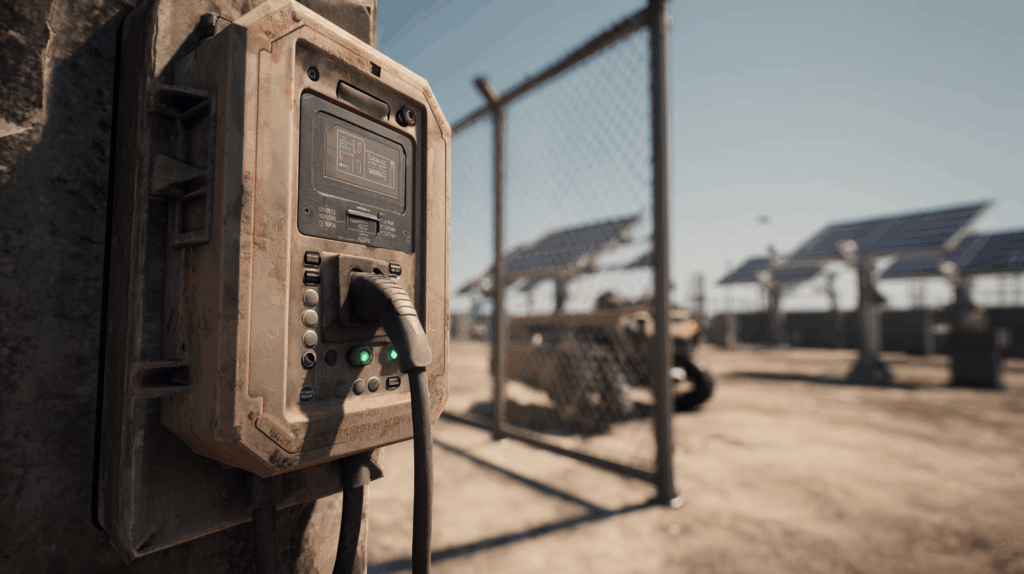
As autonomous robots move outdoors and into industrial environments, their charging stations must evolve to survive the same harsh conditions. Whether you’re developing a robot for last-mile delivery, outdoor surveillance, agriculture, or industrial service, there’s no room for error—your power system must operate flawlessly under dust storms, rain, snow, and fluctuating temperatures. That’s why IP-rated (Ingress Protection) charging stations are no longer optional—they’re essential.
IP67 and IP68 ratings set the bar for waterproof and dustproof performance. But how do you choose the best waterproof robot charging station that actually delivers on these promises? What’s the difference between IP67 and IP68 in real-world applications? And how do engineers ensure that enclosures, connectors, and electronics meet these standards without overdesigning or blowing budgets?
This guide breaks it down for you—from technical definitions to design recommendations—to help OEMs and engineers build or source rugged, reliable IP-rated robot charging docks that perform in the wild.
What Do IP67 and IP68 Mean in Charging Station Design?
IP67 and IP68 are international standards defined by IEC 60529, outlining levels of protection against solids (dust) and liquids (water).
Top Features
- IP67: Complete dust protection + waterproof against immersion up to 1 meter for 30 minutes
- IP68: Same dust protection, but immersion deeper than 1 meter—depth and duration specified by the manufacturer
- Gasket-sealed enclosures, hydrophobic membrane vents, and waterproof connectors
- Internal electronics protected with conformal coating or full potting
Top Benefits
- Supports deployment in rain, snow, dust storms, and washdown zones
- Ensures uninterrupted charging in remote or unattended areas
- Reduces maintenance and eliminates failure due to moisture or debris
- Meets procurement requirements for smart cities and industrial clients
Best Practices
- Match your IP rating to real-world application: IP67 for general outdoor, IP68 for underwater or flood-prone zones
- Test at both component and system level
- Use UV- and chemical-resistant materials for long-term durability
- Design with drain paths and ventilation to prevent internal condensation
IP ratings are only meaningful if the whole charging system—from connector to PCB—is built for compliance.
Key Differences Between IP67 and IP68 for Robot Charging Stations
While both offer robust dust and water resistance, IP68 goes a step further, requiring design considerations beyond what most off-the-shelf components can handle.
Top Features
- IP67: Ideal for robots exposed to rain, puddles, and pressure washing
- IP68: Suitable for submersion—used in underwater drones, sewer robots, or flood-risk installations
- IP68 often involves hermetically sealed connectors and zero-airflow designs
- Requires superior heat dissipation techniques due to lack of airflow
Top Benefits
- Enables robot operations in extreme or aquatic conditions
- Allows charger installations in underground vaults, manholes, or marine docks
- Protects investment in environments with high equipment turnover
- Opens new market applications (e.g., marine service, aquaculture, disaster recovery)
Best Practices
- Don’t rely on IP68 connectors alone—ensure internal boards and seals match the rating
- Perform long-duration soak and pressure tests beyond IEC minimums
- Use rugged cable glands and potting for full sealing
- Monitor temperature rise during charging, as IP68 stations trap more internal heat
Choosing IP68 when you only need IP67 adds cost and complexity. Know your risk environment before committing.
How Temperature Ratings Complement IP Certifications
A station may be watertight—but what happens when it freezes or overheats? Engineers must pair ingress protection with temperature tolerance for year-round performance.
Top Features
- Operating temperature range: typically -20 °C to +50 °C for IP67; -40 °C to +85 °C for IP68 industrial systems
- Passive heat sinks or active ventilation for thermal control
- Thermostatic heating elements for cold-weather battery performance
- Thermal shutdown and recovery logic in power electronics
Top Benefits
- Ensures charging uptime during winter storms or summer heatwaves
- Prevents battery damage due to cold charging or overheating
- Extends life of components and improves reliability
- Reduces power derating or charging failures during peak load conditions
Best Practices
- Select power supplies and PCBs rated above your worst-case scenario
- Use temperature sensors to trigger ventilation, heaters, or firmware throttling
- Avoid thermal choke points by spacing components and using insulation
- Validate all materials for expansion/contraction cycles
Don’t let your charging dock pass a splash test only to fail during a frost.
CLIENT'S QUOTE
"Phihong’s PoE solutions have made a huge difference for us! Our network runs more efficiently, and we’ve seen real cost savings. We couldn’t be happier!"
Must-Have Components for IP-Rated Charging Station Builds
A true IP67/IP68 station isn’t about the enclosure alone—it’s about holistic integration of protected components and smart engineering.
Top Features
- Waterproof DC output connectors with IP67/IP68 caps and latches
- Cable glands with compression seals and strain relief
- Conformal-coated or potted PCBs with wide-temp components
- IP-rated ventilation membranes (ePTFE) for pressure equalization
Top Benefits
- Prevents internal corrosion, arcing, or leakage paths
- Provides long-term electrical safety in all weather
- Maintains system integrity even under pressure wash or flooding
- Avoids performance loss from humidity, vibration, or debris buildup
Best Practices
- Design for maintainability: use modular panels or access ports
- Group high-voltage and communication paths separately for safer sealing
- Include visual or digital water intrusion indicators for maintenance
- Choose materials with matching chemical resistance (e.g., oils, fertilizer, salt)
Your IP-rated system is only as strong as the weakest part—don’t let it be a connector or unsealed vent.
Common Applications for IP67/IP68 Charging Stations
Understanding where these ratings shine helps guide both design and procurement decisions.
Top Features
- Sidewalk and last-mile delivery robots exposed to urban elements
- Perimeter security bots operating in rain, dust, and snow
- Industrial scrubbers or AGVs in wet cleaning zones
- Marine or aquaculture robots requiring sealed underwater docks
Top Benefits
- Ensures continuous robot uptime regardless of outdoor conditions
- Reduces manual intervention in large fleet deployments
- Enhances public and facility safety with sealed power infrastructure
- Enables growth into extreme environments without redesigning power systems
Best Practices
- Match charging station IP rating to robot’s IP rating for system-wide protection
- Deploy in zones with proper drainage and sunlight shielding
- Document usage environment for warranty and certification coverage
- Test docks on-site before scaling to full fleet installations
Robots go everywhere now—and charging systems must follow without compromise.
How Phihong USA Supports IP67/IP68 Power Projects
Phihong USA provides OEMs with waterproof, dust-tight, and temperature-rated power systems designed to meet or exceed IP67 and IP68 specifications. From outdoor charging modules and wide-temperature AC-DC converters to sealed DC connectors and thermal management strategies, we support the full engineering journey.
Whether you’re building a delivery bot dock or a marine charging platform, Phihong’s team can assist with:
- Component selection
- Power architecture design
- Compliance documentation
- IP testing support
Let’s build rugged, future-ready charging infrastructure—together. Reach out to Phihong USA to get started.

Contact Our Team Today!
Our dedicated sales team and international partners are prepared to support you with your latest projects and initiatives globally.
Explore More with Phihong USA
As we conclude our exploration of PoE technology, it’s evident how these innovations are streamlining power and data integration across various industries. Phihong USA stands at the forefront of this technological advancement, offering a diverse range of power solutions designed to meet the evolving needs of modern industries.
Phihong USA’s extensive product lineup includes:
- Power over Ethernet (PoE) Solutions: Delivering reliable power and data transmission over a single cable, ideal for simplifying network installations and reducing costs.
- AC/DC Adapters and Power Supplies: From compact adapters to industrial-grade power supplies, Phihong provides solutions that ensure efficiency and reliability in various applications.
- Battery Chargers: Customizable chargers for lithium-ion and lead-acid batteries, supporting a wide range of power requirements for mobility and industrial applications.
- Medical Power Supplies: Specialized power solutions designed to meet the stringent requirements of the healthcare industry, ensuring safety and reliability.
Phihong USA is committed to innovation and excellence, continually developing products that meet the highest standards of performance and reliability. Their global reach and dedication to customer support make them a trusted partner in powering the future.
Here are some useful links to explore Phihong USA’s offerings further and bring in new potential clients:
Visit Phihong USA to discover how their advanced power solutions can support your business needs. Whether you’re looking to upgrade your network, or find reliable power supplies, Phihong USA has you covered.
By choosing Phihong USA, you’re partnering with a leader in power technology, ensuring your operations run smoothly and efficiently with top-tier power solutions. Contact Us today!
FAQ
What’s the difference between IP67 and IP68 for robot charging stations?
IP67-rated charging stations can withstand full dust ingress and temporary immersion in water up to 1 meter for 30 minutes, while IP68-rated stations can survive longer or deeper submersion—typically in underwater or flood-prone installations. Both offer excellent dust and water resistance, but IP68 requires additional sealing, pressure resistance, and thermal strategies. For example, an IP67 station might work for delivery bots on rainy sidewalks, while IP68 is used for sewer robots or docks in flood zones. Always match the rating to your environment, not just your robot’s specs.
Are IP68-rated stations always better than IP67?
Not necessarily. IP68 adds cost, complexity, and thermal design constraints, which may be overkill if your station isn’t going underwater. For most land-based delivery, security, or cleaning robots, IP67 is ideal, offering full protection from rain, snow, and dust. IP68 is best for environments with submersion risk—flood-prone areas, marine docks, or underground vaults. Choosing IP68 when you don’t need it may lead to overheating or unnecessary costs, so always assess your deployment zone carefully.
What components should be IP-rated in a waterproof robot charger?
The entire charging system must be IP-rated for full protection. This includes:
- Enclosures (IP67/68-rated housing)
- Connectors (sealed DC outputs, bulkhead pass-throughs)
- Cable glands (with compression sealing)
- PCBs (conformal coating or potting)
- Fans or vents (ePTFE membranes for airflow without water ingress)
If any one part fails to meet the rating—like an exposed USB port or loose connector—the entire system is compromised. IP ratings are system-level certifications, not just enclosure specs.
Can I retrofit a standard charger into an IP67 enclosure?
Technically, yes—but it’s risky. Many standard chargers aren’t designed for sealing, thermal insulation, or condensation resistance. Retrofitting requires modifying airflow paths, replacing connectors, coating boards, and sealing ports. Even then, certification may be difficult or voided. A better approach is to use IP67-rated modules from the start, like Phihong’s wide-temp, sealed power supplies. OEMs benefit from fewer surprises, better thermal reliability, and faster regulatory approvals when building waterproof chargers from the ground up.
Does Phihong offer IP68 power supplies and support for waterproof station design?
Yes. Phihong USA offers IP67 and IP68-compliant AC-DC and DC-DC power solutions, along with sealed connectors, surge protection modules, and thermal-rated designs for outdoor and underwater robot applications. We help OEMs build waterproof docking stations for delivery, security, and marine environments. Our engineering team can guide you through component selection, system design, and compliance documentation, ensuring that every part of your charging system is built to last. Whether you’re creating your first rugged dock or scaling a fleet, Phihong is your partner for safe, sealed power.