










BLOG
Why High-Power-Density OEM Designs Are Rethinking DC/DC Converter Selection
QUICK LINKS
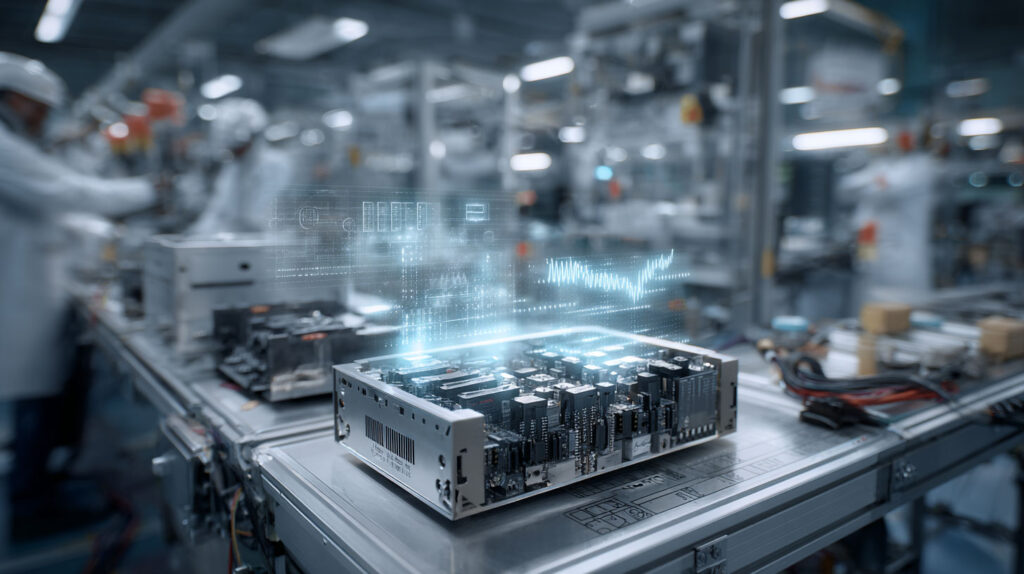
Why Are High-Power-Density OEM Designs Reconsidering Traditional DC/DC Converter Choices?
High-power-density OEM designs are rethinking DC/DC converter selection because traditional choices are reaching their practical limits as systems become smaller, more powerful, and more thermally constrained. Manufacturing teams are under pressure to deliver higher performance in reduced form factors while maintaining reliability across long operating lifecycles. Converters that once fit comfortably within electrical requirements now struggle to meet thermal, mechanical, and longevity expectations in dense assemblies.
In many OEM products, power density increases faster than the supporting thermal infrastructure. Higher switching frequencies, compact magnetics, and reduced PCB area concentrate heat in localized regions. While these approaches improve efficiency on paper, they reduce margin under sustained load and elevate long-term stress on components. As a result, converters that meet specifications at launch may experience derating or degradation once deployed.
OEMs are also facing broader deployment conditions. Products must operate across wider ambient temperature ranges, longer duty cycles, and global compliance environments. These realities expose weaknesses in converter selections optimized only for electrical fit rather than system-level resilience.
Top Benefits
• Improves reliability in compact, high-density OEM designs
• Reduces thermal and lifecycle-related failures after deployment
• Aligns power architecture with modern manufacturing constraints
Best Practices
• Evaluate converter performance under sustained high-density operation
• Consider thermal margin and aging alongside efficiency metrics
• Validate power choices within realistic enclosure conditions
Helpful Tips
• Avoid selecting converters based solely on peak efficiency figures
• Revisit power assumptions as product density increases
• Include manufacturing and reliability teams in early power reviews
Mini Q&A
Why are older DC/DC selections becoming less viable?
Because increased power density exposes thermal and lifecycle limits.
Is efficiency alone no longer sufficient?
Correct, thermal behavior and longevity now matter equally.
Should OEMs revisit legacy power architectures?
Yes, especially when product density has increased.
Recognizing these shifts helps OEMs adapt power strategies before failures occur.
(Suggested Links: DC/DC Converters | Internal Power Supplies)
How Do Efficiency, Density, and Longevity Tradeoffs Affect OEM Power Decisions?
Efficiency, density, and longevity are tightly coupled in high-power-density OEM designs, and optimizing one often impacts the others. Improving efficiency reduces total losses, but in dense systems even small losses translate into significant temperature rise. As PCB area and airflow shrink, thermal headroom disappears quickly, making longevity a primary concern.
Longevity is increasingly critical for OEMs shipping products with extended service lives. Elevated temperatures accelerate aging in capacitors, semiconductors, and magnetics, shortening usable lifespan even when electrical limits are respected. Designs optimized for peak efficiency but lacking thermal margin often struggle to meet long-term reliability expectations.
OEM power decisions now require balancing these tradeoffs explicitly. Rather than selecting the most efficient or smallest converter, teams are prioritizing predictable thermal behavior and controlled aging. This shift reflects a broader move toward lifecycle-aware design rather than specification-driven selection.
Top Benefits
• Improves long-term reliability and service life
• Reduces early-life and mid-life failures
• Aligns power design with lifecycle expectations
Best Practices
• Analyze efficiency curves across temperature and load ranges
• Evaluate thermal rise rather than efficiency alone
• Build margin for component aging and tolerance stacking
Helpful Tips
• Review capacitor lifetime ratings at operating temperatures
• Avoid continuous operation near absolute limits
• Validate longevity assumptions during qualification testing
Mini Q&A
Why does higher density reduce longevity?
Because higher temperature accelerates component aging.
Is higher efficiency always better for lifespan?
Not if it increases localized thermal stress.
Should OEMs design for lifespan explicitly?
Yes, especially for long-duty-cycle products.
Balancing efficiency and longevity helps OEMs avoid reliability surprises later.
(Suggested Links: Industrial Power Supplies | DC/DC Converters)
What System-Level Constraints Are Forcing OEMs to Reevaluate Converter Selection?
System-level constraints are a major driver behind OEMs reevaluating DC/DC converter selection in high-density designs. Enclosure size, airflow limitations, regulatory requirements, and mechanical integration all influence how power converters behave once installed. These constraints often surface late in development, exposing weaknesses in early power choices.
As products integrate more functionality, converters are placed closer to processors, radios, and other heat sources. Thermal coupling increases, reducing effective ambient margin. At the same time, compliance standards and global certifications impose additional spacing, thermal, and safety requirements that limit placement flexibility.
OEMs are responding by treating power selection as a system-level decision rather than a schematic-level task. Evaluating converters within the full product context helps identify risks earlier and reduces the likelihood of late-stage redesigns driven by thermal or compliance failures.
Top Benefits
• Improves alignment between power design and system constraints
• Reduces late-stage redesigns caused by integration issues
• Supports smoother compliance and validation processes
Best Practices
• Validate power behavior within final enclosure concepts
• Coordinate power placement with mechanical and thermal teams
• Review compliance impact during power architecture planning
Helpful Tips
• Avoid finalizing converter selection before enclosure concepts stabilize
• Include system-level testing early in development
• Reassess power choices when system requirements change
Mini Q&A
Why do system constraints matter more now?
Because higher density reduces tolerance for thermal and layout error.
Can compliance issues force power redesigns?
Yes, especially when thermal or spacing limits are exceeded.
Should power be reviewed at system milestones?
Yes, repeated reviews reduce downstream risk.
System-aware power selection helps OEMs manage complexity as designs become denser.
(Suggested Links: Open-Frame Power Supplies | Enclosed Power Supplies)
CLIENT'S QUOTE
Phihong's Power-Over-Ethernet solutions have transformed our network, boosting efficiency and reducing costs. Their seamless integration has simplified both installation and maintenance.

FEATURED RESOURCE
Phihong's Power-Over-Ethernet solutions have transformed our network, boosting efficiency and reducing costs.
FAQ
Why are high-power-density OEM designs rethinking DC/DC converter selection?
High-power-density OEM designs are rethinking DC/DC converter selection because traditional choices optimized for size or efficiency alone often struggle under real thermal and lifecycle conditions. Dense layouts concentrate heat, reduce airflow, and limit thermal margin, exposing weaknesses that datasheet testing does not reveal.
OEMs now prioritize predictable thermal behavior, derating control, and long-term reliability. This shift helps prevent early-life failures and reduces the need for redesigns after deployment.
How does power density affect DC/DC converter longevity?
Power density directly affects operating temperature, which in turn accelerates component aging. Higher temperatures shorten capacitor life, stress semiconductors, and increase the likelihood of long-term degradation. Even small increases in temperature can significantly reduce lifespan.
Managing power density through form factor selection, thermal margin, and system-level planning improves longevity and reduces lifecycle risk.
Why is efficiency no longer the only priority in OEM power design?
Efficiency reduces total losses but does not guarantee safe thermal performance in dense systems. Localized losses can still create hot spots that drive derating or failure. As a result, OEMs are balancing efficiency with thermal predictability and aging considerations.
This broader view supports stable operation across real-world environments rather than ideal lab conditions.
What role does system-level validation play in converter selection?
System-level validation reveals how DC/DC converters behave once integrated into final enclosures, layouts, and operating profiles. It exposes thermal coupling, airflow limitations, and interaction effects that component-level testing cannot predict.
OEMs that validate converters within the full system context reduce the risk of late-stage redesigns and unexpected field failures.
How can OEMs reduce redesign risk in high-density power architectures?
OEMs can reduce redesign risk by treating DC/DC converter selection as an architectural decision rather than a component choice. Validating under worst-case conditions, building margin for aging, and coordinating across disciplines all help prevent surprises.
Working with manufacturers that emphasize validation rigor and lifecycle reliability further reduces risk.
POE technology supports the centralization of power

AC Adapter Guide: Everything You Need to Know
Moreover, PoE technology supports the centralization of power management. By powering devices through a PoE-enabled network …
AC DC Power Chargers and How They Work: A Comprehensive Technical Breakdown
Moreover, PoE technology supports the centralization of power management. By powering devices through a PoE-enabled network …

USB-C Charger: Shaping the Future of the Tech World
Moreover, PoE technology supports the centralization of power management. By powering devices through a PoE-enabled network …

AC Adapter Guide: Everything You Need to Know
Moreover, PoE technology supports the centralization of power management. By powering devices through a PoE-enabled network …

AC DC Power Chargers and How They Work: A Comprehensive Technical Breakdown
Moreover, PoE technology supports the centralization of power management. By powering devices through a PoE-enabled network …

USB-C Charger: Shaping the Future of the Tech World
Moreover, PoE technology supports the centralization of power management. By powering devices through a PoE-enabled network …