






BLOG
How Military and Defense Applications Are Shaping Ruggedized Robot Charging Stations for Harsh Field Environments
Table of contents
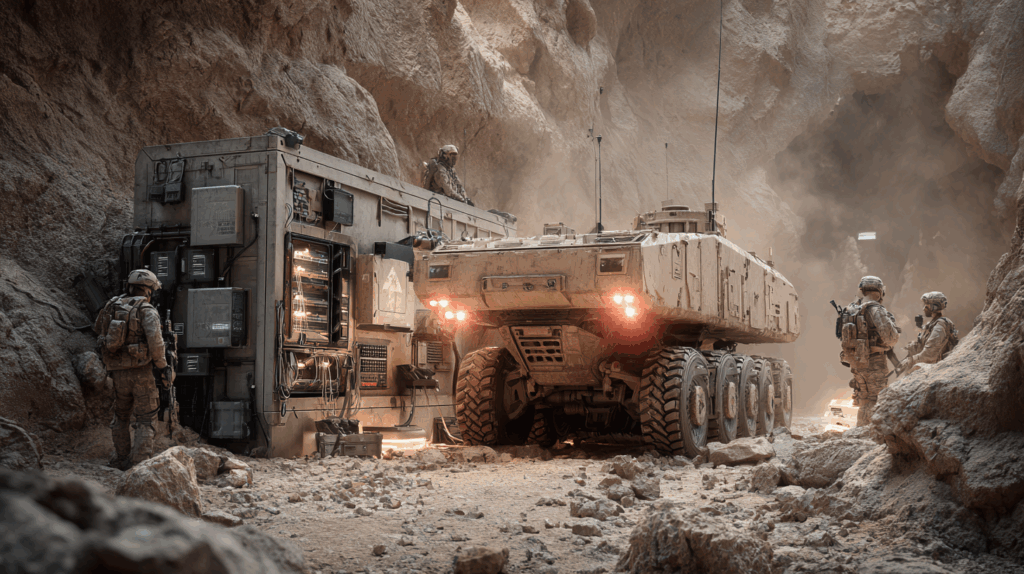
As autonomous and semi-autonomous robots take on increasingly critical roles in military and defense operations, the demand for ultra-reliable, ruggedized charging infrastructure has accelerated. From reconnaissance drones to explosive ordnance disposal (EOD) robots and unmanned ground vehicles (UGVs), these machines must operate in harsh, unpredictable field conditions—where failure is not an option.
At the center of this evolution is a new class of military-grade charging stations designed for extreme temperatures, wet or dusty environments, electromagnetic interference (EMI), and mobile deployments. These ruggedized systems must deliver more than just power—they must survive the battlefield.
In this article, we explore how military and defense applications are shaping the next generation of field-ready robotic charging stations, what makes them different from commercial versions, and how OEMs and defense contractors can build compliant, mission-ready power solutions.
Why Defense Robotics Requires Ruggedized Charging Infrastructure
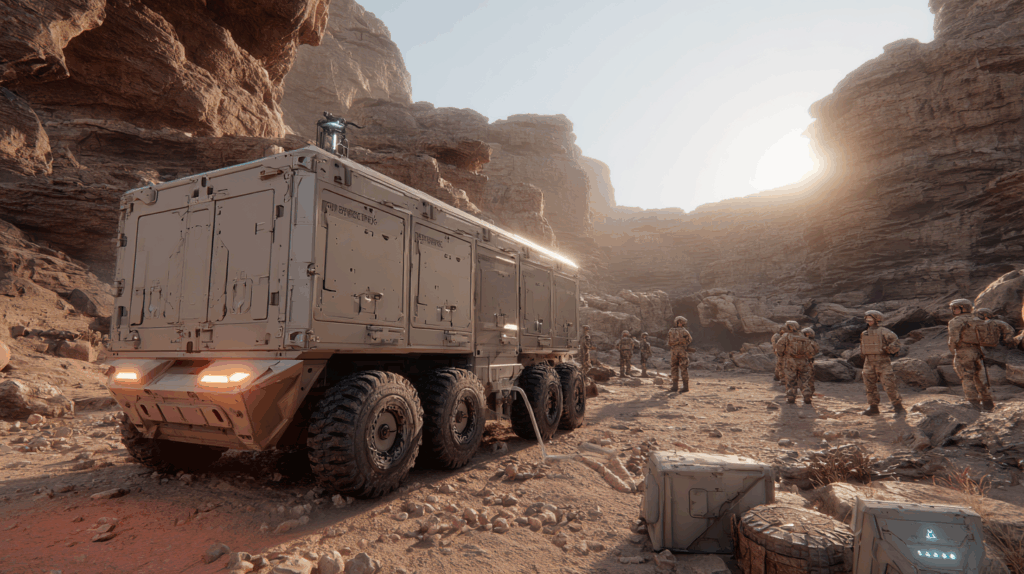
Military robots operate in some of the world’s harshest environments—deserts, jungles, arctic zones, and conflict areas—far from controlled facilities. Their charging stations must be just as tough as the machines they support.
Top Features
- IP67/IP68-rated enclosures for full dust and water protection
- Wide operating temperature range (-40 °C to +85 °C)
- Hardened materials (anodized aluminum, stainless steel, reinforced polymers)
- Surge protection and EMI shielding for electronic warfare environments
Top Benefits
- Enables robot recharging in mobile bases, forward operating zones, or field bunkers
- Prevents mission-critical failure from weather, debris, or thermal shock
- Allows full autonomy without returning to centralized charging depots
- Supports rapid redeployment with portable or vehicle-mounted docks
Best Practices
- Use military-grade connectors and cables (MIL-STD-rated)
- Integrate redundant charging logic and over-voltage protections
- Perform field testing under simulated battlefield conditions
- Include tamper-proof access and encrypted communication for charging control
When the mission is on the line, every watt must arrive safely and reliably—no matter the terrain.
Key Differences Between Military and Commercial Robot Charging Stations
While commercial chargers prioritize efficiency and ease of deployment, military charging stations are built for survivability, security, and transportability.
Military Charging
- Ruggedized, modular, and shock-resistant
- Designed for tactical mobility and vehicle mounting
- Meets MIL-STD-810, MIL-STD-461, and other defense certifications
- Operates with or without local power infrastructure (solar, generator, battery bank)
Commercial Charging
- Designed for controlled environments (indoor or outdoor urban zones)
- Uses standard connectors and accessible electrical enclosures
- Focused on fleet automation and public safety compliance
- Tied to building power or grid-based infrastructure
Best Practices
- Separate ground lines and shielding layers to reduce EMI and RFI risks
- Use field-replaceable modules and universal DC input options
- Design for fast set-up/teardown (clamp-and-go, rail-mount, or fold-out systems)
- Include visual, audible, or secure remote alerts for charge status in low-light or combat conditions
Military robots need power systems that can move with them—without compromise.
How Mobile and Off-Grid Charging Is Powering Tactical Robotics
Defense missions often take place far from power grids. As a result, charging stations must support off-grid energy sources and mobile transport platforms, including tactical vehicles, trailers, and field shelters.
Top Features
- Solar-compatible input or mobile generator integration
- DC input flexibility: 12V, 24V, 48V, or NATO-standard power ports
- Battery banks with hot-swap or rapid charge options
- Lightweight, ruggedized cases with handles or wheels
Top Benefits
- Enables off-grid operation in remote deployment zones
- Reduces downtime during mobile repositioning
- Increases operational range for ground-based autonomous systems
- Supports field charging of drones, ground robots, and sensor hubs
Best Practices
- Build modular charging kits deployable from vehicles, tents, or bunkers
- Protect battery and electronics from sand, humidity, and mechanical shock
- Include voltage converters for use with diverse military platforms
- Train operators to manage multiple energy sources under active conditions
The future of defense robotics relies on off-grid autonomy—and charging that follows the mission.
CLIENT'S QUOTE
"Phihong’s PoE solutions have made a huge difference for us! Our network runs more efficiently, and we’ve seen real cost savings. We couldn’t be happier!"
Cybersecurity and Communication Protection in Defense Charging Systems
Charging stations in military use are now part of the secure digital ecosystem, requiring strict communication controls and cybersecurity hardening.
Top Features
- Encrypted firmware and authentication protocols (AES, SHA, TLS)
- Secure data exchange with robotic systems and command networks
- Local-only operation options for disconnected missions
- Tamper detection and auto-disable features
Top Benefits
- Prevents infiltration or spoofing of charging hardware in contested zones
- Supports secure updates to charging logic and firmware
- Aligns with defense-grade IT/OT network policies
- Minimizes risk from compromised or counterfeit components
Best Practices
- Require firmware signing and boot validation at startup
- Physically isolate control logic from power layers when needed
- Log charge cycles and access attempts for field audits
- Apply role-based access control to dock configuration settings
In the field, even charging systems must act as secure, trusted assets.
How Phihong USA Supports Ruggedized Charging for Military Applications
Phihong USA delivers military-grade power components and ruggedized charging solutions for defense and tactical robotics applications. We support OEMs and contractors with:
- Wide-temperature AC-DC and DC-DC converters for off-grid or vehicle integration
- IP67/IP68-rated enclosures and military-standard connectors
- Smart charging logic with BMS integration, surge protection, and tamper alerts
- Support for MIL-STD compliance testing, EMI/EMC shielding, and safety certifications
- Engineering consultation for modular, portable, and secure charging stations
Whether you’re designing mobile UGVs, autonomous drones, or deployable robot platforms, Phihong delivers field-ready charging systems built for mission success.

Contact Our Team Today!
Our dedicated sales team and international partners are prepared to support you with your latest projects and initiatives globally.
Explore More with Phihong USA
As we conclude our exploration of PoE technology, it’s evident how these innovations are streamlining power and data integration across various industries. Phihong USA stands at the forefront of this technological advancement, offering a diverse range of power solutions designed to meet the evolving needs of modern industries.
Phihong USA’s extensive product lineup includes:
- Power over Ethernet (PoE) Solutions: Delivering reliable power and data transmission over a single cable, ideal for simplifying network installations and reducing costs.
- AC/DC Adapters and Power Supplies: From compact adapters to industrial-grade power supplies, Phihong provides solutions that ensure efficiency and reliability in various applications.
- Battery Chargers: Customizable chargers for lithium-ion and lead-acid batteries, supporting a wide range of power requirements for mobility and industrial applications.
- Medical Power Supplies: Specialized power solutions designed to meet the stringent requirements of the healthcare industry, ensuring safety and reliability.
Phihong USA is committed to innovation and excellence, continually developing products that meet the highest standards of performance and reliability. Their global reach and dedication to customer support make them a trusted partner in powering the future.
Here are some useful links to explore Phihong USA’s offerings further and bring in new potential clients:
Visit Phihong USA to discover how their advanced power solutions can support your business needs. Whether you’re looking to upgrade your network, or find reliable power supplies, Phihong USA has you covered.
By choosing Phihong USA, you’re partnering with a leader in power technology, ensuring your operations run smoothly and efficiently with top-tier power solutions. Contact Us today!
FAQ
What makes a robot charging station “military-grade”?
A military-grade robot charging station is built to meet rigorous environmental, safety, and operational standards such as MIL-STD-810 (environmental durability) and MIL-STD-461 (EMI compliance). These docks feature hardened enclosures, secure connectors, wide-temperature components, and redundant protection systems. They’re designed for mobility, off-grid use, and continuous operation in hostile or unpredictable field environments. Phihong USA supports military-grade designs with power electronics that meet these challenges.
Can military charging systems be used off-grid?
Yes. Military charging stations are often designed for off-grid deployment, supporting inputs from generators, solar panels, mobile battery banks, or vehicle alternators. These systems include voltage converters, rugged inverters, and flexible AC-DC/DC-DC inputs to match varying field energy sources. Portability and modularity are key—making these systems ideal for rapid deployment and redeployment during missions.
How do ruggedized chargers withstand harsh weather and terrain?
Ruggedized chargers use IP67/IP68 enclosures, sealed connectors, shock-resistant mounts, and thermal-resistant materials to survive harsh environments. They’re designed to resist water, mud, vibration, extreme heat, or cold—often operating from -40 °C to +85 °C. Phihong USA offers field-proven materials and coatings, along with thermal simulation services to ensure charging systems endure real-world battlefield conditions.
Are cybersecurity features necessary in robot charging stations?
Yes. In modern defense environments, charging stations are data-aware endpoints—and therefore potential targets. They must include secure firmware, encrypted communication, role-based access controls, and physical tamper resistance. Phihong’s systems support encrypted BMS protocols, OTA updates with authentication, and secure boot mechanisms. Cybersecurity is no longer optional—it’s a requirement in today’s connected battlefield.
How does Phihong support military and defense OEMs?
Phihong USA provides:
- Customizable charging solutions for mobile and tactical robot platforms
- MIL-STD-compliant components and EMI-hardened power systems
- Portable, ruggedized enclosures for harsh terrain
- Integration support for battery management, thermal control, and security protocols
Our team helps defense contractors and robotics OEMs go from prototype to field deployment with scalable, reliable, and mission-ready charging infrastructure.