







BLOG
Why the Manufacturing Location for Custom Power Supplies Has Become a Power Design Decision for OEMs
QUICK LINKS
Why Is Manufacturing Location Now Influencing Power Design Decisions for OEMs?
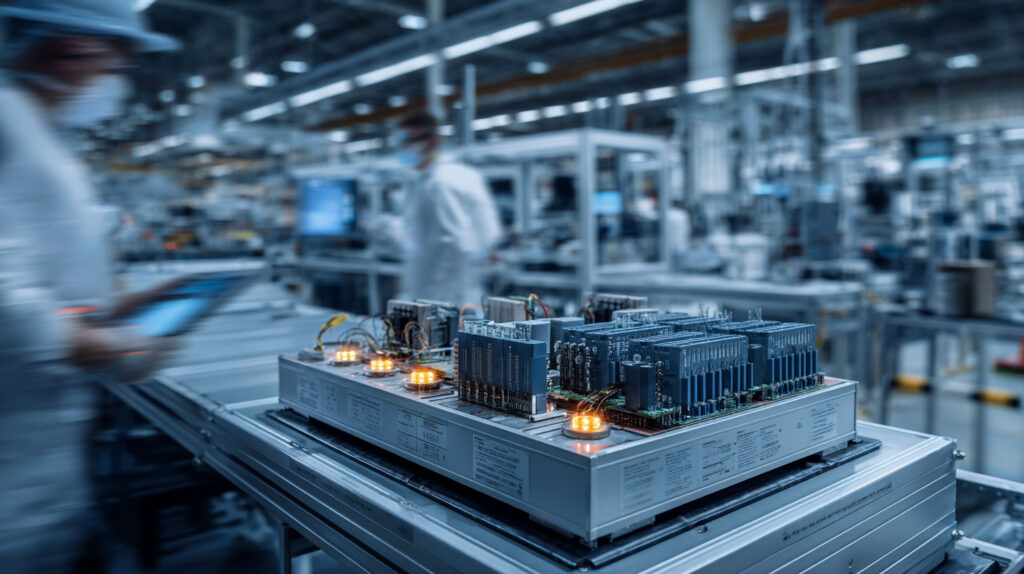
Manufacturing location has become a power design decision for OEMs because where a custom power supply is built now directly affects compliance readiness, scalability, lifecycle stability, and risk exposure. In earlier product cycles, manufacturing location was often treated as a sourcing or cost optimization decision made after design completion. Today, geopolitical risk, regulatory complexity, logistics variability, and quality control differences mean location influences how power supplies are designed from the start.
Custom power supplies must meet regional safety standards, EMI requirements, and documentation expectations that vary by market. When manufacturing locations shift, certification pathways, test evidence, and audit requirements may also change. A power design optimized for one region can encounter delays or redesigns if manufacturing is later moved to another location with different regulatory expectations or testing infrastructure.
OEMs are also planning for longer product lifecycles and higher production volumes. Manufacturing location affects supplier stability, engineering support access, and responsiveness during ramp-up or issue resolution. These factors increasingly influence how much margin, flexibility, and validation rigor are built into the power design itself.
Top Benefits
• Reduces regulatory and compliance risk tied to late manufacturing changes
• Improves predictability during production ramp and scale
• Aligns power design with long-term sourcing and lifecycle strategy
Best Practices
• Consider manufacturing location during early power architecture planning
• Validate compliance pathways for all intended production regions
• Align power design assumptions with supplier capabilities
Helpful Tips
• Avoid designing power solutions around a single-region assumption
• Include regulatory and sourcing teams in early design reviews
• Document manufacturing-dependent design constraints
Mini Q&A
Why does manufacturing location affect power design?
Because compliance, quality control, and validation vary by region.
Is location only a cost consideration?
No, it directly impacts reliability, certification, and scalability.
Should OEMs decide location before finalizing power design?
Yes, early alignment reduces downstream risk.
Recognizing manufacturing location as a design variable helps OEMs avoid costly late-stage adjustments.
(Suggested Links: Internal Power Supplies | DC/DC Converters)
How Do Regional Regulations and Certifications Shape Custom Power Supply Design?
Regional regulations and certification requirements strongly shape how custom power supplies are designed and validated. Safety standards, EMI limits, and documentation requirements differ across North America, Europe, and Asia. When manufacturing location changes, the test infrastructure and certification bodies involved may also change, influencing how compliance evidence is generated and maintained.
Custom power supplies often require close coordination between design engineers and test laboratories. Manufacturing regions with mature certification ecosystems can streamline this process, while regions with limited infrastructure may introduce delays or require additional validation steps. These differences affect how conservatively power designs must be engineered to ensure first-pass certification success.
OEMs that plan for multi-region manufacturing must design power supplies with global compliance in mind. This often means selecting components, insulation strategies, and EMI mitigation techniques that satisfy the strictest regional requirements, regardless of where final assembly occurs.
Top Benefits
• Reduces certification delays when manufacturing locations change
• Improves first-pass compliance success
• Supports global product deployment
Best Practices
• Design to the most stringent applicable safety and EMI standards
• Validate certification pathways early with manufacturing partners
• Maintain consistent compliance documentation across regions
Helpful Tips
• Avoid region-specific shortcuts that limit flexibility
• Confirm test lab availability near manufacturing sites
• Plan buffer time for regional certification differences
Mini Q&A
Do safety standards vary by manufacturing region?
Yes, requirements and enforcement differ across regions.
Can certification issues force redesigns?
Yes, especially if compliance assumptions change late.
Is global compliance harder for custom power supplies?
Yes, but early planning reduces risk.
Designing for global compliance helps OEMs keep manufacturing flexible.
(Suggested Links: Enclosed Power Supplies | Industrial Power Supplies)
What Quality, Yield, and Scale Factors Tie Power Design to Manufacturing Location?
Quality control, yield consistency, and scaling capability are closely tied to manufacturing location, making them power design considerations rather than downstream operational concerns. Custom power supplies rely on process discipline, component handling, and test rigor that can vary significantly by region and supplier.
At low volume, engineering teams can compensate for variability through inspection and manual intervention. At scale, these controls disappear, and design robustness becomes critical. Manufacturing locations with strong process control and statistical quality systems allow tighter yields with less rework, influencing how aggressively power designs can be optimized.
OEMs that anticipate scale must design power supplies that tolerate process variation inherent to their chosen manufacturing regions. This affects component selection, thermal margin, and test strategy. Treating manufacturing quality as a design input improves long-term reliability and production stability.
Top Benefits
• Improves yield stability as production scales
• Reduces rework and field failure risk
• Aligns power robustness with manufacturing capability
Best Practices
• Design power supplies to tolerate process variation
• Validate power behavior under production-like conditions
• Align test strategies with manufacturing scale plans
Helpful Tips
• Review supplier quality metrics early
• Avoid designs that rely on manual tuning
• Monitor yield trends during pilot builds
Mini Q&A
Why does quality vary by manufacturing location?
Because process maturity and controls differ by region.
Can yield issues be designed out?
Yes, with sufficient margin and robust validation.
Should manufacturing scale influence early power design?
Absolutely, scale amplifies variability.
Designing with manufacturing realities in mind helps OEMs scale reliably.
(Suggested Links: DC/DC Converters | Internal Power Supplies)
CLIENT'S QUOTE
Phihong's Power-Over-Ethernet solutions have transformed our network, boosting efficiency and reducing costs. Their seamless integration has simplified both installation and maintenance.
Why Supply Chain Resilience Has Become a Power Design Requirement
Supply chain resilience has become a power design requirement because disruptions now directly affect design continuity, certification timelines, and production stability. Manufacturing location determines exposure to geopolitical risk, logistics delays, tariff changes, and component availability. When power supplies are tightly coupled to a single region or supplier ecosystem, even minor disruptions can force redesigns or production pauses.
Custom power supplies are especially sensitive to these risks. They often use region-specific components, localized test processes, or manufacturing-dependent assembly steps. If supply conditions change, OEMs may be forced to substitute components or shift production, which can invalidate prior testing or compliance evidence.
OEMs are responding by designing power supplies with sourcing flexibility in mind. This includes validating alternate components, standardizing interfaces, and selecting manufacturing locations with robust supplier networks. Treating supply resilience as a design input reduces exposure to sudden changes that can derail production.
Top Benefits
• Reduces disruption from geopolitical and logistics instability
• Improves continuity when sourcing conditions change
• Protects production schedules and customer commitments
Best Practices
• Qualify alternate components and suppliers early
• Avoid single-region manufacturing dependencies
• Design power architectures with substitution tolerance
Helpful Tips
• Monitor component lifecycle status continuously
• Engage supply chain teams during power design reviews
• Document sourcing assumptions tied to manufacturing location
Mini Q&A
Why is supply resilience now a design concern?
Because supply disruptions can invalidate designs and certifications.
Can sourcing changes force redesigns?
Yes, especially for custom power solutions.
Should alternates be validated early?
Yes, early validation reduces disruption later.
Designing for supply resilience helps OEMs maintain momentum under uncertainty.
(Suggested Links: Industrial Power Supplies | DC/DC Converters)
How Engineering Collaboration and Support Vary by Manufacturing Location
Engineering collaboration and support availability vary significantly by manufacturing location, influencing how power designs evolve and are sustained. Custom power supplies often require close interaction between OEM engineers and manufacturing teams during validation, ramp-up, and issue resolution. Geographic distance, time zones, and communication infrastructure all affect responsiveness.
Locations with integrated engineering and manufacturing support enable faster iteration and clearer feedback loops. Issues discovered during testing or early production can be addressed quickly, reducing downtime and redesign risk. In contrast, limited local engineering presence can slow root-cause analysis and force conservative design changes to compensate for delayed feedback.
OEMs increasingly consider engineering proximity and support maturity when selecting manufacturing locations for power supplies. Designing with these realities in mind helps ensure power architectures can be refined and maintained efficiently over the product lifecycle.
Top Benefits
• Improves response time to power-related issues
• Reduces downtime during ramp and production
• Supports continuous improvement and optimization
Best Practices
• Evaluate engineering support capabilities at manufacturing sites
• Plan communication and escalation paths early
• Align design timelines with support availability
Helpful Tips
• Schedule joint design reviews with manufacturing engineers
• Ensure documentation is accessible across regions
• Track resolution time for power-related issues
Mini Q&A
Why does engineering proximity matter?
Because faster feedback reduces disruption and redesign risk.
Can remote support replace local engineering?
Partially, but physical proximity often improves outcomes.
Should support capability influence location choice?
Yes, especially for custom designs.
Considering collaboration realities helps OEMs sustain reliable power designs.
(Suggested Links: Internal Power Supplies | DC/DC Converters)
Why Long-Term Product Support Depends on Manufacturing Strategy
Long-term product support depends heavily on manufacturing strategy because power supplies must be maintained, updated, and supported for years after launch. Manufacturing location affects access to replacement parts, documentation continuity, and the ability to implement controlled changes over time.
Custom power supplies with short-lived manufacturing arrangements create risk when products require support beyond initial production runs. Component obsolescence, process changes, or supplier exits can force redesigns long after products are in the field. OEMs that anticipate these risks design power supplies with long-term supportability in mind.
Aligning power design with a stable manufacturing strategy helps ensure consistent support over the product’s lifecycle. This includes selecting locations with strong lifecycle management practices and designing architectures that tolerate controlled updates without requiring full requalification.
Top Benefits
• Improves long-term serviceability and support continuity
• Reduces costly redesigns during sustainment phases
• Protects customer trust and brand reputation
Best Practices
• Plan power supply lifecycle alongside product lifecycle
• Select manufacturing partners with long-term support capability
• Design for controlled updates and substitutions
Helpful Tips
• Track obsolescence risk for critical power components
• Maintain clear revision and change control processes
• Revalidate power behavior after significant manufacturing changes
Mini Q&A
Why does manufacturing strategy affect long-term support?
Because supply continuity and process stability vary by location.
Can poor planning force late redesigns?
Yes, often years after launch.
Is sustainment part of power design?
Yes, power decisions influence long-term support burden.
Designing power supplies with sustainment in mind helps OEMs avoid downstream risk.
(Suggested Links: Enclosed Power Supplies | Industrial Power Supplies)

FEATURED RESOURCE
Phihong's Power-Over-Ethernet solutions have transformed our network, boosting efficiency and reducing costs.
FAQ
Why has manufacturing location become a power design decision for OEMs?
Manufacturing location now affects compliance, quality control, supply continuity, and engineering support. Different regions impose different certification processes, test infrastructure, and sourcing realities. These factors influence how conservatively power supplies must be designed and validated.
Treating location as a design input helps OEMs avoid redesigns when production geography changes.
How does manufacturing location affect compliance for custom power supplies?
Compliance requirements vary by region, including safety standards, EMI limits, and documentation expectations. Manufacturing location determines which test labs, certification bodies, and audit processes apply.
Designing power supplies to meet the most stringent requirements upfront improves flexibility and reduces certification delays.
Can manufacturing location impact power supply reliability and yield?
Yes. Manufacturing locations differ in process maturity, quality controls, and test rigor. These differences influence yield consistency and long-term reliability, especially at scale.
Designs that tolerate process variation perform more consistently across regions.
Why is supply chain resilience tied to manufacturing location?
Manufacturing location determines exposure to geopolitical risk, logistics delays, and component availability. Power supplies designed around narrow sourcing assumptions are vulnerable when conditions change.
Validating alternates and designing for substitution improves resilience.
How should OEMs plan for long-term support when choosing manufacturing locations?
OEMs should align power design with long-term manufacturing strategy, including lifecycle availability, documentation continuity, and change control. Poor alignment can force redesigns years after launch.
Early planning reduces sustainment risk and protects customer trust.
POE technology supports the centralization of power

AC Adapter Guide: Everything You Need to Know
Moreover, PoE technology supports the centralization of power management. By powering devices through a PoE-enabled network …
AC DC Power Chargers and How They Work: A Comprehensive Technical Breakdown
Moreover, PoE technology supports the centralization of power management. By powering devices through a PoE-enabled network …

USB-C Charger: Shaping the Future of the Tech World
Moreover, PoE technology supports the centralization of power management. By powering devices through a PoE-enabled network …

AC Adapter Guide: Everything You Need to Know
Moreover, PoE technology supports the centralization of power management. By powering devices through a PoE-enabled network …

AC DC Power Chargers and How They Work: A Comprehensive Technical Breakdown
Moreover, PoE technology supports the centralization of power management. By powering devices through a PoE-enabled network …

USB-C Charger: Shaping the Future of the Tech World
Moreover, PoE technology supports the centralization of power management. By powering devices through a PoE-enabled network …