











BLOG
OEM Power Supply Qualification: How Should Engineers Evaluate Standards and Test Documentation?
QUICK LINKS
Quick answer: Power supply qualification evidence should identify what was evaluated, under which conditions, against which revision and for what decision. A datasheet, certification listing, reference-design report and finished-equipment validation record serve different purposes. OEM teams need an evidence chain that connects the exact model and configuration to the applicable requirement and disposition rather than relying on the number of documents supplied.
Why This Topic Matters Now
New standards revisions and emerging application notes can influence engineering decisions without immediately changing every product requirement. A buyer may receive updated technical literature alongside older qualification records. If those records are treated as interchangeable, the organization can approve a model against evidence from a different revision, operating condition or equipment boundary. This article focuses on interpreting the evidence itself, complementing the existing Phihong RFQ and Golden Sample guides. The aim is not to create another supplier-selection checklist, but to define how a reviewer determines whether an evidence item answers a specific question.
Source context: USB-IF Power Delivery specification and compliance updates.
What Are the Different Layers of Technical Evidence?
A base specification defines requirements within its scope. A compliance test document defines an evaluation method for applicable requirements. A product datasheet describes declared capabilities and conditions for an exact model. A certification listing establishes a particular certified scope when valid and applicable. An application report may explain a reference implementation or demonstrate a test under particular conditions. A finished-equipment report addresses the intended assembly or application. None of these is automatically a substitute for all the others. The engineering record should connect each document to its purpose and identify any remaining acceptance questions.
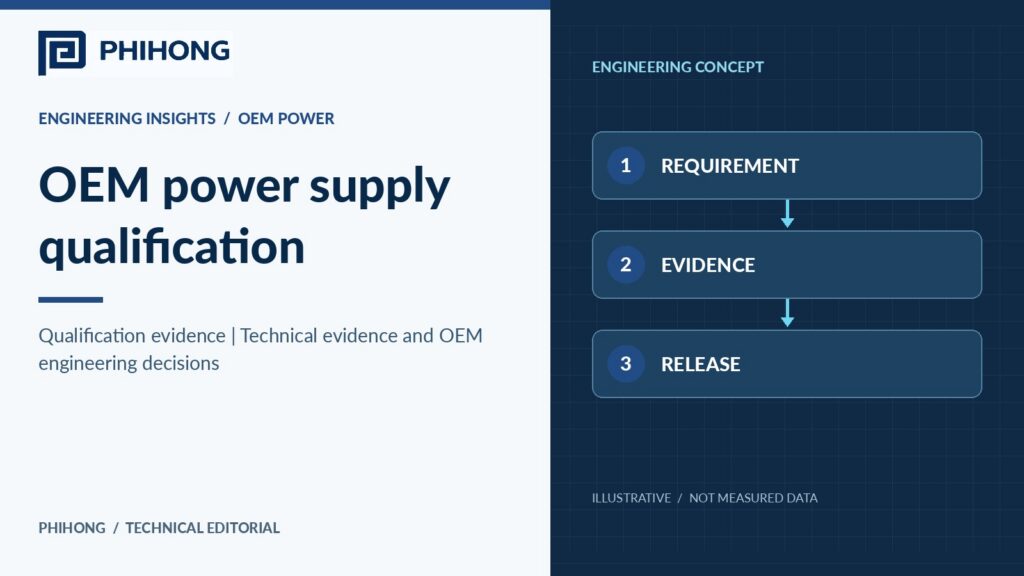
Engineering workflow: Qualification evidence
- 01
Requirement - 02
Applicable revision - 03
Evaluated configuration - 04
Evidence and condition - 05
Release decision
Why Does Document Revision Matter?
The November 2026 USB-IF source-power test specification revision 1.2 references PD 3.2 version 1.2 and updates several tests. A revision to a test document is not itself proof that an individual adapter complies with a newer base specification. The 2026 PMBus secure profile is another example: an existing PMBus interface does not establish secure-profile support. Record the document title and revision separately from the product's declared implementation. When a newer version becomes available, compare relevant changes and applicability before reopening or accepting an existing qualification decision. Avoid equating publication date with mandatory adoption date.
How Should Reviewers Connect a Result to the Exact Model?
A product family may contain different suffixes, output ratings, regional configurations, controller options or mechanical arrangements. Identify the evaluated item and distinguish common family evidence from variant-specific evidence. A report may refer to a development sample whose firmware or components differ from the released configuration. Ask the responsible engineer to establish whether the sample represents the intended production unit. A document with the correct wattage but the wrong model or configuration is not automatically suitable. Maintain a model and revision reference beside the result rather than storing a detached PDF without context.
How Can Test Conditions Change the Meaning of a Pass?
A result may depend on input voltage, ambient temperature, cooling, load pattern, measurement location and initial operating state. A pass at one defined condition does not automatically establish the whole operating envelope. Identify whether a test uses a specified nominal condition or a worst-case condition selected for the relevant requirement. For transient results, preserve the applied stimulus and its measured characteristics. For a security or protocol test, preserve the implementation state and the relevant interface outcome. A useful comparison identifies which variables are equivalent and which are not, before comparing performance values.
What Evidence Belongs to Supplier Qualification Versus Equipment Qualification?
A power supply supplier can provide model-specific capability and product-level evidence within its scope. The OEM remains responsible for the requirements and qualification of its final equipment. An installation may change the source environment, expose a different duty cycle or involve a particular receiver and cable. Those boundaries can affect whether the product documentation answers the application question. A certified component should not be advertised as making the entire finished assembly certified. The applicable regulatory, standards and engineering reviewers must determine what evidence is required for the completed equipment.
How Should Procurement Handle Missing or Conflicting Evidence?
Do not silently resolve a discrepancy by choosing the most favorable result. Record the requirement, the relevant documents, the inconsistency and the owner of the decision. If a reported result uses an unfamiliar test method, ask for the conditions and acceptance definition before treating it as equivalent. If a capability is not declared for the chosen model, request clarification rather than extrapolating from another product. A useful purchasing handoff differentiates a confirmed capability, a conditional capability, a pending engineering decision and a requirement the model does not meet. That distinction can prevent an unresolved issue from being hidden in a commercial approval.
What Does a Release Evidence Index Look Like?
Maintain a versioned index of the requirements, source documents, exact models and supporting results. For each entry identify the acceptance owner, status and any restrictions. The index can point to the approved test file rather than copying large reports into the purchasing record. Keep a separate record of changes affecting the qualification basis. Review the impact of a substitution or firmware change against the index. The final release decision should refer to the approved configuration, with open questions explicitly resolved by the appropriate owners. Existing Phihong documentation, product pages and OEM resources are useful starting points for gathering model evidence; they do not replace application-specific review.
Start With a Requirement, Not a Folder of Test Reports
A qualification file should answer a defined engineering question. A folder containing product literature, a test report and a certification document is a useful collection, but it is not an acceptance decision. The reviewer must establish the relationship between the requirement, the evaluated configuration and the evidence. Begin with a versioned requirement identifier and identify the relevant equipment boundary. The requirement may apply to the standalone source, its interface, an assembled power path or the finished equipment. A report addressing a different boundary may still be useful, but its applicability has to be evaluated.
For an OEM project, distinguish a supplier's declared product requirement from an independently specified equipment requirement. A datasheet may establish a nominal output capability and operating conditions, while the equipment specification may define additional behavior during a particular event. The first document does not automatically address the second. A buyer should provide the actual application question rather than expecting the supplier to infer it from a power rating or broad reference to a standard.
Consider an application that needs a source to support a defined workload and remain suitable in a particular enclosure. The electrical load requirement, installation condition and applicable safety or EMC requirement are distinct. A report addressing one of these is not automatically sufficient for the others. The release index can maintain separate entries and reference the accepted evidence for each. This is a more useful approach than assigning a single overall qualification status to a collection of documents without identifying the requirements covered.
Review the relevant documentation
Compare the exact model, operating conditions and revision before drawing conclusions for an OEM application.
Establish the Difference Between a Requirement and a Test Method
A specification and a test procedure do not necessarily have the same revision numbering or publication schedule. A procedure may define the stimulus, observation boundary and acceptance criteria for particular assertions in the applicable specification. The reviewer should identify the actual document set used to evaluate a result. Do not assume that the most recently released document automatically governs a product that was qualified under a previous program or requirement. The applicable certification or regulatory organization may define transition rules that need to be confirmed separately.
The November 2026 USB-IF source-power test revision illustrates this distinction: the test document's revision and the base specification revision it references are separate pieces of information. A purchasing requirement stating only a broad USB PD version may leave the applicable test evidence unclear. Similarly, the secure PMBus application profile identifies specific security properties that are not established simply by a conventional PMBus command interface. These examples are useful for explaining evidence scope, not for assigning compliance to a Phihong model without model-specific support.
When a new revision is released, compare its changes with the actual requirements and product scope. Some changes may affect the evaluation method or evidence format; others may concern an implemented feature or a new qualification question. A responsible engineering or certification owner can determine whether earlier results remain applicable and what additional evidence is needed. Preserve that decision in the release index. This prevents a later reviewer from interpreting the absence of a new report as an unexplained gap when the original evidence was deliberately retained under an accepted decision.
Interpret Each Type of Supplier Document Within Its Scope
A datasheet is a model-specific reference for declared capabilities and conditions. It can provide the basis for a selection discussion, but its information should be read with the accompanying definitions, footnotes and conditions. A typical measurement is not automatically a guaranteed limit. A published maximum does not establish that every other operating condition is simultaneously permitted. The reviewer should identify the applicable combination of conditions rather than extracting isolated values into a purchasing table.
A certification document or listing can establish a defined scope for an evaluated product. Confirm the identity of the listed model, the relevant program and the conditions or limitations that apply. Where the equipment uses a certified component, establish what remains necessary for the completed assembly. A certificate should not be presented as proof of unrelated application performance. Likewise, a reference-design report can be valuable evidence about the architecture and conditions it describes, without establishing that a commercial source has passed the same evaluation.
An application note can explain a mechanism, demonstrate a representative circuit or discuss a qualification consideration. Its findings are useful when the engineer preserves their actual context. For example, a current-sensing reference for a server architecture can illustrate the importance of response and measurement boundaries without defining the protection threshold of a different industrial supply. The article's technical value is in the distinction, not in claiming identical performance across products. Link readers to the original document when a detailed implementation question requires it.
Review Configuration Identity as a Technical Variable
Two devices with the same nominal output rating need not have the same control implementation, firmware or mechanical configuration. Establish which model and revision the evidence actually represents. A family-level test may be applicable to several variants when that relationship is documented, but it should not be inferred merely from similarity in a part number. Identify any relevant difference in connector, output setting, cooling condition or management interface. The engineering owner can determine whether the difference affects the requirement under review.
For digitally managed power systems, retain firmware and configuration identity when they are relevant to the result. An active operating value may differ from a persistent default. A controlled initialization process may establish the accepted state after startup. A review of the approved configuration therefore needs to identify the state that actually existed during the evaluation, not only the model on the equipment label. The appropriate record may be a supplier declaration, manufacturing release or approved system configuration reference, depending on the implementation.
A change-impact assessment becomes easier when the evidence index contains this information. If a later revision changes a management function or electrical behavior, the reviewer can identify the affected requirement and the earlier evidence. If the change is unrelated to the requirement, document why the evidence remains applicable. Do not assume that every modification demands the same test scope, and do not assume that an unchanged commercial model name establishes equivalence. The applicable obligations and engineering impact determine the disposition.
Worked Example: Two Reports With Different Electrical Boundaries
Suppose a hypothetical source report shows acceptable voltage behavior at the source terminals during a defined load step. A second report describes the voltage at a downstream device after a connecting path. A buyer might be tempted to compare the reported minimum values and prefer the smaller deviation. The measurements do not necessarily address the same condition. The connection path, load stimulus and measurement convention can affect the observed value. The engineering question is which boundary the actual equipment requires and whether each report supports it.
The comparison record can identify the nominal operating point, actual applied current, timing, measurement location and relevant acceptance definition. If one report omits the transition rate, mark the resulting limitation and request clarification if that information is material. Do not fill the gap with an assumed value based on the other report. If the two results address different requirements, they may both remain useful as separate evidence rather than being ranked against each other. A common controlled evaluation can be considered if the project actually needs comparable results.
This example also illustrates why the largest or most recent report is not necessarily the best evidence. A shorter model-specific report with a clearly documented condition may answer a particular requirement more directly than a detailed study of another architecture. Keep the source and conclusion together. Procurement can record whether evidence is comparable, conditionally applicable or unresolved, rather than reducing incomplete information to an artificial supplier score.
Make the Evidence Index Usable During Supplier Selection
A practical index can contain the requirement identifier, its source and revision, evaluated model and configuration, supporting evidence reference, relevant conditions and disposition. Include an accountable decision owner where an issue requires interpretation. For a document stored in a controlled repository, preserve the versioned reference rather than relying on an unversioned attachment. The index should enable another qualified reviewer to understand what was accepted and why without depending on a conversation with the original purchaser.
For preliminary supplier selection, classify evidence according to its actual status. A published capability can be documented as a declared capability, while a planned application test remains pending. A supplier's clarification can resolve a particular applicability question without turning every statement into a verified result. Distinguish a missing document from a confirmed nonconformity. These distinctions support a defensible commercial decision while keeping unresolved engineering issues visible.
The index is also useful when asking suppliers questions. Rather than requesting every possible test report, identify the requirement that is not yet supported and ask for evidence appropriate to it. The supplier can then identify the relevant model documentation, test condition or clarification. If the capability is not established for the exact model, preserve that fact and determine the next engineering action. The existing RFQ and Golden Sample guides provide complementary procedures for maintaining the commercial and unit-level baseline.
Connect the Qualification Evidence to the Finished Equipment
A source may be selected using documented model capabilities, yet the completed equipment can introduce different integration conditions. Mounting, airflow, wiring, downstream conversion and operating sequence all have the potential to affect the relevant requirement. Identify which product-level evidence can be retained and which application-level questions remain. Do not imply that an OEM's completed equipment is automatically certified because it contains a component with documented certification. The responsible compliance reviewer should determine the actual obligations and accepted evidence for the assembly.
A system qualification file can reference the supplier's accepted evidence instead of duplicating every measurement. The project should nevertheless identify its own acceptance boundary. For example, a source-terminal transient result may support a component-level requirement, while an equipment-level observation addresses the downstream load. A repeated load profile may be a different question from a single documented excursion. The important point is to preserve the distinction and evaluate the actual application rather than demand or waive tests indiscriminately.
Where an equipment requirement is not covered by the available source documentation, record the gap and agree on an appropriate review. The solution may involve supplier clarification, a representative system test, an alternative configuration or a design change. The record should state the approved disposition rather than leave a gap hidden behind a purchasing approval. This makes the qualification process useful to engineering, procurement, manufacturing and service teams throughout the equipment lifecycle.
Use a Release Gate That Keeps Exceptions Visible
Before release, verify that the applicable requirements have an accepted disposition and that the model and configuration match the approved basis. An unresolved issue should remain visible to the responsible owner. A documented deviation is different from a missing fact: it identifies a specific departure and the authorized decision that addresses it. A missing fact has not yet been resolved. Procurement should not turn an unknown into an accepted deviation merely because a project schedule is under pressure.
The release gate should also identify changes that would reopen the evidence assessment. A revised firmware version, different component, changed operating sequence or revised installation condition may affect an earlier requirement. A new specification release can prompt an applicability review without automatically invalidating the existing evidence. Preserve the original basis so the engineering team can evaluate the actual impact rather than restart qualification without a reason.
For a Phihong product discussion, start with the exact model and its documented operating conditions. The company's product pages and technical documentation provide useful references, but application suitability depends on the equipment requirements and relevant evidence. A project-specific question can be directed to the appropriate product or engineering contact. This approach avoids unsupported claims while giving the OEM a practical method for reaching a transparent purchasing and release decision.
What Evidence Belongs in the OEM Release Record?
A useful procurement handoff identifies open items rather than compressing all evidence into a yes/no compliance field. For example, a supplier may provide an applicable product-level report while the OEM still needs to verify an equipment-specific operating condition. The two records can coexist without contradiction. Identify the approval owner for each outstanding item and preserve the reason why existing evidence is accepted or considered insufficient. The qualification record should remain usable when a new product revision, supplier substitution or application change appears. An approved sample, an advertised specification and a regulatory certificate have different scopes; none is automatically a complete answer to every finished-equipment question. Keep the requirements linked to the evidence used to release the actual configuration.
| Review item | Evidence to retain | Decision criterion |
|---|---|---|
| Requirement | Exact operating condition and acceptance boundary | Separate product specification, system requirement and regulatory obligation |
| Applicable document | Revision, scope and relevant test method | Record whether the evidence addresses the same requirement |
| Configuration | Model, revision, firmware and representative setup | Do not transfer a result to a changed configuration without review |
| Result | Recorded condition, measured result and limitations | Identify missing or incomparable evidence |
| Decision | Owner, unresolved items and release disposition | Preserve the reason for acceptance or rejection |
Key Takeaways
- Requirement: Separate product specification, system requirement and regulatory obligation
- Applicable document: Record whether the evidence addresses the same requirement
- Configuration: Do not transfer a result to a changed configuration without review
- Result: Identify missing or incomparable evidence
- Decision: Preserve the reason for acceptance or rejection
Frequently Asked Questions
Does a certificate establish every application requirement?
No. Its scope and applicability must be reviewed.
Does a newer standard invalidate all older evidence?
Not automatically. Assess changes and applicable obligations.
Can a test report from a related model be accepted?
Only when its applicability to the actual configuration is established.
Is a reference design the same as a certified product?
No. Its documented results belong to the reference implementation.
Related Articles and OEM Resources
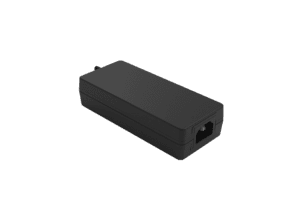
- Phihong PA350R-212A-R datasheet
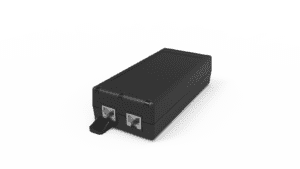
- Phihong BI240-240ASPR-R datasheet
- Phihong AA240U-59FKEA-R datasheet
- Power supply manufacturer RFQ evidence guide
- Power adapter golden sample approval checklist
- Phihong technical documentation
- Contact Phihong
Technical References
- USB-IF Power Delivery specification and compliance updates
- USB-IF Source Power Requirements Compliance Test Specification, v1.2
- PMBus Secure Device Application Profile, rev. 1.2 (July 2026)
- Texas Instruments UCD91xxx controller reference
- Advanced Energy Open Rack V3 power system reference note
Discuss your OEM power supply requirements
Share the intended workload, application conditions, relevant revision and unresolved technical evidence with Phihong. Confirm exact product capabilities against current model documentation.