












BLOG
Best Guide to Intelligent Rack Power Supplies: PMBus, Redundancy, and Digital Front-End Power
QUICK LINKS
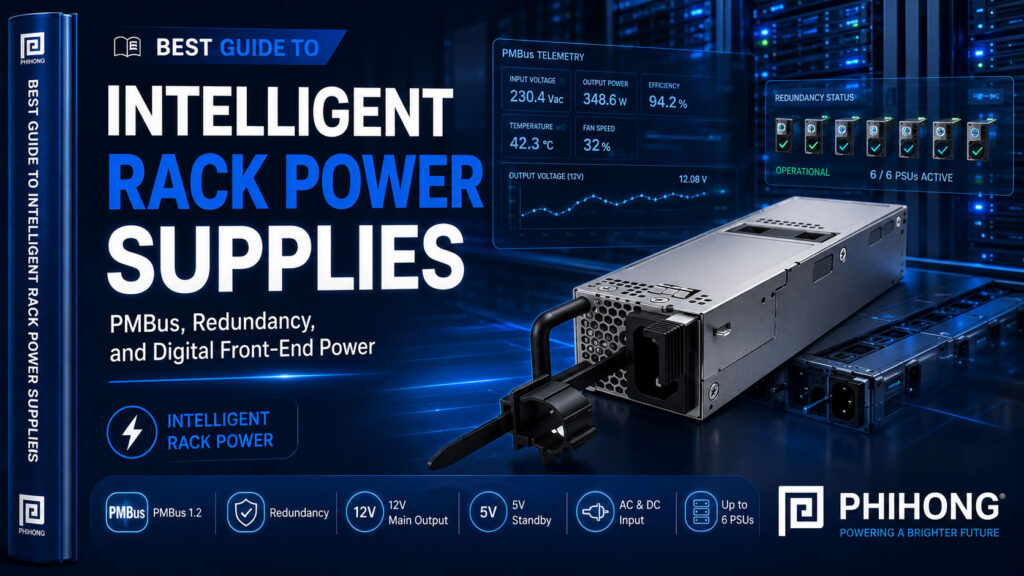
What is an intelligent rack power supply and why does PMBus matter?
An intelligent rack power supply is designed to do more than convert input power into regulated DC output. In rack-based systems, front-end power supplies often need to support monitoring, control signals, current sharing, redundancy, status reporting, timing behavior and serviceability. This is why PMBus becomes important. Instead of treating the power supply as a silent hardware block, PMBus allows system controllers to read operating data, monitor faults and manage power behavior more intelligently.
Phihong’s PA350R-212A-R is a useful example of this category. The datasheet identifies it as a 350-watt front-end power supply with a 12Vdc main output, 5Vdc standby power, PMBus Version 1.2 support, AC and DC input capability and fully digital design. For OEMs, rack system builders, telecom equipment teams, datacom designers and industrial electronics manufacturers, these details matter because power architecture increasingly needs visibility. A rack system may need to know whether input power is valid, output power is stable, a warning condition has occurred, or a redundant unit is present and sharing current correctly.
| Intelligent Power Feature | Why It Matters in Rack Systems | What OEM Teams Should Review |
|---|---|---|
| PMBus communication | Enables digital monitoring and command access for system-level power management. | Supported PMBus revision, command set, accuracy, address configuration and firmware behavior. |
| Status signals | Helps the system detect input, output, standby and fault conditions. | AC_OK, PW_OK, SMB_ALERT, PRESENT, PS_ON and PS_KILL behavior. |
| Digital design | Supports more advanced monitoring, control and reporting than basic analog-only supplies. | Firmware, fault handling, update method and monitoring architecture. |
| Rack integration | Lets the PSU communicate with system controllers instead of operating as an isolated component. | Backplane interface, card edge connector, system controller and service workflow. |
Why This Matters
• PMBus can help OEM teams monitor voltage, current, power, temperature, fan status and fault information in intelligent rack systems.
• Digital front-end power supplies are useful when the rack system needs status visibility, serviceability and system-level control.
What OEMs Should Do Now
• Define which power telemetry and control signals the rack system actually needs before choosing the front-end PSU.
• Review the PSU’s PMBus revision, supported commands, address pins, status signals and firmware behavior early in system design.
Useful Links
PA350R-212A-R Product Page: www.phihong.com/products/adapters/pa350r-212a-r/
PA350R-212A-R 350W Front-End Power Supply Datasheet: www.phihong.com/wp-content/uploads/New-datasheet-PA350R-212A-R-09082025.pdf
Open-Frame / Internal PSU Product Line: www.phihong.com/products/open-frame-internal-psu/
FEATURED PRODUCTS
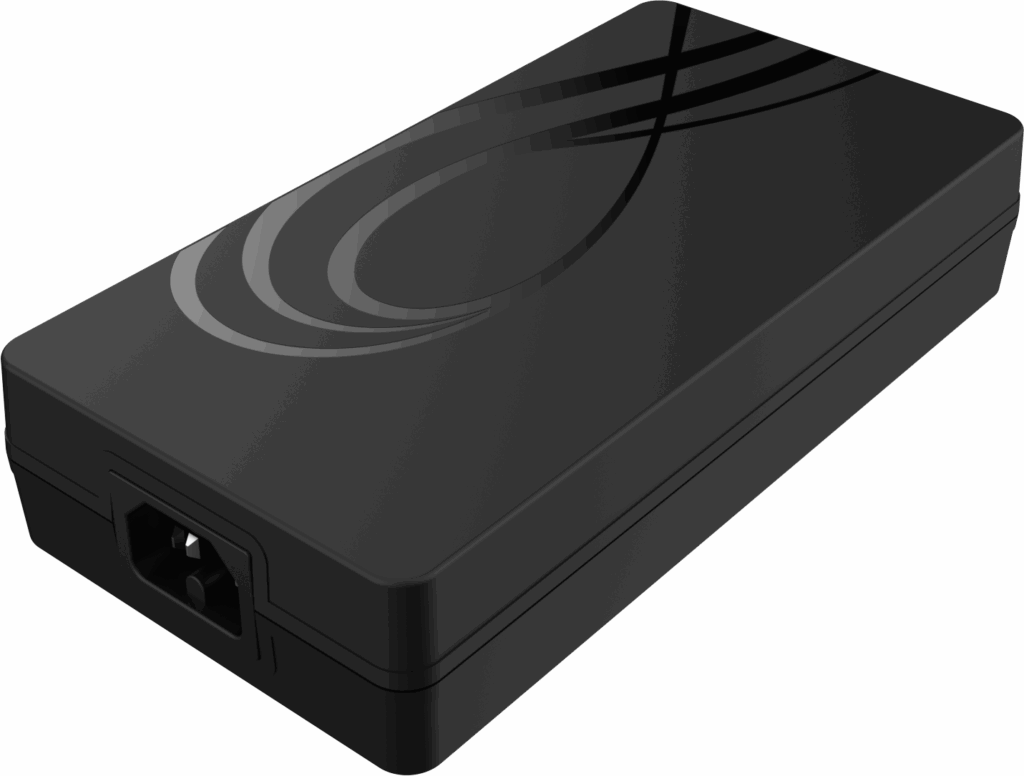
AM250U-540AP-R
- Output Power - 250W
- Output Volt - 54V
- Output Current - 4.63A
- Features - Class B EMI , US DoE Level VI Efficiency compliance, EU CoC Ver 5 Tier 2 Compliance, Over-Voltage, Over-Current, Short Circuit, & Over-Temperature Protection, 5,000 Meters Operating Altitude
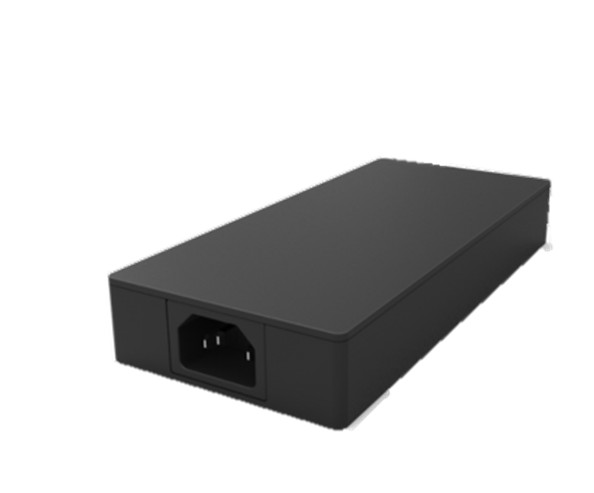
AA240U-200A-R
- Output Power - 240W
- Output Volt - 20V
- Output Current - 12A
- Features - high-efficiency desktop power supply designed for multiple applications, delivering a reliable 240W single output with advanced GaN technology for compact performance. Ideal for powering high-demand gaming systems etc with reduced heat and improved energy conversion.
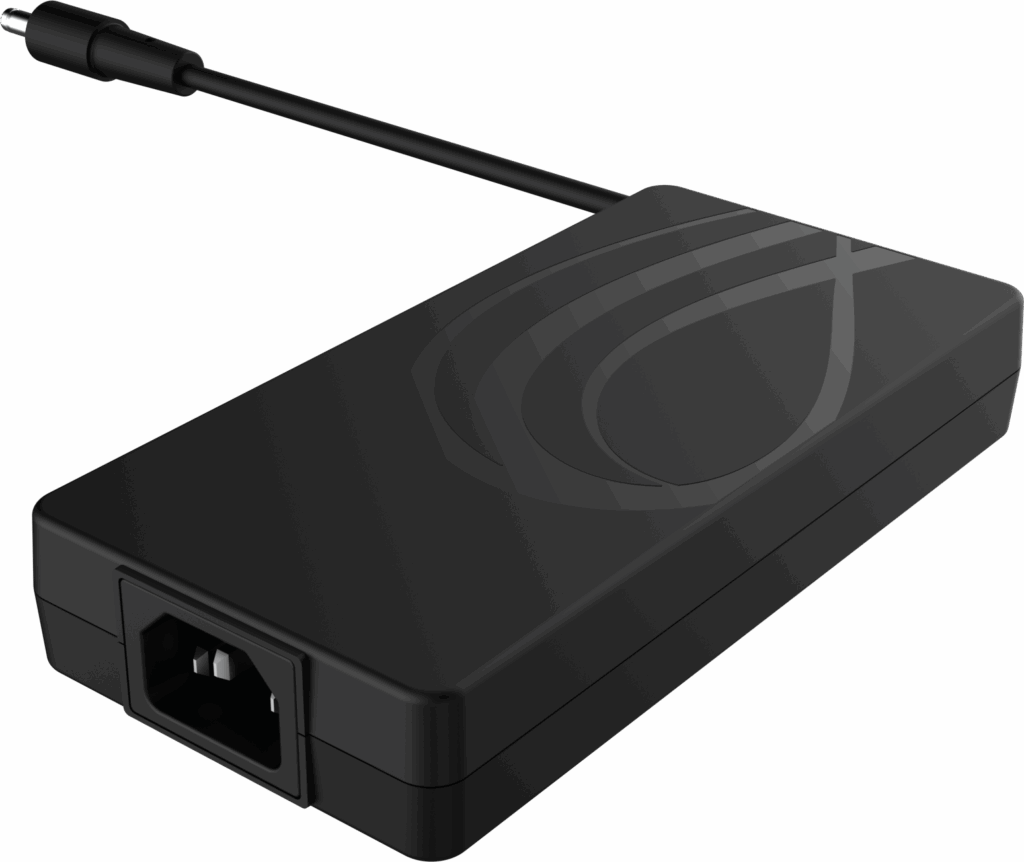
AA240U-200B-R
- Output Power - 240W
- Output Volt - 20V
- Output Current - 12A
- Features - This 240-watt GaN Series Desktop C14 Adapter delivers high power in a compact, efficient design, ideal for demanding professional and industrial applications. Its GaN technology ensures cooler operation, reliability, and space-saving performance.
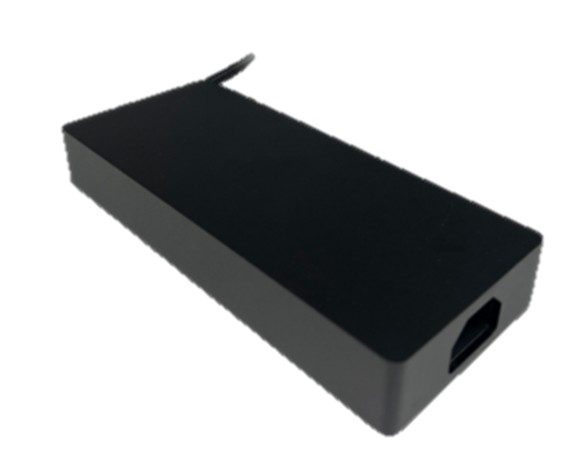
AA280U-200B-R
- Output Power - 280W
- Output Volt - 20V
- Output Current - 14A
- Features - high-efficiency desktop power supply designed for multiple applications, delivering a reliable 240W single output with advanced GaN technology for compact performance. Ideal for powering high-demand gaming systems etc with reduced heat and improved energy conversion.
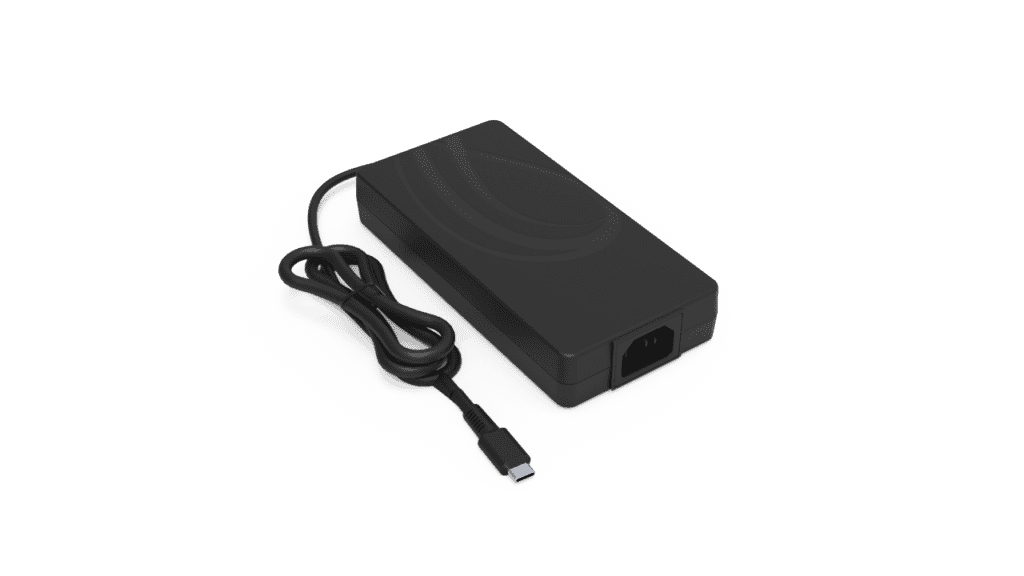
AA240U-59FKEA-R
- Output Power - 240 Watt
- Output Volt - 5Vdc/ 9Vdc/ 15Vdc/ 20Vdc/ 28V/ 36V/ 48V
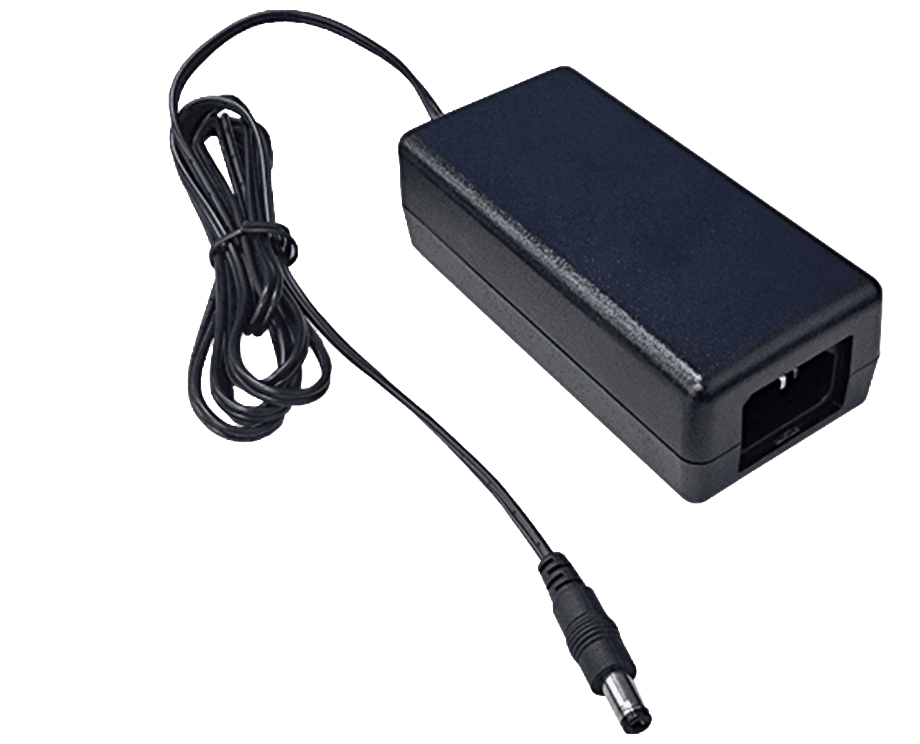
AA36U-240B-R
- Output Power - 36W
- Output Volt - 24V
- Output Current - 1.5A
- Features - C14 Inlet Receptacle, US DoE Level VI & NRCan Compliance, EU Ecodesign 2019/1782 Compliance, CoC V5 Tier 2 Compliance, Operating Altitude to 5,000 Meters, and Protections from Short Circuit, Over-Current and Over-Voltage

When do rack systems need front-end power supplies instead of standard internal PSUs?
Rack systems often need front-end power supplies when the product architecture requires modularity, higher serviceability, current sharing, digital monitoring or redundant operation. A standard internal PSU may be enough for simpler equipment, but rack-mounted platforms often need a more system-oriented power design. In these environments, the PSU may connect through a card edge interface, communicate with a controller and support status signals that help the larger system manage uptime and service events.
The PA350R-212A-R is positioned as a 350W front-end power supply with 12V main output and 5V standby output. It accepts 100Vac to 240Vac input or 180Vdc to 300Vdc input, which can support equipment that may be deployed in different power infrastructure environments. For OEM teams designing rack systems, the front-end PSU decision should be made alongside backplane design, thermal planning, input power strategy, redundancy planning and system firmware. The PSU is not only a conversion component. It is part of the rack’s operational architecture.
| Rack Power Requirement | Why a Front-End PSU Can Help | What OEM Teams Should Review |
| Modular service | Front-end supplies can support rack designs where the PSU is installed as a replaceable module. | Mechanical access, card edge connector, service process and replacement strategy. |
| AC/DC input flexibility | Some rack systems may need support for both AC and DC input infrastructure. | Input voltage range, input current, inrush, leakage and deployment environment. |
| Standby power | A 5V standby rail can support management or control functions before the main 12V output is active. | Standby load, sequencing, PS_ON behavior and controller requirements. |
| Digital rack control | Rack systems may need power status, warnings and telemetry. | PMBus commands, status pins, SMB_ALERT and monitoring accuracy. |
Why This Matters
• Front-end power supplies can support rack systems that need modularity, monitoring and service-oriented power architecture.
• AC/DC input flexibility, standby output and digital status signals can make the PSU more useful in telecom, datacom, enterprise and industrial rack systems.
What OEMs Should Do Now
• Compare a front-end PSU approach against a conventional internal PSU before finalizing the rack power architecture.
• Review input infrastructure, backplane interface, standby power, control signals and service model as part of one design decision.
Useful Links
PA350R-212A-R Product Page: www.phihong.com/products/adapters/pa350r-212a-r/
PA350R-212A-R 350W Front-End Power Supply Datasheet: www.phihong.com/wp-content/uploads/New-datasheet-PA350R-212A-R-09082025.pdf
Product Finder: www.phihong.com/product-finder/
How does redundancy change front-end power supply selection?
Redundancy changes front-end power supply selection because the system is no longer choosing one power supply for one load. Instead, the rack architecture may need multiple supplies that can operate together, share current and support continued operation if one unit is removed or fails. The PA350R-212A-R datasheet lists redundant support for a maximum of 6 PSUs and current share accuracy of 4% on the +12V full-load current. Those details are important for teams designing rack systems where uptime, maintainability and modular replacement matter.
For OEMs, redundancy is not just adding more PSUs. The system must support proper current sharing, address configuration, fault reporting, presence detection, airflow, mechanical access and service instructions. A redundant rack power design also needs to define what happens when one unit enters fault mode, is removed, or is added back into the system. If these behaviors are not designed and validated, a redundancy plan can create complexity without delivering the reliability benefit the product team expects.
| Redundancy Design Area | Why It Matters | What OEM Teams Should Review |
| Maximum PSU count | Defines how many units the system can support in a redundant architecture. | Maximum 6 PSU support, backplane design, power budget and redundancy target. |
| Current sharing | Helps multiple supplies contribute to the load instead of one unit carrying too much. | I_Share behavior, current share accuracy, load balance and full-load validation. |
| Addressing | Allows multiple PSUs to be identified and monitored individually. | A0, A1, A2 address pins, PMBus addresses and system controller mapping. |
| Service behavior | Redundant systems must behave predictably during removal, replacement and faults. | PRESENT signal, LED states, fault latching, recovery behavior and service procedure. |
Why This Matters
• Redundancy requires current sharing, monitoring, fault behavior and mechanical service planning, not only extra PSU slots.
• PMBus and status signals can help rack controllers identify and manage multiple front-end power supplies in the same system.
What OEMs Should Do Now
• Define the redundancy model before finalizing the number of PSU slots, backplane interface and service procedure.
• Validate current sharing, PMBus addressing, fault behavior and hot-service assumptions under realistic rack load conditions.
Useful Links
PA350R-212A-R Product Page: www.phihong.com/products/adapters/pa350r-212a-r/
PA350R-212A-R 350W Front-End Power Supply Datasheet: www.phihong.com/wp-content/uploads/New-datasheet-PA350R-212A-R-09082025.pdf
Open-Frame / Internal PSU Product Line: www.phihong.com/products/open-frame-internal-psu/
CLIENT'S QUOTE
Phihong’s custom OEM power solutions have transformed our product development, boosting performance and reducing overhead. Their expert engineering support has simplified both the design and manufacturing phases.
What PMBus signals and telemetry should OEMs review in a digital front-end PSU?
PMBus support matters because it gives the rack system a way to communicate with the power supply instead of relying only on simple on/off behavior. In intelligent rack designs, engineers may need to monitor voltage, current, temperature, fan status, power warnings, fault conditions and PSU presence. The PA350R-212A-R datasheet identifies PMBus Version 1.2 support at 100kHz, which makes PMBus review an important part of system integration rather than an optional feature.
OEM teams should look beyond the phrase “PMBus supported.” The practical question is which signals, commands and status conditions the rack controller needs to read, log, alert or act on. The datasheet references control and signal functions such as AC_OK, PW_OK, PS_ON, PS_KILL, SMB_ALERT, PRESENT, address pins and current sharing. These functions help a rack system understand whether the PSU is present, powered, healthy, faulted, enabled or sharing load correctly.
| PMBus / Signal Area | Why It Matters in Intelligent Rack Power | What OEM Teams Should Review |
|---|---|---|
| PMBus version | Confirms the communication foundation between PSU and system controller. | PMBus Version 1.2, 100kHz operation, supported commands and controller compatibility. |
| Alert behavior | Helps the system respond to warning or fault events. | SMB_ALERT behavior, warning thresholds, fault reporting and recovery handling. |
| Power-good signaling | Indicates whether output power is within expected operating conditions. | PW_OK timing, output status, startup sequence and shutdown behavior. |
| PSU presence and addressing | Allows the system to identify which PSU is installed or removed. | PRESENT signal, A0/A1/A2 address pins and PMBus address mapping. |
Why This Matters
• PMBus can help rack systems monitor power behavior, detect faults and support service workflows.
• Signal behavior should be mapped into the system controller early so power events are handled predictably.
What OEMs Should Do Now
• Define which PMBus readings, alerts and status signals the rack controller must use before finalizing firmware.
• Validate signal timing, fault reporting, address mapping and system response under startup, shutdown, removal and fault conditions.
Useful Links
PA350R-212A-R Product Page: www.phihong.com/products/adapters/pa350r-212a-r/
PA350R-212A-R 350W Front-End Power Supply Datasheet: www.phihong.com/wp-content/uploads/New-datasheet-PA350R-212A-R-09082025.pdf
Open-Frame / Internal PSU Product Line: www.phihong.com/products/open-frame-internal-psu/
Why do AC/DC input flexibility and 5V standby power matter in rack systems?
Rack systems may be deployed into different infrastructure environments, which is why input flexibility can be valuable. The PA350R-212A-R datasheet lists 100Vac to 240Vac input and 180Vdc to 300Vdc input, giving OEM teams a power supply reference that can support both AC and DC input planning. This can matter for telecom, datacom, industrial, enterprise and infrastructure equipment where deployment conditions may vary across regions, facilities or customer sites.
What EMI, safety, and environmental specs should OEMs verify in rack front-end power supplies?
EMI, safety, and environmental specifications are especially important in rack systems because power supplies operate near high-speed electronics, communication modules, storage systems, processors, fans, backplanes and control boards. A front-end PSU that provides the right voltage and wattage still needs to fit the complete system’s compliance strategy. The PA350R-212A-R datasheet lists Class A conducted and radiated emissions references, along with UL/IEC 62368-1-related safety listings and operation up to 5,000 meters.
For OEMs, these details should be reviewed early because rack systems are often sold into enterprise, telecom, datacom, industrial or infrastructure environments. EMI behavior can affect neighboring electronics. Safety requirements can shape connectors, spacing, labeling, installation guidance and user access. Environmental limits can affect deployment into higher-elevation locations or equipment rooms with variable temperature and airflow. The PSU should be reviewed as part of the final rack system, not only as a standalone component.
| Compliance Area | Why It Matters in Rack Systems | What OEM Teams Should Review |
|---|---|---|
| EMI performance | Rack systems contain dense electronics that can be sensitive to emissions. | Class A conducted/radiated emissions, system layout, cabling and final test setup. |
| Safety standards | Front-end PSUs interact with user access, service procedures and rack infrastructure. | UL/IEC 62368-1 references, labels, connector safety and installation instructions. |
| Operating altitude | Some rack systems may deploy into high-elevation markets or infrastructure sites. | 5,000-meter operating altitude, target regions and environmental validation. |
| Temperature and humidity | Real equipment rooms may not match ideal lab conditions. | Operating temperature, humidity, airflow and full-load behavior. |
Why This Matters
• Rack front-end power supplies should be reviewed for EMI, safety and environmental fit before system certification planning.
• A PSU’s compliance details need to be validated in the final rack configuration, not only in isolation.
What OEMs Should Do Now
• Build an EMI, safety and environmental checklist before finalizing the PSU and backplane design.
• Validate the front-end PSU inside the actual rack system under full-load, redundant and fault conditions.
Useful Links
PA350R-212A-R Product Page: www.phihong.com/products/adapters/pa350r-212a-r/
PA350R-212A-R 350W Front-End Power Supply Datasheet: www.phihong.com/wp-content/uploads/New-datasheet-PA350R-212A-R-09082025.pdf
Open-Frame / Internal PSU Product Line: www.phihong.com/products/open-frame-internal-psu/
How Phihong supports intelligent rack power supply design with PA350R-212A-R
For OEM teams developing intelligent rack power systems, Phihong’s PA350R-212A-R provides a product-specific reference for digital front-end power. It is a 350W front-end power supply with 12V main output, 5V standby output, PMBus Version 1.2 support, AC/DC input capability, active current sharing, redundancy support and built-in protection functions. This makes it relevant for rack systems where monitoring, serviceability, redundancy and digital control are part of the product architecture.
The strongest fit is not any product that needs 350W. The better fit is a rack or modular system that needs a managed front-end PSU with telemetry, status signals, standby power and support for redundant operation. OEM teams should compare the datasheet against the actual rack design, including power budget, PMBus requirements, backplane interface, airflow path, service model, compliance targets and environmental conditions. Intelligent rack power depends on the PSU, controller, mechanical design and firmware working together.
| Phihong Product Area | Why It Helps OEM Teams | What Teams Should Review |
| PA350R-212A-R | Provides a specific 350W front-end PSU reference. | 12V output, 5V standby, PMBus, current sharing and protection features. |
| PMBus support | Helps the rack system monitor and manage PSU behavior digitally. | PMBus commands, address mapping, alert behavior and firmware response. |
| Redundancy support | Supports multi-PSU architectures for higher serviceability and uptime planning. | Maximum PSU count, current share behavior, fault handling and service process. |
| Rack integration | Helps teams evaluate power, control, cooling and documentation together. | Backplane design, connector mapping, airflow, system controller and validation checklist. |
Why This Matters
• Product-specific PSU evaluation helps OEMs connect PMBus, redundancy and front-end power features to real rack design requirements.
• Intelligent rack power only works when electrical, digital, thermal, mechanical and compliance decisions are planned together.
What OEMs Should Do Now
• Start with the PA350R-212A-R datasheet and map its power, PMBus, signal, thermal and redundancy features to the rack architecture.
• Validate the PSU inside the final system with the intended controller, backplane, airflow path, load profile and service workflow.
Useful Links
PA350R-212A-R Product Page: www.phihong.com/products/adapters/pa350r-212a-r/
PA350R-212A-R 350W Front-End Power Supply Datasheet: www.phihong.com/wp-content/uploads/New-datasheet-PA350R-212A-R-09082025.pdf
Open-Frame / Internal PSU Product Line: www.phihong.com/products/open-frame-internal-psu/
Intelligent rack power is about more than converting input power into 12V output. In modern rack systems, OEM teams need visibility, redundancy, telemetry, control signals, thermal awareness and serviceable architecture. PMBus, current sharing, standby output and front-end PSU design can help make power more manageable when the rack system is built around those capabilities from the beginning.
For telecom, datacom, enterprise, industrial and infrastructure equipment, the strongest power supply decisions happen early. OEM teams should evaluate front-end PSUs by output power, standby power, PMBus behavior, redundancy strategy, current sharing, airflow, safety, EMI, environmental limits and service workflow before the rack architecture is finalized.
Standby power is another important part of intelligent rack design. The PA350R-212A-R provides a 5V standby output rated from 0A to 3A. A standby rail may support control logic, management circuits, status monitoring, or system controller functions before the main 12V rail is fully enabled. For OEMs, this affects sequencing, firmware behavior, service states and power management strategy. The PSU is not only providing 12V output. It may also help keep the system management layer alive.
| Power Architecture Area | Why It Matters | What OEM Teams Should Review |
|---|---|---|
| AC input support | Allows the PSU to operate from common facility AC power. | Input voltage range, input current, inrush, leakage and regional deployment. |
| DC input support | Can be important for telecom, infrastructure or specialized rack environments. | DC source range, polarity, protection, cabling and installation requirements. |
| 5V standby output | Supports management circuits before the main output is enabled. | Standby load, sequencing, PS_ON behavior and controller power budget. |
| Startup timing | Rack systems need predictable transitions between standby and full operation. | Turn-on timing, PW_OK timing, fault response and system firmware logic. |
Why This Matters
• AC/DC input support can help rack systems fit varied infrastructure environments.
• A 5V standby rail can support management, monitoring and control functions before the main 12V output is active.
What OEMs Should Do Now
• Confirm whether the rack system needs AC input only, DC input support, or both before selecting the front-end PSU.
• Validate standby load, sequencing, PS_ON behavior and power-good timing with the system controller.
Useful Links
PA350R-212A-R Product Page: www.phihong.com/products/adapters/pa350r-212a-r/
PA350R-212A-R 350W Front-End Power Supply Datasheet: www.phihong.com/wp-content/uploads/New-datasheet-PA350R-212A-R-09082025.pdf
Product Finder: www.phihong.com/product-finder/
How do thermal design, fan control, and rack airflow affect front-end PSU selection?
Thermal design is central to front-end PSU selection because rack systems often place multiple heat-producing modules in a compact space. A 350W front-end power supply must operate inside a system where airflow, fan behavior, surrounding modules, inlet temperature and service conditions all affect real performance. The PA350R-212A-R datasheet lists a built-in fan and PMBus-related monitoring capability, which makes thermal behavior part of both mechanical design and digital power management.
OEM teams should evaluate the PSU as part of the full rack airflow path. A power supply that performs well on the bench may behave differently when installed in a chassis with restricted airflow, adjacent modules, cable congestion, dust exposure, or elevated ambient temperature. If the system depends on redundancy, thermal validation should also consider the effect of one PSU being removed, failed, blocked, or operating at a different load share. Intelligent rack power is only useful when power and cooling are planned together.
| Thermal Review Area | Why It Matters in Rack Systems | What OEM Teams Should Review |
|---|---|---|
| Built-in fan behavior | Fan performance affects PSU cooling and acoustic behavior. | Fan status, airflow path, obstruction risk, fault reporting and service access. |
| Rack airflow | The PSU must work inside the final chassis, not only in open-air testing. | Inlet temperature, exhaust path, module spacing and cable routing. |
| Redundant operation | Multiple PSUs sharing load can change thermal behavior. | Load balance, failed-unit conditions, fan response and full-system airflow. |
| Temperature telemetry | Monitoring can help detect abnormal conditions before failure. | PMBus temperature readings, alert thresholds, logging and controller response. |
Why This Matters
• Front-end PSU performance depends on rack airflow, fan behavior and system thermal design.
• Digital monitoring can help rack systems detect thermal warnings, but mechanical design still needs validation.
What OEMs Should Do Now
• Validate PSU thermal behavior in the final rack enclosure under full-load and redundancy scenarios.
• Review fan status, temperature telemetry, airflow obstruction, service access and alert behavior before production.
Useful Links
PA350R-212A-R Product Page: www.phihong.com/products/adapters/pa350r-212a-r/
PA350R-212A-R 350W Front-End Power Supply Datasheet: www.phihong.com/wp-content/uploads/New-datasheet-PA350R-212A-R-09082025.pdf
Open-Frame / Internal PSU Product Line: www.phihong.com/products/open-frame-internal-psu/

CONTACT US TODAY
From concept to production, Phihong delivers custom OEM power solutions tailored to your specifications.
FAQ
What is an intelligent rack power supply?
An intelligent rack power supply is a PSU designed to support monitoring, control, status reporting and system-level power management in rack equipment. Instead of only providing DC output, it may communicate with a system controller through PMBus and support signals such as power-good, alert, present, address and enable behavior. This is useful in rack systems where uptime, serviceability and digital monitoring matter.
What is PMBus used for in a front-end power supply?
PMBus is used to support digital communication between the power supply and the system controller. In a front-end PSU, PMBus may allow the system to monitor operating values, warnings, faults and status conditions. For OEM teams, PMBus can help with telemetry, fault logging, redundancy management and service diagnostics. The exact benefit depends on the supported PMBus commands and how the rack controller uses them.
Why do rack systems use redundant front-end power supplies?
Rack systems use redundant front-end power supplies when uptime and serviceability are important. A redundant architecture can allow multiple PSUs to share load and help the system continue operating if one unit is removed or fails, depending on the overall design. OEM teams must validate current sharing, fault response, presence detection, PMBus addressing, airflow and service procedures before relying on redundancy in production.
What is a 5V standby output used for in rack power systems?
A 5V standby output can power management circuits, controllers, monitoring logic or system functions before the main 12V output is fully enabled. In intelligent rack systems, standby power can help keep the control layer active so the system can monitor status, manage startup sequencing or respond to commands. OEM teams should review standby load, sequencing and PS_ON behavior during design.
What should OEMs check before choosing a digital front-end PSU?
OEMs should review output voltage, output current, standby power, input range, PMBus support, status signals, current sharing, redundancy support, thermal design, fan behavior, EMI, safety documentation, operating altitude, connector interface and service requirements. The PSU should be validated in the actual rack system with the intended controller, backplane, load profile and airflow path.
How does current sharing affect redundant PSU design?
Current sharing helps multiple power supplies contribute to the load instead of one PSU carrying too much of the system demand. In redundant rack systems, current sharing can improve load balance and help support predictable operation across multiple modules. OEM teams should validate current sharing accuracy, load transitions, failed-unit behavior and recovery conditions under real rack operating conditions.
Why is airflow important for front-end power supplies?
Front-end power supplies operate inside dense rack environments where airflow can be constrained by modules, cables, chassis design and service access. Even a well-specified PSU needs validation inside the final system. OEM teams should review fan behavior, inlet temperature, exhaust path, adjacent module heat, redundancy scenarios and temperature telemetry before production.
POE technology supports the centralization of power

AC Adapter Guide: Everything You Need to Know
Moreover, PoE technology supports the centralization of power management. By powering devices through a PoE-enabled network …
AC DC Power Chargers and How They Work: A Comprehensive Technical Breakdown
Moreover, PoE technology supports the centralization of power management. By powering devices through a PoE-enabled network …

USB-C Charger: Shaping the Future of the Tech World
Moreover, PoE technology supports the centralization of power management. By powering devices through a PoE-enabled network …

AC Adapter Guide: Everything You Need to Know
Moreover, PoE technology supports the centralization of power management. By powering devices through a PoE-enabled network …

AC DC Power Chargers and How They Work: A Comprehensive Technical Breakdown
Moreover, PoE technology supports the centralization of power management. By powering devices through a PoE-enabled network …

USB-C Charger: Shaping the Future of the Tech World
Moreover, PoE technology supports the centralization of power management. By powering devices through a PoE-enabled network …