












BLOG
How Does an Ultra-Slim 460W Power Adapter Stay Cool at Nearly 18W/in³ Power Density?
QUICK LINKS
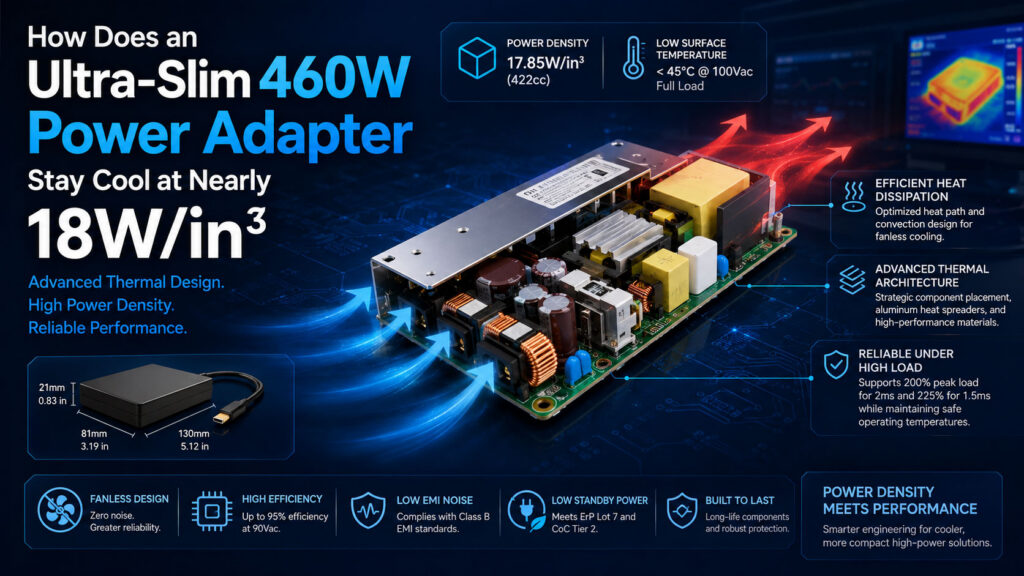
Why does 460W create a thermal challenge in an ultra-slim power adapter?
A 460W external power adapter creates a thermal challenge because hundreds of watts must be converted, regulated and delivered from a compact enclosure without allowing heat concentration to undermine reliability, performance or user-facing surface temperatures. At this power level, small design choices can have larger consequences. Semiconductor losses, magnetics, capacitors, PCB placement, switching behavior, enclosure volume and cable configuration all influence how heat is generated and moved through the adapter.
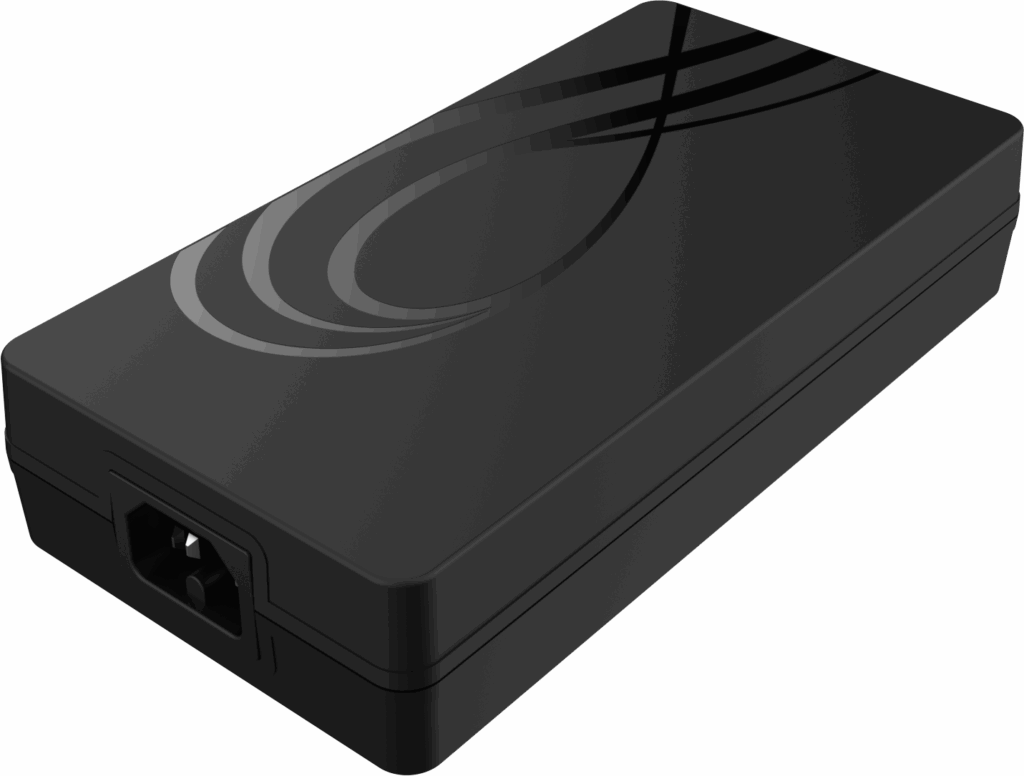
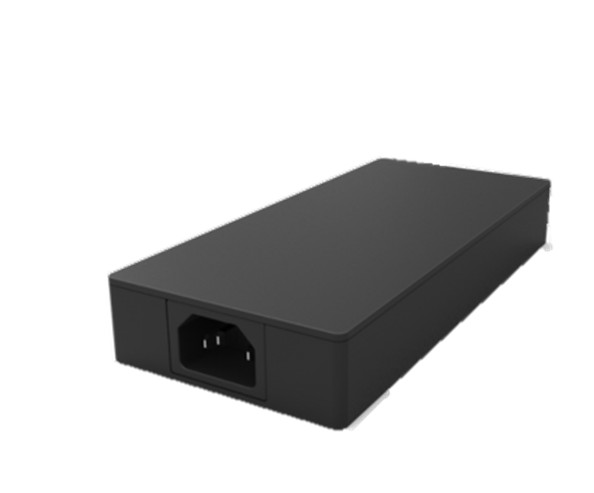
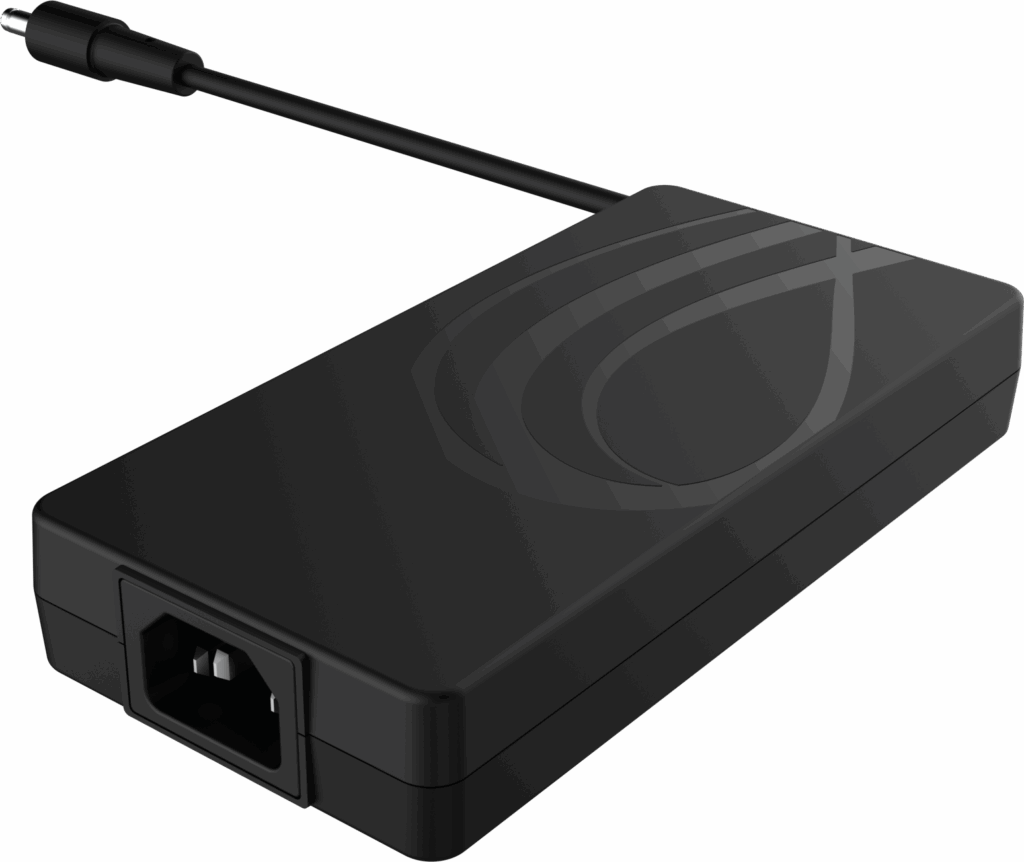
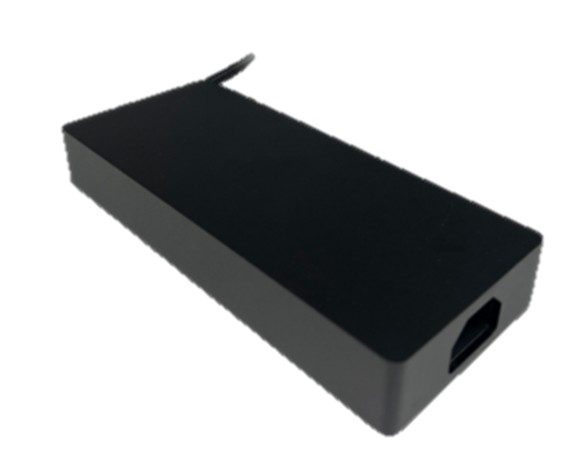
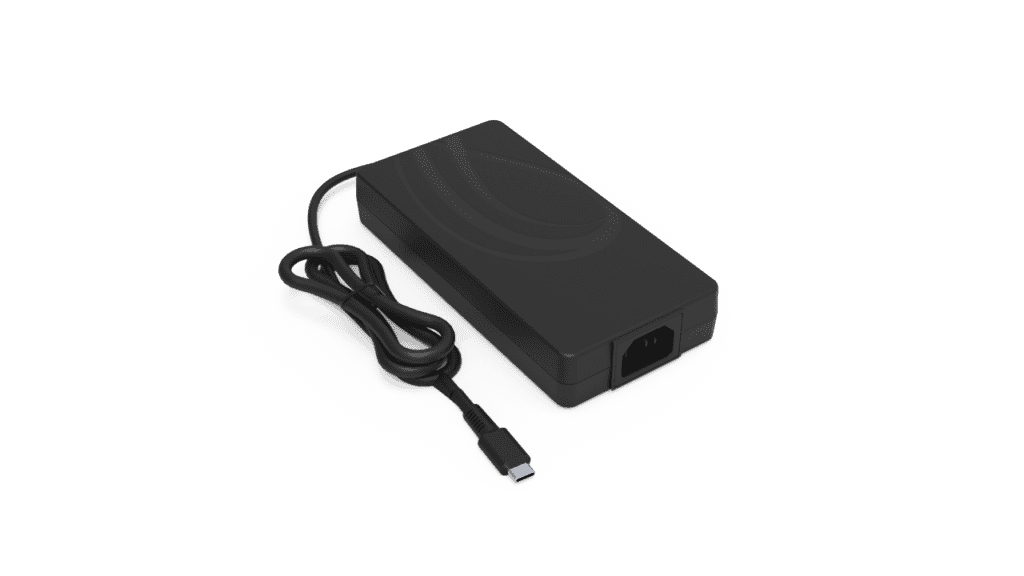
Phihong’s AA460U-205A-R provides a useful example of the engineering tradeoffs involved in combining 460W output capability with an ultra-slim external-adapter format. Phihong’s supplied engineering materials identify the product as a 460W external power adapter with stated power density of 17.85W/in³, approximate case volume of 422cc and product weight below 750g. Those figures make thermal design a central topic because the adapter is not simply delivering high wattage. It is doing so from a compact physical package where heat must be distributed carefully.
| Thermal Challenge | Why It Matters in a 460W Adapter | What OEM Teams Should Review |
|---|---|---|
| High output power | More delivered power can increase conversion losses and heat. | Continuous load, peak load, duty cycle and system power demand. |
| Slim enclosure | Less internal volume can make hot spots harder to manage. | Case volume, component spacing, thermal paths and surface temperature. |
| Internal losses | Semiconductors, magnetics and capacitors all contribute heat. | Switching losses, conduction losses, transformer behavior and capacitor temperature. |
| User-facing surface | External adapters are handled, placed and routed near users and equipment. | Case temperature, placement, cable routing, ambient temperature and airflow exposure. |
Why This Matters
• A 460W ultra-slim adapter must manage heat as part of the complete power architecture, not as a separate mechanical issue.
• Higher wattage and compact volume make thermal distribution, efficiency and validation more important for OEM integration.
What OEMs Should Do Now
• Start thermal review early, before the adapter is selected only by wattage, size or appearance.
• Validate adapter temperature under the product’s real load profile, ambient condition, placement and cable configuration.
Useful Links
Power Adapter Product Line: www.phihong.com/products/adapters/
Thermal Performance Validation: www.phihong.com/how-to-validate-thermal-performance-of-open-frame-power-supplies-in-real-enclosures/
Contact Phihong: www.phihong.com/contact
Related Links
How 330W GaN Power Adapters Support Gaming Laptops and Mobile Workstations: www.phihong.com/how-330w-gan-power-adapters-support-gaming-laptops-and-mobile-workstations/
Best Guide to GaN Power Adapters: What Modern Devices Need From Compact, High-Density Power: www.phihong.com/best-guide-to-gan-power-adapters-what-modern-devices-need-from-compact-high-density-power/
FEATURED PRODUCTS
AM250U-540AP-R
AA240U-200A-R
AA240U-200B-R
AA280U-200B-R
AA240U-59FKEA-R
AA36U-240B-R

What does 17.85W/in³ power density mean in practical adapter design?
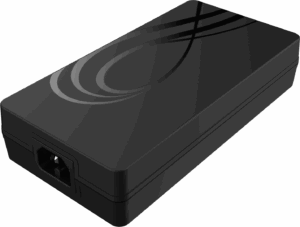
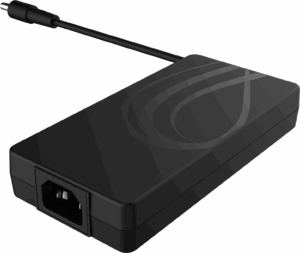
Power density describes how much power is delivered relative to the physical volume of the adapter. In practical terms, higher power density means the adapter delivers more watts from a smaller enclosure. This can be valuable for OEM products that need high power without a large external brick, but it also increases the importance of thermal management. A compact high-power adapter must manage losses, component temperatures and case temperature inside a tighter physical space.
Phihong’s supplied materials state that the AA460U-205A-R has a power density of 17.85W/in³ and an approximate case volume of 422cc. This should be treated as an engineering metric, not a marketing superlative. For OEM engineers, the useful question is not only whether the number is high. The better question is how that density affects internal layout, heat flow, surface temperature, cable placement and real-world operation when the adapter is powering the final device.
| Power Density Factor | Practical Meaning | What OEM Teams Should Review |
| Watts per cubic inch | Shows output power relative to adapter volume. | Power density, case volume, wattage and mechanical fit. |
| Heat per enclosure space | Compact volume gives heat less room to spread. | Hot spots, thermal paths, surface temperature and material behavior. |
| System placement | Dense adapters may be placed behind displays, near equipment or in constrained spaces. | Ambient temperature, ventilation, nearby heat sources and cable routing. |
| Validation burden | Higher density makes final application testing more important. | Full load, thermal soak, peak load, user placement and operating environment. |
Why This Matters
• 17.85W/in³ helps describe the relationship between 460W output and compact adapter volume.
• Power density becomes useful only when OEMs also review heat generation, surface temperature and system integration conditions.
What OEMs Should Do Now
• Use power density as one engineering comparison point, not the only selection factor.
• Test the adapter in realistic locations and operating conditions instead of relying only on open-bench assumptions.
Useful Links
Power Adapter Product Line: www.phihong.com/products/adapters/
GaN Power Adapter Guide: www.phihong.com/best-guide-to-gan-power-adapters-what-modern-devices-need-from-compact-high-density-power/
Contact Phihong: www.phihong.com/contact
Related Links
Best Guide to GaN Power Adapters: What Modern Devices Need From Compact, High-Density Power: www.phihong.com/best-guide-to-gan-power-adapters-what-modern-devices-need-from-compact-high-density-power/
What Can a 240W USB-C PD 3.1 Adapter Power That 100W and 140W Chargers Cannot?: www.phihong.com/what-can-a-240w-usb-c-pd-3-1-adapter-power-that-100w-and-140w-chargers-cannot/
Why does efficiency matter more as adapter power density increases?
Efficiency matters more as power density increases because conversion losses become heat. At low wattage, a small percentage of loss may be easier to manage. At hundreds of watts, even a few percentage points of loss can create meaningful thermal load inside the adapter. In a slim external enclosure, that heat must be distributed through the internal layout, components, PCB, case and surrounding environment without creating unacceptable hot spots.
Phihong’s supplied engineering materials state that the AA460U-205A-R reaches efficiency up to 95% at 90Vac. This should be described carefully. It does not mean 95% efficiency under every line, load, temperature or operating condition. It indicates a supplied efficiency point that helps explain why conversion efficiency is central to compact high-power adapter design. For OEM teams, the key is to validate efficiency and thermal behavior under the input voltage, load level, ambient temperature and placement conditions expected in the final application.
| Efficiency Factor | Why It Affects Cooling | What OEM Teams Should Review |
| Conversion loss | Lost energy becomes heat inside or near the adapter. | Efficiency at input voltage, load percentage and operating temperature. |
| High wattage | Small efficiency differences create more heat at higher output power. | Full-load behavior, duty cycle, peak-load behavior and thermal margin. |
| Slim case design | Heat must be spread through limited internal volume and case area. | PCB layout, component placement, heat paths and surface temperature. |
| Real operating condition | Lab efficiency points may not represent every application. | 90Vac data, target AC line, ambient temperature and actual device load. |
Why This Matters
• Efficiency directly affects how much heat an ultra-slim high-wattage adapter must manage.
• Phihong’s stated efficiency should be reviewed under the supplied condition and validated against the OEM’s application.
What OEMs Should Do Now
• Compare efficiency data with the device’s expected line voltage, load profile and duty cycle.
• Validate adapter temperature under both typical operation and worst-case realistic operating conditions.
Useful Links
Power Adapter Product Line: www.phihong.com/products/adapters/
Power Adapter Compliance Basics: www.phihong.com/what-compliance-engineers-look-for-in-internal-psus-emi-ems-and-safety-basics/
Contact Phihong: www.phihong.com/contact
Related Links
How 330W GaN Power Adapters Support Gaming Laptops and Mobile Workstations: www.phihong.com/how-330w-gan-power-adapters-support-gaming-laptops-and-mobile-workstations/
What Must Be Validated Before a 240W USB-C PD 3.1 Adapter Goes Into Production?: www.phihong.com/what-must-be-validated-before-a-240w-usb-c-pd-3-1-adapter-goes-into-production/
CLIENT'S QUOTE
Phihong’s custom OEM power solutions have transformed our product development, boosting performance and reducing overhead. Their expert engineering support has simplified both the design and manufacturing phases.
How do PCB placement and thermal distribution help prevent hot spots?
PCB placement and thermal distribution matter because a slim 460W adapter has limited internal space to spread heat. The hottest components cannot simply be placed wherever they are easiest to route electrically. Engineers need to consider how semiconductors, magnetics, capacitors, rectification stages, PFC components and other heat-producing parts interact inside the case. Poor placement can concentrate heat in one region, while better-organized placement can help distribute thermal load more evenly.
Phihong’s supplied materials for the AA460U-205A-R highlight carefully organized PCB and component placement for thermal distribution. That matters because thermal design in a compact adapter is not only about one heatsink or one hot component. It is about the complete heat path across the board, components, case and surrounding environment. OEM teams should review how thermal load is distributed and how temperature-sensitive components are kept away from major heat sources where practical.
| Thermal Layout Area | Why It Matters | What OEM Teams Should Review |
|---|---|---|
| Component placement | Heat-producing parts can create localized hot spots. | Semiconductors, magnetics, capacitors, spacing and thermal paths. |
| PCB thermal distribution | The board layout can help spread or concentrate heat. | Copper areas, component grouping, airflow exposure and case contact. |
| Temperature-sensitive parts | Some components may age faster when exposed to excessive heat. | Capacitor placement, nearby hot components and long-duration load conditions. |
| Mechanical constraints | Slim adapters must balance electrical routing with thermal and case design. | Internal clearance, case material, assembly method and surface temperature. |
Why This Matters
• PCB layout can directly affect hot spots, case temperature and long-term reliability in compact high-power adapters.
• Thermal distribution should be designed with both electrical performance and mechanical packaging in mind.
What OEMs Should Do Now
• Review the internal thermal map, not just the maximum output wattage or external size.
• Validate surface temperature and component temperature under full-load and high-ambient operating conditions.
Useful Links
Power Adapter Product Line: www.phihong.com/products/adapters/
Thermal Performance Validation: www.phihong.com/how-to-validate-thermal-performance-of-open-frame-power-supplies-in-real-enclosures/
Contact Phihong: www.phihong.com/contact
Related Links
How to Validate Thermal Performance of Open-Frame Power Supplies in Real Enclosures: www.phihong.com/how-to-validate-thermal-performance-of-open-frame-power-supplies-in-real-enclosures/
What Compliance Engineers Look for in Internal PSUs: EMI, EMS, and Safety Basics: www.phihong.com/what-compliance-engineers-look-for-in-internal-psus-emi-ems-and-safety-basics/
How Phihong approaches thermal design in the AA460U-205A-R 460W adapter
Phihong’s AA460U-205A-R gives OEM teams a product-specific example of how a manufacturer can approach thermal design in an ultra-slim high-wattage external adapter. According to Phihong’s supplied engineering materials, the adapter combines 460W output capability with stated 17.85W/in³ power density, approximate 422cc case volume, weight below 750g, interleaved PFC topology, front-end Active Bridge Rectifier design and organized PCB placement for thermal distribution.
The supplied temperature information should be described with its test conditions. Phihong’s material states case surface temperature below 70°C at 100Vac and Ta 25°C. A supplied comparison graphic also states surface temperature rise below 45°C at 100Vac under full-load conditions. These are not universal temperature guarantees for every installation. Adapter temperature can change depending on ambient temperature, airflow, placement, adjacent heat sources, cable routing, input voltage and the powered device’s load behavior.
| Phihong Thermal Area | Why It Helps Explain the Design | What OEM Teams Should Validate |
|---|---|---|
| Interleaved PFC topology | Can help distribute power-stage activity and reduce stress on individual paths. | Line/load conditions, ripple behavior, component stress and thermal profile. |
| Active Bridge Rectifier | Part of the front-end architecture used in the high-power design. | Efficiency contribution, heat generation and integration with the full power stage. |
| Organized PCB placement | Supports more balanced thermal distribution across the compact enclosure. | Hot spots, component temperature, surface temperature and thermal margin. |
| Stated temperature data | Gives engineers a supplied benchmark under defined conditions. | Final application conditions, ambient temperature, airflow and load behavior. |
Why This Matters
• Phihong’s supplied AA460U-205A-R materials connect high power density with efficiency, PCB placement and thermal distribution.
• Temperature data should be interpreted under the stated test conditions and revalidated in the OEM’s application.
What OEMs Should Do Now
• Use the supplied AA460U-205A-R data as a starting point for thermal review, not a substitute for final application testing.
• Test the adapter under expected input voltage, load profile, ambient temperature, placement and cable-routing conditions.
Useful Links
Power Adapter Product Line: www.phihong.com/products/adapters/
Contact Phihong: www.phihong.com/contact
GaN Power Adapter Guide: www.phihong.com/best-guide-to-gan-power-adapters-what-modern-devices-need-from-compact-high-density-power/
Related Links
How 330W GaN Power Adapters Support Gaming Laptops and Mobile Workstations: www.phihong.com/how-330w-gan-power-adapters-support-gaming-laptops-and-mobile-workstations/
What Must Be Validated Before a 240W USB-C PD 3.1 Adapter Goes Into Production?: www.phihong.com/what-must-be-validated-before-a-240w-usb-c-pd-3-1-adapter-goes-into-production/
A 460W ultra-slim adapter stays thermally viable only when efficiency, power architecture, component placement, enclosure design and application validation work together. At nearly 18W/in³, thermal performance is not a side issue. It is one of the main design constraints that determines whether the adapter can support the target device reliably.
For OEM teams, the most important lesson is that adapter temperature depends on real use conditions. A compact high-wattage adapter should be tested with the final device, final cable position, expected ambient temperature, placement environment and representative load conditions. If your team is evaluating thermal, mechanical or electrical requirements for a compact high-wattage external adapter, contact Phihong to discuss your application.
FAQ
What does 17.85W/in³ power density mean?
17.85W/in³ describes how much power the adapter delivers relative to its case volume. Phihong’s supplied materials state that the AA460U-205A-R delivers 460W from an approximate 422cc case volume, resulting in the stated 17.85W/in³ power density. For OEMs, this is useful as an engineering metric because it connects output power with physical size, thermal constraints and mechanical packaging.
Why do high-wattage power adapters generate heat?
High-wattage adapters generate heat because no power conversion process is perfectly lossless. Some input energy is lost as heat in semiconductors, magnetics, capacitors, switching stages, rectification, wiring and other components. At hundreds of watts, even small loss percentages can become meaningful thermal load. That is why efficiency, layout and thermal distribution are critical in compact high-power adapters.
How can a 460W adapter stay slim without overheating?
A slim 460W adapter requires a coordinated design that includes efficient power conversion, organized component placement, thermal distribution, suitable materials, controlled hot spots and careful validation. Phihong’s supplied materials identify interleaved PFC, front-end Active Bridge Rectifier design and organized PCB placement as part of the AA460U-205A-R engineering approach. Real-world temperature still depends on operating conditions.
Why does efficiency matter in a high-density adapter?
Efficiency matters because conversion losses become heat. In a high-density adapter, there is less physical space to spread and dissipate that heat. Phihong’s supplied materials state efficiency up to 95% at 90Vac for the AA460U-205A-R. That should not be interpreted as 95% under every condition. OEMs should validate efficiency and temperature across the actual load, line voltage and ambient environment.
Why does enclosure surface temperature matter?
Surface temperature matters because external adapters are touched, moved, placed near equipment and used in real environments. Phihong’s supplied material states case surface temperature below 70°C at 100Vac and Ta 25°C, while a supplied comparison graphic states surface temperature rise below 45°C at 100Vac under full-load conditions. These values should be considered under the stated test conditions and verified for the final application.
Does short-duration peak loading create thermal concerns?
Short-duration peak loading can matter because equipment may draw brief current spikes during startup or load transitions. Phihong’s supplied materials state peak-current capability of 200% for 2ms and 225% for 1.5ms. These values describe short-duration transient behavior, not continuous overload capability. OEMs should test peak-load timing, voltage stability, recovery and thermal impact with the final device.
Meta Tags
Meta Title:
Ultra-Slim 460W Power Adapter Thermal Design
Meta Description:
Learn how ultra-slim 460W power adapters manage heat, power density, efficiency, PCB layout and surface temperature.
Image Prompt
Ultra-realistic 16:9 electronics engineering lab scene showing an ultra-slim 460W external power adapter under thermal evaluation, connected to high-performance OEM equipment, engineers reviewing infrared thermal maps, power density data and PCB layout visualization on monitors, realistic slim adapter body, clean coreless DC cord, thermal camera, oscilloscope and load test equipment on a clean technical bench, premium industrial lighting, no text, no logos, no watermarks
WordPress Tags
460W power adapter, ultra-slim power adapter, power adapter thermal design, high power density adapter, 17.85W per cubic inch, high-power AC/DC adapter, OEM power adapter
Relevant WordPress Categories
Power Adapters
Desktop Adapters
Power Supply
OEM

CONTACT US TODAY
From concept to production, Phihong delivers custom OEM power solutions tailored to your specifications.
FAQ
POE technology supports the centralization of power

AC Adapter Guide: Everything You Need to Know
Moreover, PoE technology supports the centralization of power management. By powering devices through a PoE-enabled network …
AC DC Power Chargers and How They Work: A Comprehensive Technical Breakdown
Moreover, PoE technology supports the centralization of power management. By powering devices through a PoE-enabled network …

USB-C Charger: Shaping the Future of the Tech World
Moreover, PoE technology supports the centralization of power management. By powering devices through a PoE-enabled network …

AC Adapter Guide: Everything You Need to Know
Moreover, PoE technology supports the centralization of power management. By powering devices through a PoE-enabled network …

AC DC Power Chargers and How They Work: A Comprehensive Technical Breakdown
Moreover, PoE technology supports the centralization of power management. By powering devices through a PoE-enabled network …

USB-C Charger: Shaping the Future of the Tech World
Moreover, PoE technology supports the centralization of power management. By powering devices through a PoE-enabled network …