











BLOG
How Does 200% Peak Load Capability Help a 460W Adapter Handle Sudden Power Demands?
QUICK LINKS
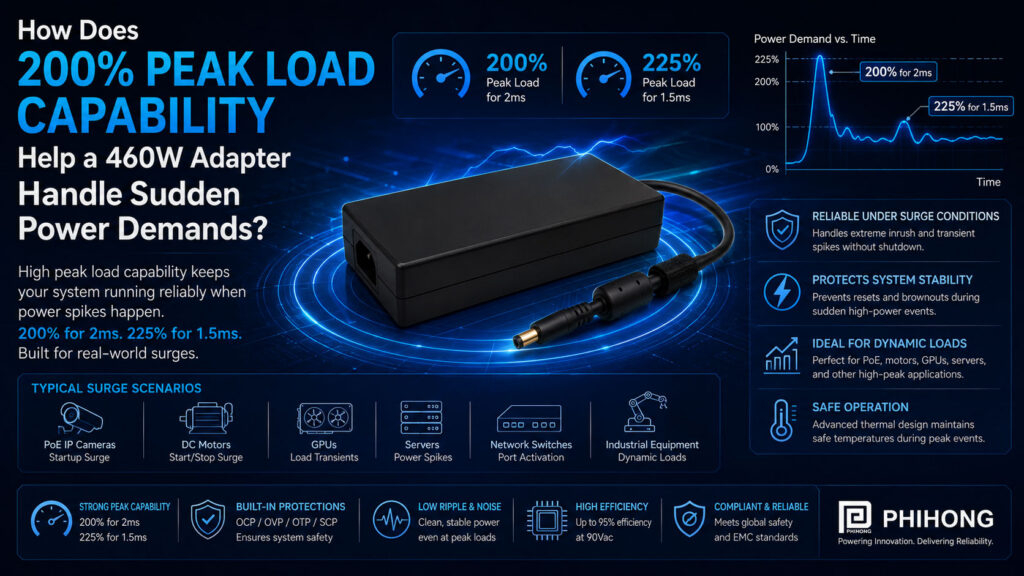
What does 200% peak load capability mean in a high-power adapter?
Peak load capability describes how a power adapter responds to very short bursts of demand above its normal continuous operating level. In a high-power external adapter, this matters because real equipment does not always draw power in a perfectly flat pattern. Some systems create brief power spikes during startup, processor bursts, motor activation, graphics load changes, battery charging transitions, or subsystem switching. A peak-load specification helps engineers understand whether the adapter has short-duration response capability beyond its continuous power rating.
For Phihong’s AA460U-205A-R, Phihong’s supplied engineering data states peak-current capability of 200% for 2ms and 225% for 1.5ms. This should be interpreted carefully. It does not mean the adapter is designed to operate continuously at double its rated output. It means the adapter is designed to tolerate specific short-duration peak-current events under the stated engineering conditions. For OEM teams, the practical value is in comparing those short peak windows against the actual transient behavior of the device.
| Peak-Load Concept | What It Means | What OEM Teams Should Review |
|---|---|---|
| Continuous output | The adapter’s normal sustained operating capability. | Rated output, full-load behavior, thermal conditions and duty cycle. |
| 200% for 2ms | Short-duration peak-current capability stated by Phihong’s supplied data. | Transient timing, load shape, voltage stability and recovery behavior. |
| 225% for 1.5ms | Higher short-duration peak-current capability stated by Phihong’s supplied data. | Peak duration, protection thresholds, system startup and load events. |
| Not continuous overload | Peak capability is not the same as sustained over-rating. | OCP behavior, thermal margin, device load profile and safety validation. |
Why This Matters
• Peak-load capability helps OEM engineers evaluate brief load events that exceed steady-state operation.
• Short-duration peak ratings should not be used as continuous power ratings or long-duration overload assumptions.
What OEMs Should Do Now
• Capture the device’s real transient-load waveform before deciding whether peak capability is relevant.
• Compare peak current magnitude, duration and repetition rate against the adapter’s stated short-duration peak behavior.
Useful Links
Power Adapter Product Line: www.phihong.com/products/adapters/
Power Supply Decisions OEMs Regret: www.phihong.com/the-power-supply-decisions-oems-regret-most-and-why-theyre-hard-to-fix-later/
Contact Phihong: www.phihong.com/contact
Related Links
How 330W GaN Power Adapters Support Gaming Laptops and Mobile Workstations: www.phihong.com/how-330w-gan-power-adapters-support-gaming-laptops-and-mobile-workstations/
What Must Be Validated Before a 240W USB-C PD 3.1 Adapter Goes Into Production?: www.phihong.com/what-must-be-validated-before-a-240w-usb-c-pd-3-1-adapter-goes-into-production/
FEATURED PRODUCTS
AM250U-540AP-R
AA240U-200A-R
AA240U-200B-R
AA280U-200B-R
AA240U-59FKEA-R
AA36U-240B-R

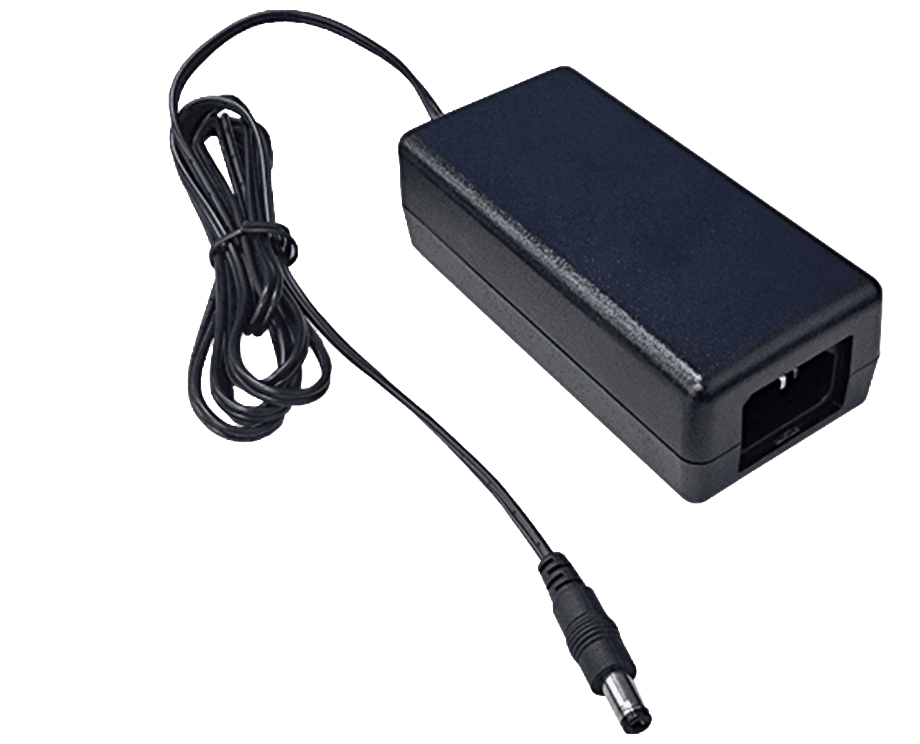
Why do sudden power demands happen in high-performance equipment?
Sudden power demands happen because many high-performance devices shift quickly between idle, partial-load and high-load states. A system may draw moderate power during normal operation, then briefly demand more power when a processor accelerates, a GPU changes state, a battery charging stage begins, a motor starts, a display brightens, or a subsystem turns on. These short events may last only milliseconds, but they can still affect voltage stability, connector stress, cable behavior and protection timing.
This is why peak-load capability is especially relevant in high-wattage external power design. The AA460U-205A-R is positioned in a 460W external adapter class, which means OEM teams may evaluate it for demanding equipment that can create dynamic load behavior. The adapter’s short-duration 200% and 225% peak-current capability can help engineers think about transient response, but only if the equipment’s load event fits the timing and conditions. A repeated or long-duration overload is a different problem and should be handled through proper continuous power sizing.
| Sudden Load Source | Why It Can Create a Peak Demand | What OEM Teams Should Review |
| Startup sequence | Multiple circuits may energize at once. | Inrush timing, sequencing, soft-start behavior and startup current. |
| Processor or GPU burst | Compute loads can change rapidly. | Peak timing, sustained load, thermal limits and firmware control. |
| Motors or actuators | Electromechanical loads may draw high current at activation. | Startup torque, pulse duration, repetition and protection response. |
| Battery charging transition | Charging behavior can shift quickly between operating states. | Charge profile, current limit, adapter negotiation and thermal behavior. |
Why This Matters
• High-performance systems can create short power spikes that are not visible in simple average-power calculations.
• Peak capability matters only when it matches the real device transient profile, including duration and repetition.
What OEMs Should Do Now
• Measure startup, compute-burst, motor-start and charging-transition events in the actual device.
• Separate short peak events from sustained high-load operation when choosing the adapter power level.
Useful Links
Power Adapter Product Line: www.phihong.com/products/adapters/
GaN Power Adapter Guide: www.phihong.com/best-guide-to-gan-power-adapters-what-modern-devices-need-from-compact-high-density-power/
Contact Phihong: www.phihong.com/contact
Related Links
How 330W GaN Power Adapters Support Gaming Laptops and Mobile Workstations: www.phihong.com/how-330w-gan-power-adapters-support-gaming-laptops-and-mobile-workstations/
How Does an Ultra-Slim 460W Power Adapter Stay Cool at Nearly 18W/in³ Power Density?: www.phihong.com/how-does-an-ultra-slim-460w-power-adapter-stay-cool-at-nearly-18w-in%C2%B3-power-density/
How does peak capability affect voltage stability and protection behavior?
Peak capability can affect voltage stability because sudden load changes can pull current faster than the power system can respond. If the adapter, cable and powered device are not designed for the transient, the output voltage may dip, the device may reset, or protection behavior may activate unexpectedly. In some systems, this can look like random instability even though the average power consumption appears acceptable.
Protection behavior is just as important. A high-power adapter must distinguish between acceptable short-duration transients and abnormal overload conditions that should trigger protection. For OEM engineers, this means peak-current capability should be reviewed together with over-current protection, short-circuit protection, thermal behavior, cable voltage drop, connector rating and device-side input capacitance. Phihong’s supplied AA460U-205A-R data gives a short-duration peak reference, but OEM teams still need to validate the complete adapter-to-device response under the product’s real load pattern.
| Validation Area | Why It Matters During Peak Loads | What OEM Teams Should Review |
| Voltage stability | Sudden load demand can cause output droop. | Output voltage, transient response, cable drop and device reset threshold. |
| Protection timing | The adapter must avoid nuisance trips while still protecting against faults. | OCP timing, short-circuit behavior, recovery and safety margin. |
| Cable and connector stress | Peak current can increase stress in the output path. | Connector rating, cable gauge, temperature rise and strain relief. |
| Repetition rate | Repeated peaks can create more thermal stress than isolated events. | Peak frequency, duty cycle, heat buildup and operating mode. |
Why This Matters
• Peak-load capability should support stable short transients without being confused with fault tolerance.
• Voltage stability, protection timing, cable behavior and device reset thresholds should be validated together.
What OEMs Should Do Now
• Test peak-load events with the final adapter, cable, connector and device input design.
• Confirm that protection behavior is predictable across startup, burst load, abnormal load and recovery conditions.
Useful Links
Power Adapter Product Line: www.phihong.com/products/adapters/
Power Adapter Compliance Basics: www.phihong.com/what-compliance-engineers-look-for-in-internal-psus-emi-ems-and-safety-basics/
Contact Phihong: www.phihong.com/contact
Related Links
What Must Be Validated Before a 240W USB-C PD 3.1 Adapter Goes Into Production?: www.phihong.com/what-must-be-validated-before-a-240w-usb-c-pd-3-1-adapter-goes-into-production/
How Class B EMI and IEC 62368-1 Shape 250W Adapter Selection for Commercial Devices: www.phihong.com/how-class-b-emi-and-iec-62368-1-shape-250w-adapter-selection-for-commercial-devices/
CLIENT'S QUOTE
Phihong’s custom OEM power solutions have transformed our product development, boosting performance and reducing overhead. Their expert engineering support has simplified both the design and manufacturing phases.
Why should peak-load capability be validated with thermal design?
Peak-load capability should be validated with thermal design because repeated short bursts can still affect the adapter’s operating temperature. A single 2ms or 1.5ms event may be brief, but real equipment may create repeated bursts during startup, high-performance workloads, charging transitions, or electromechanical activity. If these events happen often enough, they can contribute to heat buildup in the adapter, cable, connector, and powered device.
For the AA460U-205A-R, Phihong’s supplied engineering data states 200% peak-current capability for 2ms and 225% for 1.5ms. Those are short-duration transient values. They should not be interpreted as permission to run the adapter continuously above its rated output. OEM teams should review how often the peaks occur, how long the adapter returns to normal load between peaks, how the thermal system recovers, and whether the adapter remains within acceptable surface-temperature and component-temperature limits.
| Thermal Peak-Load Factor | Why It Matters | What OEM Teams Should Review |
|---|---|---|
| Peak duration | Very short bursts behave differently than sustained overload. | 2ms and 1.5ms timing, device waveform and measurement method. |
| Repetition rate | Repeated peaks can create more heat than isolated events. | Burst frequency, duty cycle, recovery time and thermal soak. |
| Surface temperature | External adapters must be evaluated for user-facing case temperature. | Full-load temperature, ambient condition, placement and airflow exposure. |
| Cable and connector heating | Peak current can increase stress in the output path. | Cable temperature, connector rating, cable routing and strain relief. |
Why This Matters
• Short-duration peak capability should be reviewed together with thermal behavior, not treated as a separate electrical feature.
• Repeated transient events can affect real-world temperature even when each event is brief.
What OEMs Should Do Now
• Validate peak-load behavior under the device’s realistic operating cycle, including repetition rate and recovery time.
• Test adapter surface temperature, cable temperature and connector behavior during repeated transient-load scenarios.
Useful Links
Power Adapter Product Line: www.phihong.com/products/adapters/
Thermal Performance Validation: www.phihong.com/how-to-validate-thermal-performance-of-open-frame-power-supplies-in-real-enclosures/
Contact Phihong: www.phihong.com/contact
Related Links
How 330W GaN Power Adapters Support Gaming Laptops and Mobile Workstations: www.phihong.com/how-330w-gan-power-adapters-support-gaming-laptops-and-mobile-workstations/
What Must Be Validated Before a 240W USB-C PD 3.1 Adapter Goes Into Production?: www.phihong.com/what-must-be-validated-before-a-240w-usb-c-pd-3-1-adapter-goes-into-production/
How Phihong supports short-duration peak-load design in the AA460U-205A-R adapter
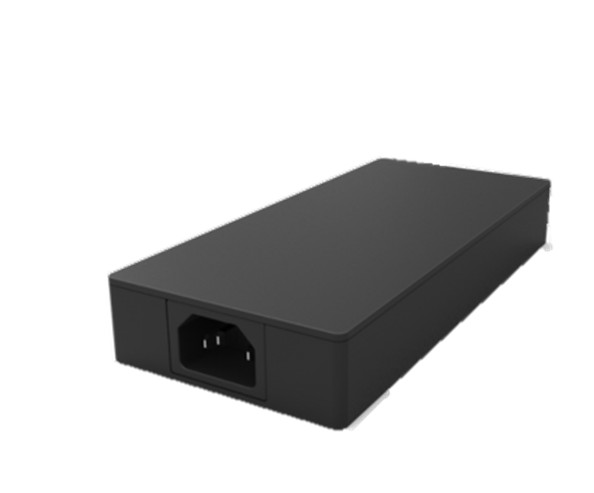
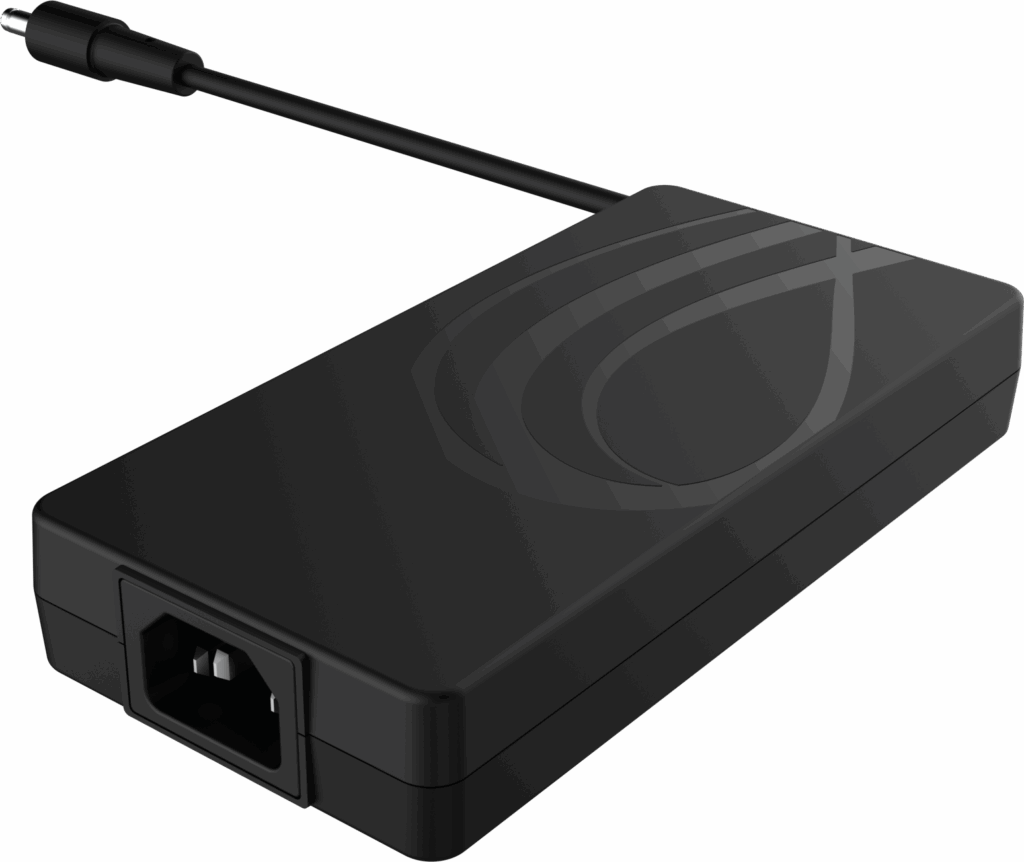
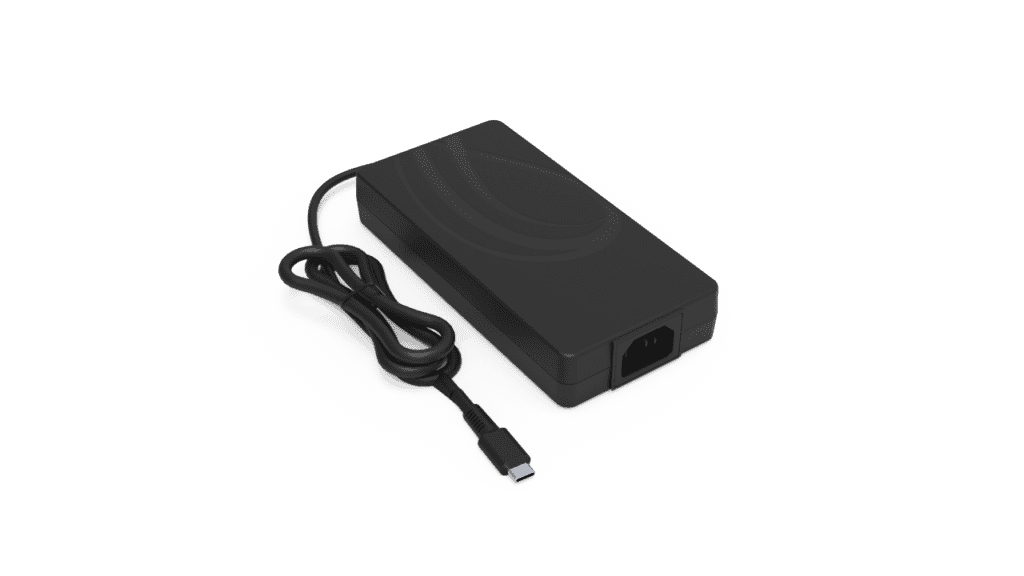
Phihong’s AA460U-205A-R gives OEM teams a real product example for evaluating short-duration peak-load behavior in a compact high-wattage external adapter. According to Phihong’s supplied engineering materials, the adapter is an ultra-slim 460W external power adapter with high power density, interleaved PFC topology, front-end Active Bridge Rectifier design, organized PCB placement for thermal distribution, coreless DC cord design and short-duration peak-current capability.
The key point for engineers is that peak-load performance must be evaluated as part of the full adapter system. The AA460U-205A-R’s stated 200% for 2ms and 225% for 1.5ms peak-current values are useful transient references, but final suitability depends on the powered device’s load behavior. OEM teams should compare the adapter’s short-duration peak data against the device’s startup current, burst workload, connector design, cable length, thermal environment and protection requirements before making integration decisions.
| Phihong Design Area | Why It Helps Explain Peak-Load Behavior | What OEM Teams Should Review |
|---|---|---|
| AA460U-205A-R | Provides a 460W ultra-slim adapter example for transient-load evaluation. | Continuous load, peak-load timing, voltage stability and recovery. |
| Peak-current capability | Supports specific short-duration overload events. | 200% for 2ms, 225% for 1.5ms, waveform shape and repetition rate. |
| Thermal distribution | Helps connect peak-load behavior with heat-management requirements. | PCB placement, surface temperature, airflow exposure and ambient conditions. |
| System validation | Confirms whether the adapter matches the real equipment demand. | Device load profile, cable routing, connector stress and protection behavior. |
Why This Matters
• Product-specific peak-load data helps OEM teams evaluate sudden power demands more realistically.
• A 460W adapter should be selected by continuous load, transient load, thermal behavior and system validation together.
What OEMs Should Do Now
• Use Phihong’s supplied AA460U-205A-R peak-current data as a starting point for transient-load evaluation.
• Contact Phihong to discuss power, thermal, cable and integration requirements for the intended high-power external adapter application.
Useful Links
Power Adapter Product Line: www.phihong.com/products/adapters/
Contact Phihong: www.phihong.com/contact
GaN Power Adapter Guide: www.phihong.com/best-guide-to-gan-power-adapters-what-modern-devices-need-from-compact-high-density-power/
Related Links
How 330W GaN Power Adapters Support Gaming Laptops and Mobile Workstations: www.phihong.com/how-330w-gan-power-adapters-support-gaming-laptops-and-mobile-workstations/
How Class B EMI and IEC 62368-1 Shape 250W Adapter Selection for Commercial Devices: www.phihong.com/how-class-b-emi-and-iec-62368-1-shape-250w-adapter-selection-for-commercial-devices/
A 200% peak-load capability can help a high-power adapter respond to sudden, short-duration current demands, but it should never be confused with continuous overload capacity. For OEM engineers, the real question is whether the adapter’s short-duration response matches the device’s actual transient profile.
The strongest integration process looks at continuous 460W operation, short peak events, voltage stability, thermal behavior, cable performance, connector stress and protection timing together. If your team is evaluating peak-load, thermal, EMI or mechanical requirements for a compact high-wattage external adapter, contact Phihong to discuss your application.

CONTACT US TODAY
From concept to production, Phihong delivers custom OEM power solutions tailored to your specifications.
FAQ
What does 200% peak load capability mean in a 460W adapter?
A 200% peak-load capability means the adapter is designed to tolerate a short-duration current demand above its normal continuous rating under specified conditions. For the AA460U-205A-R, Phihong’s supplied engineering data states 200% for 2ms. This should not be interpreted as continuous double-power operation. It is a transient capability that must be compared against the actual device load waveform.
What does 225% for 1.5ms mean?
The 225% for 1.5ms value describes a higher short-duration peak-current event over an even shorter time window. It is useful for evaluating brief load spikes, but it does not mean the adapter can sustain that level continuously. OEM teams should review the peak magnitude, duration, waveform shape, repetition rate and recovery behavior before relying on this capability in a product.
Why do devices create sudden power demands?
Devices can create sudden power demands during startup, processor bursts, GPU load changes, motor activation, battery charging transitions, display changes or subsystem switching. These events may be short, but they can still affect voltage stability and protection behavior. OEM teams should measure actual load transients rather than relying only on average power consumption.
Can peak-load capability prevent voltage dips?
Peak-load capability can help during brief load spikes, but voltage stability depends on the full power path. The adapter, cable, connector, device input capacitance, protection behavior and load timing all matter. OEMs should test voltage droop, recovery time, connector stress and device reset thresholds with the final adapter and cable configuration.
Is peak-load capability the same as overload protection?
No. Peak-load capability describes the adapter’s ability to handle short transient demands. Overload protection is designed to protect the adapter and system from abnormal or unsafe load conditions. OEM engineers need to understand where acceptable transient behavior ends and where protection should activate. Both behaviors should be validated with the final system.
What should OEMs test before relying on 200% peak-load capability?
OEMs should test startup current, burst workloads, repeated transient events, voltage stability, cable voltage drop, connector temperature, surface temperature, protection timing and recovery behavior. The testing should use the final device, production-intent cable routing and expected operating conditions. Peak-load behavior should be validated together with thermal and safety requirements.
POE technology supports the centralization of power

AC Adapter Guide: Everything You Need to Know
Moreover, PoE technology supports the centralization of power management. By powering devices through a PoE-enabled network …
AC DC Power Chargers and How They Work: A Comprehensive Technical Breakdown
Moreover, PoE technology supports the centralization of power management. By powering devices through a PoE-enabled network …

USB-C Charger: Shaping the Future of the Tech World
Moreover, PoE technology supports the centralization of power management. By powering devices through a PoE-enabled network …

AC Adapter Guide: Everything You Need to Know
Moreover, PoE technology supports the centralization of power management. By powering devices through a PoE-enabled network …

AC DC Power Chargers and How They Work: A Comprehensive Technical Breakdown
Moreover, PoE technology supports the centralization of power management. By powering devices through a PoE-enabled network …

USB-C Charger: Shaping the Future of the Tech World
Moreover, PoE technology supports the centralization of power management. By powering devices through a PoE-enabled network …