









BLOG
Why Does High Current Matter in 240W and 280W 20V Desktop Power Adapters?
QUICK LINKS

Why Do 240W and 280W Power Adapters Need So Much Current at 20V?
High-wattage power can be delivered through different combinations of voltage and current. When the output voltage is fixed at 20V, increasing power requires more current. That is why a 240W adapter operates at up to 12A while a 280W adapter reaches 14A. For OEM engineers, that current level matters because cables, connectors, PCB traces and output components must carry substantially more current than they would in a higher-voltage architecture delivering the same total wattage.
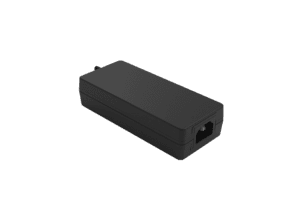
Phihong’s AA240U-200B-R is rated at 20V, 12A and 240W, while the AA280U-200B-R is rated at 20V, 14A and 280W. Both are GaN desktop adapters with IEC C14 AC inputs, making them useful examples of how power increases within the same 20V architecture. Phihong
| Comparison | AA240U-200B-R | AA280U-200B-R |
|---|---|---|
| Output Voltage | 20V | 20V |
| Maximum Current | 12A | 14A |
| Rated Power | 240W | 280W |
| Current Increase | Baseline | +2A |
| Main Engineering Question | Can the system and output path support 12A continuously? | Can the output path reliably support 14A continuously? |
A 2A increase may not sound large, but at these current levels it can meaningfully affect conductor loss, connector temperature and voltage drop. The output path therefore becomes part of the power-system design, not merely a cable selected after the adapter is chosen.
Why This Matters
- At 20V, increasing power from 240W to 280W requires increasing output current from 12A to 14A.
- High current places greater demands on cables, connectors and other conductive paths.
What OEMs Should Do Now
- Measure maximum sustained output current rather than looking only at system wattage.
- Include the DC cable and connector in the power-budget and thermal-validation process.
Relevant Phihong Products
AA240U-200B-R
240W GaN desktop adapter rated at 20V and 12A.
AA280U-200B-R
280W GaN desktop adapter rated at 20V and 14A.
Related Phihong Product
AA240U-200A-R
Related 240W / 20V platform within the same high-wattage GaN desktop authority group.
Useful Links
AA240U-200B-R Datasheet: www.phihong.com/wp-content/uploads/New-datasheet-AA240U-200B-R-08252025.pdf
AA280U-200B-R Datasheet: www.phihong.com/wp-content/uploads/New-datasheet-AA280U-200B-R-06262025.pdf
Power Adapter Product Line: www.phihong.com/products/adapters/
Related Links
When Should You Choose a 280W GaN Desktop Adapter Instead of a 240W Model?: Add cluster URL once live
Best Guide to GaN Power Adapters: What Modern Devices Need From Compact, High-Density Power: www.phihong.com/best-guide-to-gan-power-adapters-what-modern-devices-need-from-compact-high-density-power/
FEATURED PRODUCTS
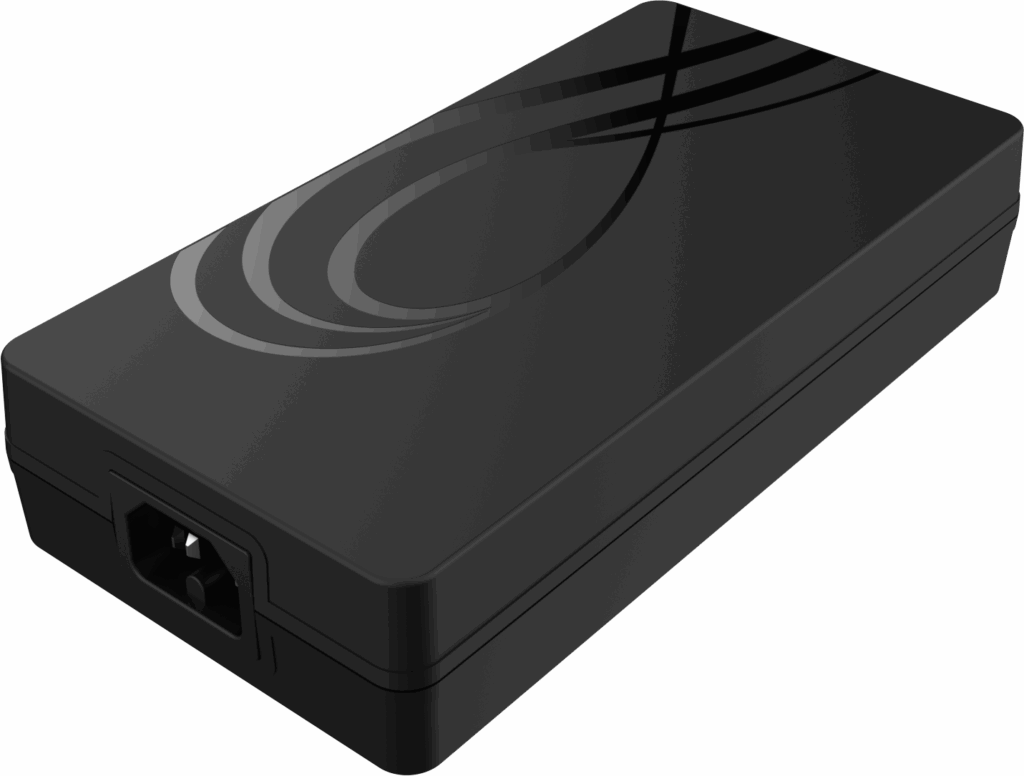
AM250U-540AP-R
- Output Power - 250W
- Output Volt - 54V
- Output Current - 4.63A
- Features - Class B EMI , US DoE Level VI Efficiency compliance, EU CoC Ver 5 Tier 2 Compliance, Over-Voltage, Over-Current, Short Circuit, & Over-Temperature Protection, 5,000 Meters Operating Altitude
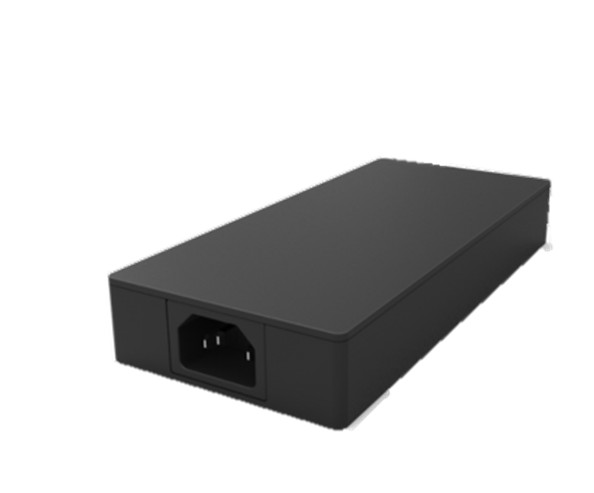
AA240U-200A-R
- Output Power - 240W
- Output Volt - 20V
- Output Current - 12A
- Features - high-efficiency desktop power supply designed for multiple applications, delivering a reliable 240W single output with advanced GaN technology for compact performance. Ideal for powering high-demand gaming systems etc with reduced heat and improved energy conversion.
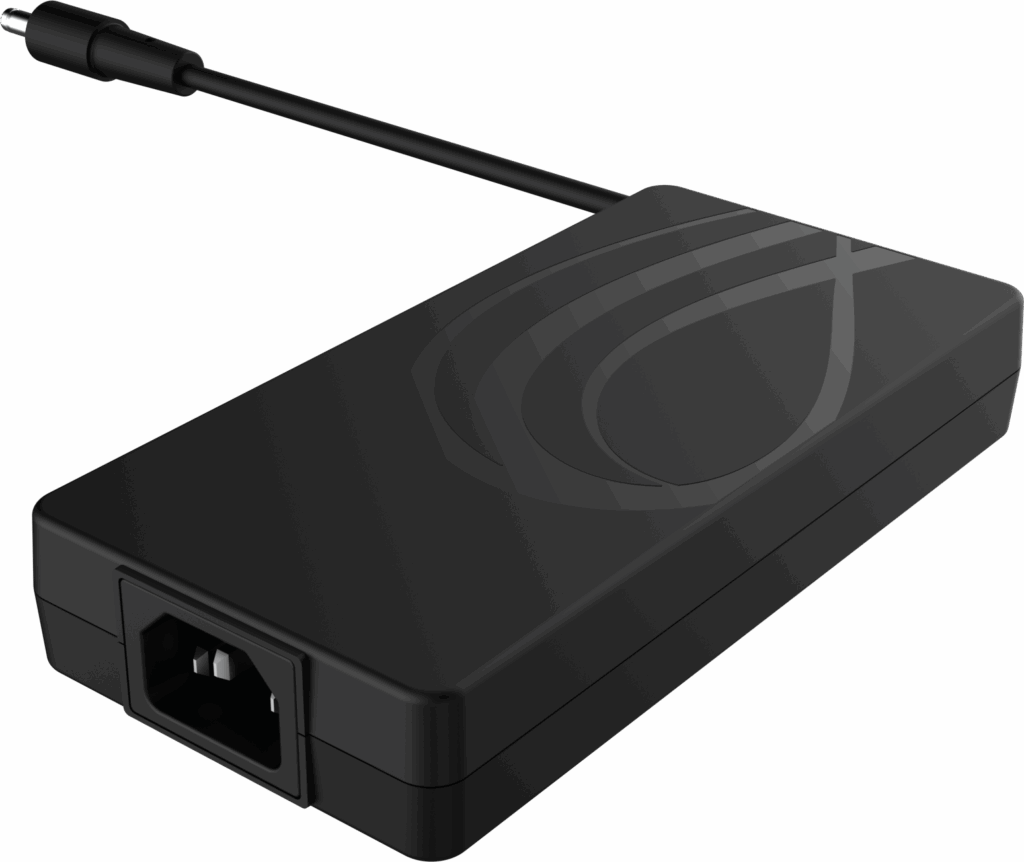
AA240U-200B-R
- Output Power - 240W
- Output Volt - 20V
- Output Current - 12A
- Features - This 240-watt GaN Series Desktop C14 Adapter delivers high power in a compact, efficient design, ideal for demanding professional and industrial applications. Its GaN technology ensures cooler operation, reliability, and space-saving performance.
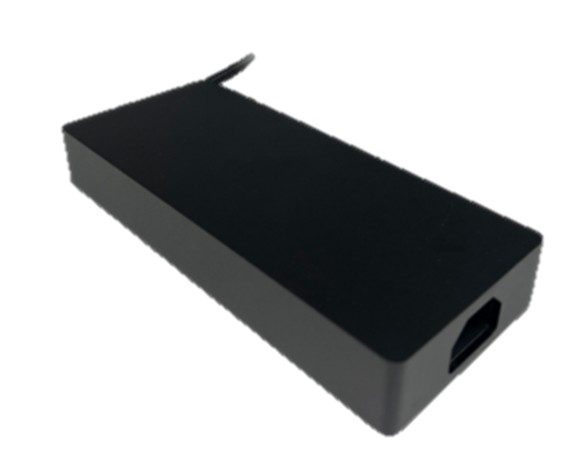
AA280U-200B-R
- Output Power - 280W
- Output Volt - 20V
- Output Current - 14A
- Features - high-efficiency desktop power supply designed for multiple applications, delivering a reliable 240W single output with advanced GaN technology for compact performance. Ideal for powering high-demand gaming systems etc with reduced heat and improved energy conversion.
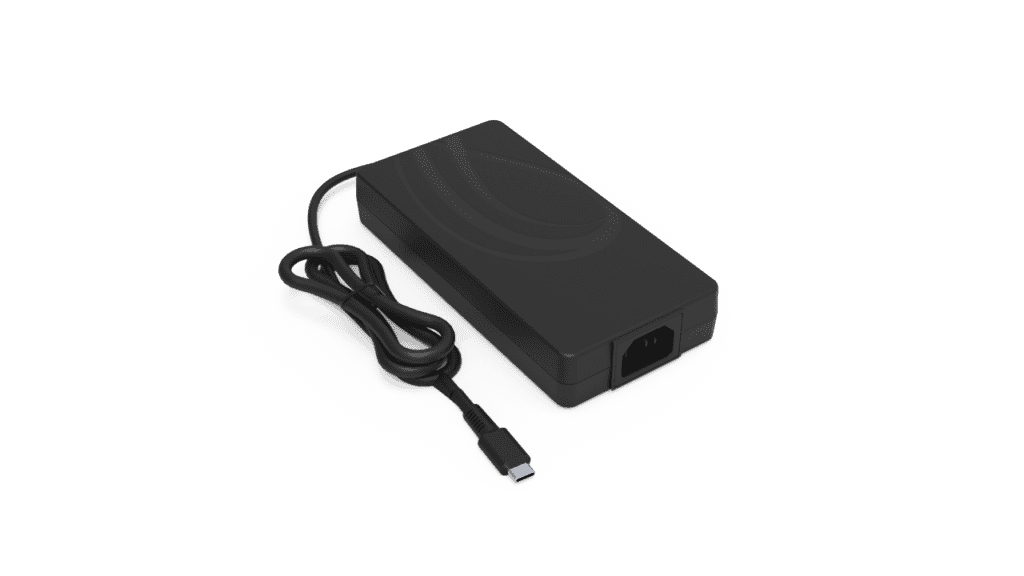
AA240U-59FKEA-R
- Output Power - 240 Watt
- Output Volt - 5Vdc/ 9Vdc/ 15Vdc/ 20Vdc/ 28V/ 36V/ 48V
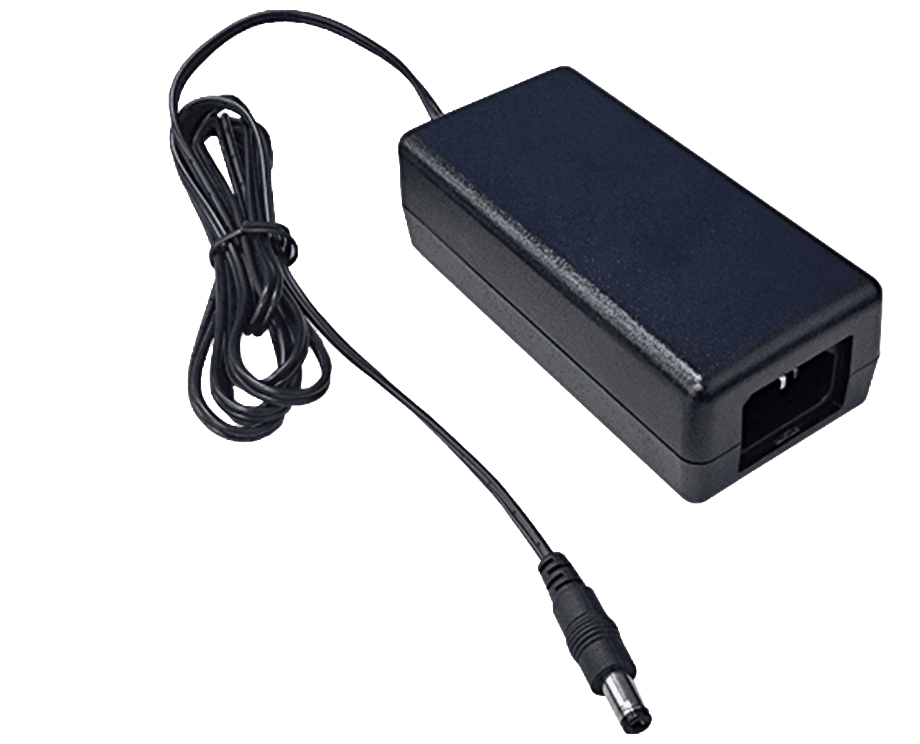
AA36U-240B-R
- Output Power - 36W
- Output Volt - 24V
- Output Current - 1.5A
- Features - C14 Inlet Receptacle, US DoE Level VI & NRCan Compliance, EU Ecodesign 2019/1782 Compliance, CoC V5 Tier 2 Compliance, Operating Altitude to 5,000 Meters, and Protections from Short Circuit, Over-Current and Over-Voltage

How Does High Current Increase Cable Loss and Voltage Drop?
Cable resistance becomes increasingly important as current rises because electrical losses increase rapidly with current. Even when the adapter itself regulates the output correctly, resistance in the cable, connector contacts and wiring can cause some voltage to be lost before power reaches the device.
For a high-current 20V system, the engineering concern is not simply whether the cable conducts electricity. Engineers need to know whether it can carry 12A or 14A without excessive voltage drop or temperature rise. Conductor size, cable length, connector resistance and termination quality can all influence the result. These are general electrical design principles that OEM teams should validate against the actual Phihong cable and connector configuration being considered.
| Output-Path Factor | Why It Matters at 12A–14A | What OEM Teams Should Review |
|---|---|---|
| Cable resistance | Creates voltage drop and power loss | Conductor size and resistance |
| Cable length | Longer conductors increase total resistance | Required device-to-adapter distance |
| Current level | Higher current increases conductor losses | Continuous 12A or 14A requirement |
| Connector resistance | Contact resistance creates localized heating | Contact quality and mating condition |
| Termination quality | Poor joints can add resistance | Production consistency and strain relief |
This also helps explain why higher-voltage architectures can move the same power with less current. A 280W system operating at 20V needs 14A, while a hypothetical higher-voltage system delivering the same wattage could operate at substantially lower current. The 20V approach may be appropriate for the target equipment, but it makes cable and connector engineering more important.
Why This Matters
- High output current makes cable resistance and voltage drop more significant.
- A properly rated adapter can still experience system-level problems if the DC output path is poorly matched to the current.
What OEMs Should Do Now
- Measure voltage at both the adapter output and device input under maximum sustained load.
- Validate cable temperature, connector temperature and voltage drop using production-intent hardware.
Relevant Phihong Products
AA240U-200B-R
Provides a useful 12A / 20V reference point for high-current desktop power.
AA280U-200B-R
Raises output current to 14A, making output-path validation even more important.
Useful Links
AA240U-200B-R Datasheet: www.phihong.com/wp-content/uploads/New-datasheet-AA240U-200B-R-08252025.pdf
AA280U-200B-R Datasheet: www.phihong.com/wp-content/uploads/New-datasheet-AA280U-200B-R-06262025.pdf
Contact Phihong: www.phihong.com/contact
Related Links
The Power Supply Decisions OEMs Regret Most and Why They’re Hard to Fix Later: www.phihong.com/the-power-supply-decisions-oems-regret-most-and-why-theyre-hard-to-fix-later/
How to Validate Thermal Performance of Open-Frame Power Supplies in Real Enclosures: www.phihong.com/how-to-validate-thermal-performance-of-open-frame-power-supplies-in-real-enclosures/
Why Can Connectors Become a Thermal Bottleneck in High-Current 20V Systems?
Connectors deserve special attention because electrical current must pass through relatively small contact areas. At 12A or 14A, even modest contact resistance can create localized heat. Connector temperature can therefore become a limiting factor even when the adapter electronics themselves remain within specification.
The concern is not limited to the connector model printed on a drawing. Mating quality, contact wear, insertion cycles, contamination, mechanical stress and manufacturing consistency can all influence real contact resistance. OEM teams should evaluate the entire connector system, including the adapter plug, device receptacle, cable termination and expected field-use conditions.
| Connector Issue | Potential Effect | Validation Focus |
|---|---|---|
| Contact resistance | Localized heating | Temperature rise at full load |
| Loose mating | Intermittent power or higher resistance | Retention and mechanical fit |
| Repeated insertion | Contact wear over product life | Cycle testing |
| Cable strain | Stress at termination point | Strain relief and bending |
| High sustained current | Greater thermal load at contacts | Continuous 12A / 14A operation |
Phihong’s AA240U-200B-R datasheet also defines over-current protection above 15A and documents dynamic-load and peak-load behavior, illustrating why engineers need to distinguish normal continuous current from abnormal overload and short transient events. The AA280U-200B-R likewise documents peak-load capability of 200% to 225% for short durations. Those transient specifications should not be interpreted as continuous connector-current ratings. Phihong
Why This Matters
- The connector can become one of the hottest points in a high-current DC power path.
- Peak capability does not mean the cable or connector should carry peak current continuously.
What OEMs Should Do Now
- Monitor connector temperature during sustained worst-case operation.
- Test the complete adapter, cable and device receptacle together rather than qualifying each part independently.
Relevant Phihong Products
AA240U-200B-R
240W, 20V, 12A GaN desktop platform.
AA280U-200B-R
280W, 20V, 14A GaN desktop platform and the higher-current hero product for this cluster.
Related Phihong Product
AA240U-200A-R
Additional 240W / 20V option within the same product family.
Useful Links
AA240U-200B-R Datasheet: www.phihong.com/wp-content/uploads/New-datasheet-AA240U-200B-R-08252025.pdf
AA280U-200B-R Datasheet: www.phihong.com/wp-content/uploads/New-datasheet-AA280U-200B-R-06262025.pdf
Contact Phihong: www.phihong.com/contact
Related Links
When Should You Choose a 280W GaN Desktop Adapter Instead of a 240W Model?: Add cluster URL once live
How 330W GaN Power Adapters Support Gaming Laptops and Mobile Workstations: www.phihong.com/how-330w-gan-power-adapters-support-gaming-laptops-and-mobile-workstations/
CLIENT'S QUOTE
Phihong’s custom OEM power solutions have transformed our product development, boosting performance and reducing overhead. Their expert engineering support has simplified both the design and manufacturing phases.
How Should OEMs Validate Cable and Connector Performance at 12A to 14A?
OEM teams should validate the complete DC output path under real sustained current, not just confirm that the adapter can provide the required wattage. At 12A to 14A, cable resistance, connector resistance and termination quality can all create measurable voltage drop and localized heating. These effects may be small at lower current but become much more important as current rises.
For the AA240U-200B-R and AA280U-200B-R, the 20V architecture means the output path has to carry relatively high current to deliver 240W or 280W. This makes production-intent validation especially important. Engineers should test the actual cable length, conductor size, connector pair, device receptacle and assembly method intended for the finished product.
| Validation Area | Why It Matters at 12A–14A | What OEM Teams Should Measure |
|---|---|---|
| Voltage drop | Resistance reduces voltage reaching the device | Adapter output vs device input voltage |
| Cable temperature | High current increases conductor heating | Temperature rise under sustained load |
| Connector temperature | Contact resistance can create hot spots | Plug and receptacle temperature |
| Retention | Loose contacts can increase resistance | Mating force and mechanical stability |
| Repeated use | Contact wear can change electrical performance | Insertion-cycle behavior |
| Termination quality | Poor joints add resistance | Production consistency and strain relief |
Validation should include worst-case sustained operating conditions rather than only brief bench tests. A cable and connector that appear acceptable during a short measurement may behave differently after the system has reached thermal equilibrium.
Why This Matters
- At 12A to 14A, the cable and connector become active parts of the power-system design.
- Production variation can matter because small increases in resistance can create more heat at high current.
What OEMs Should Do Now
- Measure voltage drop and temperature after the system reaches steady-state full-load operation.
- Repeat testing with production-intent cables, connectors and assemblies rather than prototype-only hardware.
Relevant Phihong Products
AA240U-200B-R
20V, 12A, 240W GaN desktop adapter.
AA280U-200B-R
20V, 14A, 280W GaN desktop adapter.
Related Phihong Product
AA240U-200A-R
Related 20V / 240W platform within the same high-current desktop family.
Useful Links
AA240U-200B-R Datasheet: www.phihong.com/wp-content/uploads/New-datasheet-AA240U-200B-R-08252025.pdf
AA280U-200B-R Datasheet: www.phihong.com/wp-content/uploads/New-datasheet-AA280U-200B-R-06262025.pdf
Power Adapter Product Line: www.phihong.com/products/adapters/
Contact Phihong: www.phihong.com/contact
Related Links
The Power Supply Decisions OEMs Regret Most and Why They’re Hard to Fix Later: www.phihong.com/the-power-supply-decisions-oems-regret-most-and-why-theyre-hard-to-fix-later/
How to Validate Thermal Performance of Open-Frame Power Supplies in Real Enclosures: www.phihong.com/how-to-validate-thermal-performance-of-open-frame-power-supplies-in-real-enclosures/
How Does Phihong Support High-Current 20V Desktop Power Adapter Design?
Phihong’s AA240U-200B-R and AA280U-200B-R provide OEM teams with two high-current GaN desktop platforms built around the same 20V output architecture. The AA240U-200B-R delivers 12A for 240W, while the AA280U-200B-R increases available current to 14A for 280W. That makes them useful product examples for understanding how higher wattage at a fixed 20V output directly increases current demand.
The engineering implications extend beyond the adapter itself. High-current systems require attention to cable resistance, connector quality, thermal behavior, mechanical retention and protection strategy. Phihong’s documented peak-load behavior on these models is also useful for understanding dynamic system requirements, but short-duration peak capability should remain separate from continuous cable and connector current ratings.
| Phihong Design Area | Why It Matters | What OEM Teams Should Review |
|---|---|---|
| 20V output architecture | Keeps device voltage consistent | Device input requirement |
| 12A / 14A continuous current | Defines high-current output demand | Cable and connector capability |
| 240W / 280W rated power | Supports different sustained load levels | System power budget |
| GaN desktop platform | Supports compact high-wattage conversion | Thermal and mechanical integration |
| Peak-load capability | Helps address brief dynamic demand | Duration, repetition and recovery behavior |
Why This Matters
- Phihong’s 240W and 280W models show how increasing wattage at the same 20V output increases current through the entire DC path.
- High-current validation should include the adapter, cable, connector and powered device as one system.
What OEMs Should Do Now
- Compare the device’s measured sustained current directly against the 12A and 14A product limits.
- Contact Phihong to review cable, connector, thermal and load requirements for the intended application.
Relevant Phihong Products
AA240U-200B-R
Primary 240W / 20V / 12A high-current platform.
AA280U-200B-R
Primary 280W / 20V / 14A higher-current platform.
Related Phihong Product
AA240U-200A-R
Related 240W / 20V GaN desktop option.
Useful Links
AA240U-200B-R Product Page: www.phihong.com/products/adapters/aa240u-200b-r/
AA240U-200B-R Datasheet: www.phihong.com/wp-content/uploads/New-datasheet-AA240U-200B-R-08252025.pdf
AA280U-200B-R Datasheet: www.phihong.com/wp-content/uploads/New-datasheet-AA280U-200B-R-06262025.pdf
Contact Phihong: www.phihong.com/contact
Related Links
How Do You Choose a 240W, 250W, or 280W Desktop Power Adapter?: Add pillar URL once live
When Should You Choose a 280W GaN Desktop Adapter Instead of a 240W Model?: Add cluster URL once live
High current matters in 240W and 280W 20V desktop adapters because the same power delivered at a lower voltage requires more current. At 20V, moving from 240W to 280W raises rated output current from 12A to 14A, increasing the importance of cable resistance, connector quality, voltage drop and thermal management.
For OEM teams, the adapter should not be evaluated by wattage alone. The complete DC path, including the cable, connector, device receptacle and internal wiring, must support the required current reliably under sustained operating conditions. If your team is evaluating a 20V high-current desktop adapter, contact Phihong to discuss the electrical and mechanical requirements of your application.

CONTACT US TODAY
From concept to production, Phihong delivers custom OEM power solutions tailored to your specifications.
FAQ
Why does a 20V 240W adapter need 12A?
Power is the product of voltage and current. At 20V, delivering 240W requires 12A of current. That high current must pass through the cable, connector and device input, which is why conductor size, contact resistance and thermal validation matter.
Why does a 20V 280W adapter need 14A?
At 20V, 280W corresponds to 14A. Compared with a 240W model, that is 2A more continuous current. The increase may require additional attention to cable loss, connector heating and thermal margin.
Why does high current increase cable heating?
Cable conductors have electrical resistance. As current rises, resistive losses increase and appear as heat. That is why conductor size, cable length and material quality become more important in high-current systems.
Can a connector cause voltage drop in a high-current system?
Yes. Connector contacts have resistance, and that resistance can create both voltage drop and localized heating. OEM teams should measure the voltage at the device input and monitor connector temperature under sustained load.
Is peak-load capability the same as a connector’s continuous current rating?
No. Peak-load capability describes short-duration adapter behavior. Cable and connector continuous current limits must be evaluated separately. A short transient specification should not be used to justify continuous operation above the output path’s thermal or electrical limits.
POE technology supports the centralization of power

AC Adapter Guide: Everything You Need to Know
Moreover, PoE technology supports the centralization of power management. By powering devices through a PoE-enabled network …
AC DC Power Chargers and How They Work: A Comprehensive Technical Breakdown
Moreover, PoE technology supports the centralization of power management. By powering devices through a PoE-enabled network …

USB-C Charger: Shaping the Future of the Tech World
Moreover, PoE technology supports the centralization of power management. By powering devices through a PoE-enabled network …

AC Adapter Guide: Everything You Need to Know
Moreover, PoE technology supports the centralization of power management. By powering devices through a PoE-enabled network …

AC DC Power Chargers and How They Work: A Comprehensive Technical Breakdown
Moreover, PoE technology supports the centralization of power management. By powering devices through a PoE-enabled network …

USB-C Charger: Shaping the Future of the Tech World
Moreover, PoE technology supports the centralization of power management. By powering devices through a PoE-enabled network …