










BLOG
PoE Restart Testing: What Happens When the Switch Reboots While the Injector Stays Powered?
QUICK LINKS

A separately powered midspan injector and a switch have different power domains. If the switch reboots while the injector stays on, the access point may remain energized while losing its Ethernet link and controller connection. The important question is how the tested configuration restores service after the switch returns.
Quick answer. Test switch reboot, injector power loss and cable reconnect as separate scenarios. Record access point power continuity, wired link recovery and service restoration independently.
Why This Topic Matters Now
Network upgrades and routine maintenance can restart a switch without interrupting the injector’s AC circuit. A deployment that appears healthy during a full cold boot can behave differently when the access point remains running while its network path disappears and returns. The recovery sequence should be part of acceptance for the real topology.
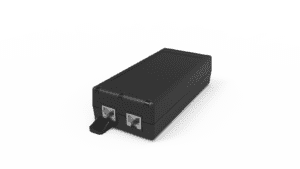
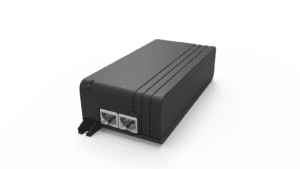
Record the POE29U-1AT(PL)D-R injector and model-specific documentation alongside switch, port and access point revisions. Record how the devices receive power. A switch and injector on the same power strip can behave differently from a setup where one stays powered through the other’s reboot.
Which events should the test separate?
Use a common clock or timestamp reference. Mark switch restart, link down, access point power state, link up, required network access and application readiness. Where logs are collected from multiple devices, record the expected timing accuracy. If a controller reports the access point offline after a delay, distinguish that notification time from the actual link loss.
| Event | Evidence to record |
|---|---|
| Switch reboot starts | Switch log or test trigger |
| Wired link drops | Port status or link event timestamps |
| Access point stays powered or restarts | Device uptime or suitable power observation |
| Wired link returns | Negotiated rate and port state |
| Service resumes | Controller, client or application health check |
An LED can help describe a state during troubleshooting, but device logs, counters or measurement can provide more precise evidence. State which evidence is authoritative for the acceptance criterion.
What happens if only the switch reboots?
Keep the injector on under the approved test conditions and restart the switch as planned. Observe whether the access point remains energized and whether Ethernet re-negotiates at the intended rate. Check the actual application path, including network services the access point relies on. A link-up event can occur before the controller or clients recover.
Document the switch configuration relevant to port recovery. Depending on the topology, forwarding policy, authentication or address configuration can affect how long it takes for the access point to resume service. Report observations from the tested setup rather than generalizing the behavior to all switches and injectors.
How is that different from injector power loss or a cable reconnect?
An injector AC interruption can remove power from the access point and introduce a full boot sequence. A cable reconnect can affect data link and PoE behavior depending on which connection is interrupted. Define the exact scenario in the test record instead of labeling all three cases as a reboot.
| Scenario | Main question |
|---|---|
| Switch reboot only | Does the powered access point restore network and application service? |
| Injector power loss | Does the endpoint boot and return to the required state? |
| Cable disconnect and reconnect | Do power and data recover as expected for the interrupted segment? |
| Planned full outage | Does the whole topology recover in the required order? |
Repeat the relevant cases and capture exceptions. A system that recovers eventually may still fail a service readiness requirement. If intervention is required, record the step and use the release process to decide whether that is acceptable.
What should the release and service records include?
Document the intended power topology, equipment revisions, port configuration and event timings. Keep a repeatable test case and include the accepted rate, application readiness and whether intervention is allowed. Describe how the field team can distinguish a device that never lost power from one that rebooted.
If a later deployment uses a different switch, injector power source or access point firmware, compare it with the tested configuration. Route relevant changes through the program’s qualification process. The record should let a service team tell whether an observed recovery delay is expected or needs investigation.
Key Takeaways
Test switch restart and injector power loss separately. Record access point power, Ethernet link and application service as separate outcomes. Tie the expected recovery to the exact topology and firmware.
FAQs
Will the access point always stay powered when the switch reboots?
It depends on the actual powering topology and equipment behavior. Verify the configuration instead of assuming continuity.
Does link up mean the access point is ready for users?
It establishes Ethernet link. Check the controller, network services and client readiness separately.
Should the injector and switch be power-cycled together to simulate this case?
That tests a different event. Keep injector power present to test a switch-only restart.
Discuss your design with Phihong. Review the multigigabit poe product family or contact Phihong with the model, operating conditions and qualification question.
Related reading: What should OEMs include in a power supply manufacturer RFQ?