









BLOG
Top 10 Features of the MQ10 Series Medical USB Chargers
QUICK LINKS
Why Does the MQ10 Series Still Matter for Low-Power Medical Devices?
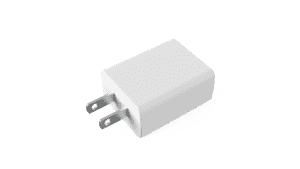
The MQ10 Series remains highly relevant because the 5W to 10W range is still a practical fit for a wide band of handheld, bedside, and portable medical electronics. Your draft positions this wattage range as the sweet spot for many essential devices, and the current MQ10 product family on Phihong’s medical catalog supports that positioning with 10W, 5V, single-port USB-A medical adapters offered in multiple regional variants.
The product documentation also shows why the line holds value for OEMs that do not need high-power USB-C complexity. The MQ10A-050B-H datasheet lists 10W output, 5V, up to 2A, IEC 60601-1 and IEC 60601-1-11 safety approvals, IP22 rating, DOE Level VI efficiency, and built-in protection features including OVP, OCP, and SCP. That combination makes it easier to position the series as a dependable low-power medical charger platform rather than just a generic wall adapter.
Useful Links
- MQ10A-050B-H product page
- MQ10A-050B-H datasheet
- Phihong medical power supplies and adapters catalog
Related Articles
- What is IEC 60601 and why it matters for medical power supply design
- Medical power solution: how low leakage current affects medical power supply selection
- Medical power supply vs. medical power adapter: what’s the difference and which one do you need
What Makes the MQ10 Series a Strong OEM Choice for Compact Medical Charging?
The MQ10 Series stands out because it combines familiar USB-A charging with medical-specific safety and environmental specs that are difficult to deliver in a very small housing. Your uploaded draft emphasizes compact size, IEC 60601 safety, low leakage current, and global export practicality, and the official datasheet backs up many of those points directly. The MQ10A-050B-H is rated for 100 to 240Vac nominal input, 90 to 264Vac input range, 100µA max leakage current at 264Vac/50Hz, and input power saving of 75mW or less.
It also helps that the wider MQ10 family includes US, EU, UK, and AU variants in both black and white versions on the current medical products page. For OEMs that want to keep the device side simple while matching charger configurations by region, that broad family structure is a real operational advantage. Phihong’s product finder and medical catalog both show those regional variants in market today.
Useful Links
- MQ10 medical family in the current product catalog
- Product finder results including MQ10 regional models
- Adapter and power supplies catalog listing MQ10 models
Related Articles
- Best guide to medical power supplies for modern medical devices
- How to choose an open-frame medical power supply for embedded healthcare equipment
- How thermal design affects open-frame medical power supply performance
Top 10 Features of the MQ10 Series Medical USB Chargers
Before getting into the list, the main reason the MQ10 Series deserves attention is that it fills a practical niche many OEMs still need: low-power, medically compliant USB charging in a compact wall-plug format. That makes it especially useful for simple diagnostic and monitoring devices that need safe, familiar, globally deployable power.
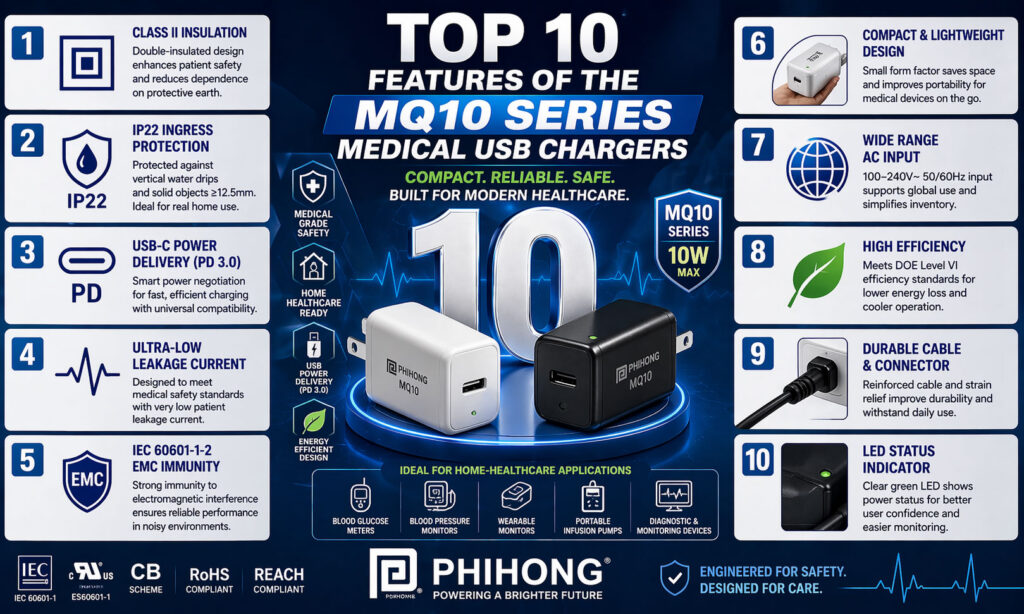
1. Compact Size Makes the MQ10 Easy to Use in Crowded Clinical and Home Environments
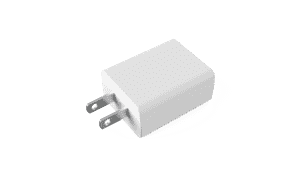
One of the strongest features of the MQ10 Series is its small physical footprint. The MQ10A-050B-H datasheet lists the enclosure at 47mm long, 38mm wide, and 22.3mm high, which supports the argument in your draft that the charger is suited to space-constrained settings where bulky adapters become inconvenient. Small size matters when devices are charged around bedsides, carts, strips, and shared outlets.
That compactness also helps keep the overall device kit more portable. For OEMs shipping smaller handheld or bedside systems, the charger becomes less intrusive and easier to package, store, and travel with. In low-power medical applications, that physical convenience can matter almost as much as the electrical spec sheet.
2. USB-A Still Offers a Familiar, Stable Interface for Low-Power Medical Charging
Your source draft makes a good case for why USB-A remains useful in this category, and the MQ10 line is built squarely around that format. The datasheet identifies a USB-A output connector with a defined charging scheme using shorted data pins 2 and 3, which reflects a straightforward 5V charging implementation for low-power devices.
For OEMs building basic portable medical electronics, that simplicity can be a benefit. Many products in this power band do not require more advanced negotiation protocols, and USB-A remains widely available and easy for users to understand. When the goal is dependable, low-friction charging rather than feature-heavy connectivity, a mature interface still has value.
3. IEC 60601-1 and IEC 60601-1-11 Support Strengthen Its Medical Positioning
A major reason the MQ10 Series stands apart from general consumer USB chargers is its medical safety alignment. The MQ10A-050B-H datasheet lists IEC 60601-1 and IEC 60601-1-11 among its safety approvals, which supports both clinical and home-healthcare use-case discussions in your draft.
That matters because medical OEMs need more than just the right voltage and current. They need a charger platform that can fit into broader regulatory and application requirements. For simple monitoring or handheld devices, using a medically aligned external power source can reduce integration risk and help keep the product architecture cleaner and easier to justify in regulated markets.
4. The MQ10 Series Delivers MOOP-Based Protection in a Small Adapter Format
Your draft refers to strong patient-protection positioning, and the currently available MQ10 product pages and datasheet consistently describe the series with MOOP classification rather than 2xMOPP wording. The MQ10A-050B-H product page lists MOOP classification, while the datasheet specifies MOOPx2 classification. That distinction is worth keeping accurate in the final article.
Even with that clarification, the core point still holds: the MQ10 is not positioned like a generic USB cube. It is built as a medical-grade charger with reinforced safety intent for low-power healthcare products. For OEMs, that gives the series credibility in applications where a small plug-in adapter still needs to meet medical-use expectations.
5. Low Leakage Current Helps Support Cleaner Medical Power Delivery
Low leakage current is one of the defining features that separates medical-grade power from ordinary adapters. For the MQ10A-050B-H, the datasheet lists maximum leakage current of 100µA at 264Vac/50Hz. That is higher than the “below 10µA” figure stated in your draft, so this is one place where the newer official spec should be treated as the source of truth.
For OEMs, the more important takeaway is that the MQ10 is clearly engineered with medical leakage constraints in mind. In low-power diagnostic and monitoring devices, cleaner external power can help reduce risk and support safer patient-adjacent use. The exact threshold needed always depends on the total system and rating target, but the MQ10 is plainly built for medical rather than consumer leakage expectations.
FEATURED PRODUCTS
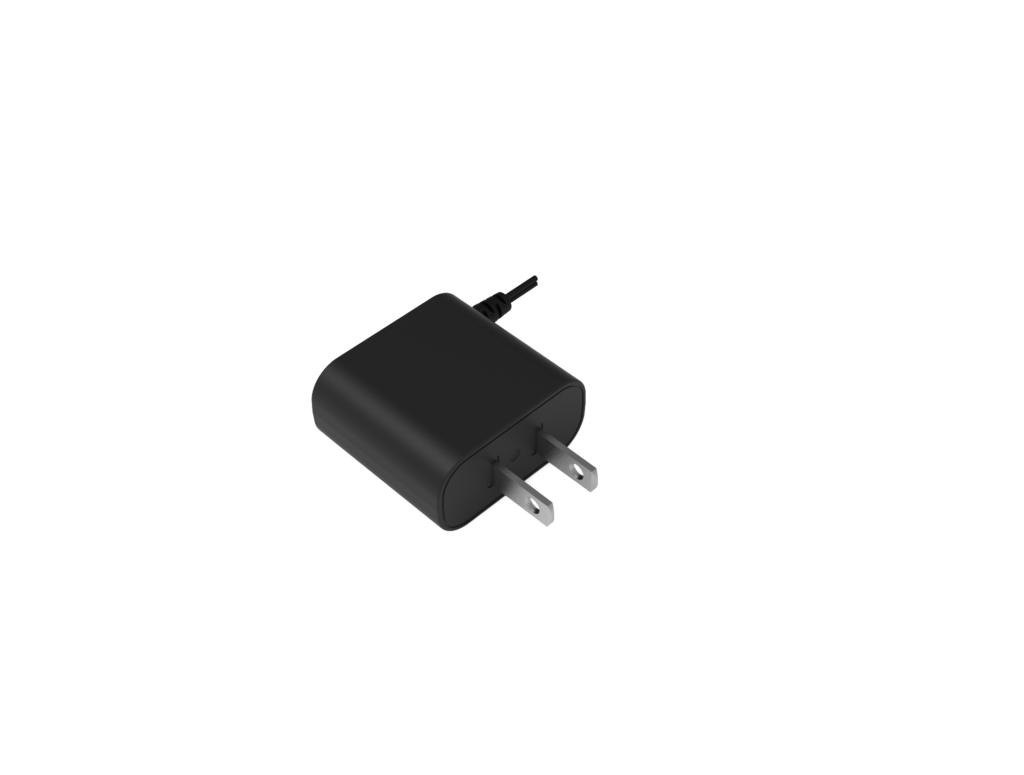
AA03A-075A-R
- Output Power - 2.75W
- Output Volt - 7.5V
- Output Current - 0.366A
- Features - Fixed Blade AC Input, Limited Power Source, Class B EMI, Level VI Efficiency, Standard Barrel Connector
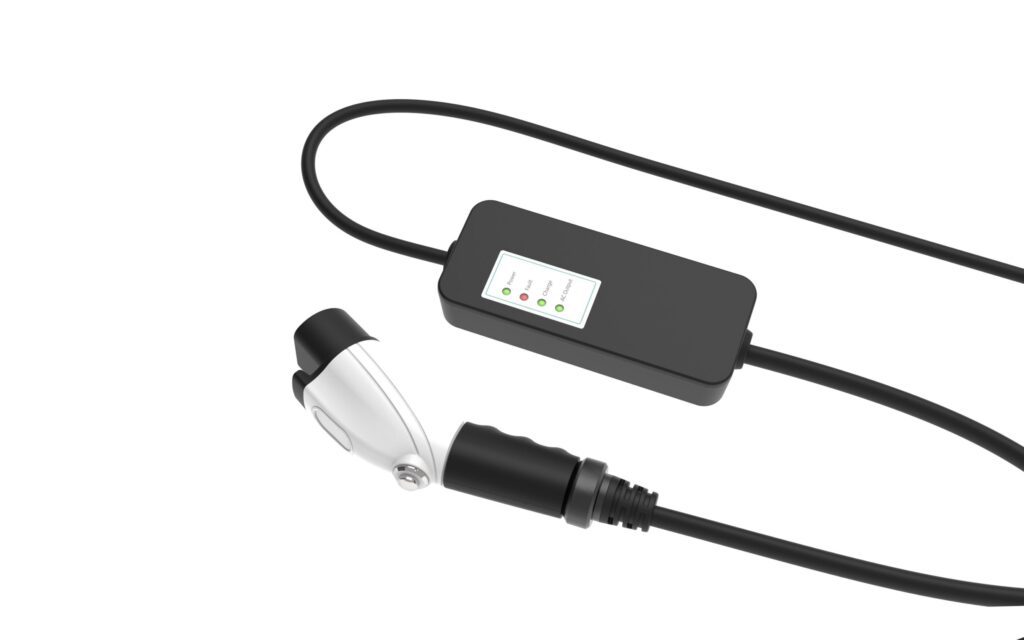
AC Series
- Output Current - 16A
- Features - Mode 2-chargers can use a circuit ranging from 8Amp to 16Amp with a local standard AC input plug installed for operation, Provides overcurrent, over voltage and short circuit protection, Protected against strong jets of water from all directions, Continuously monitors/supervises the ground connection between the AC supply and EV to ensure safe and reliable charging
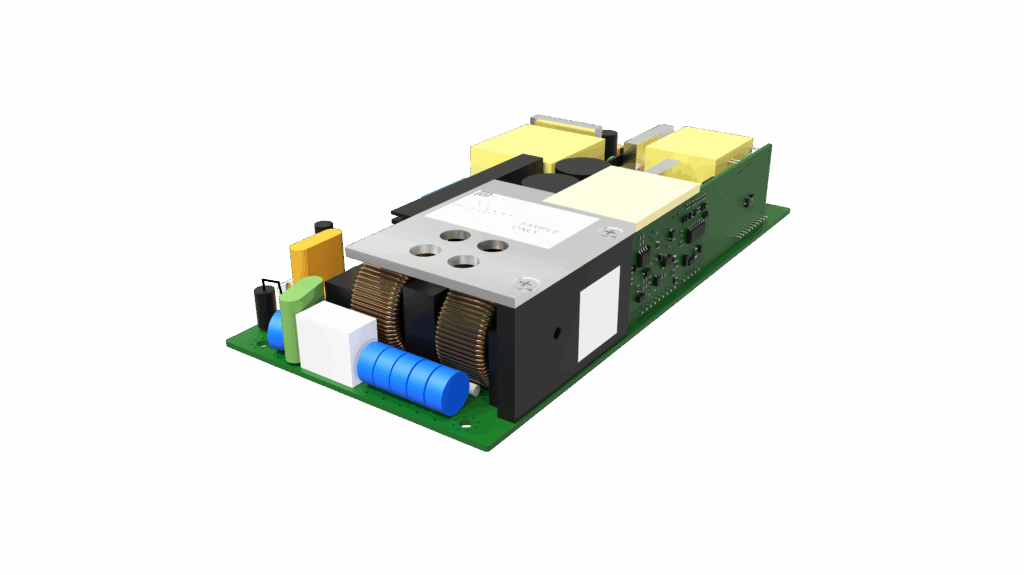
BF550-234B-R
- Output Power - 550W
- Output Volt - 12Vdc / 54.5Vdc
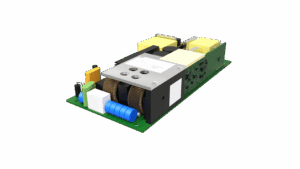
- Features - Universal AC Input range, Class I Design , Class B EMI , High Efficiency Performance , OVP, OCP, SCP, OTP Protections , Operating Altitude: 5,000M
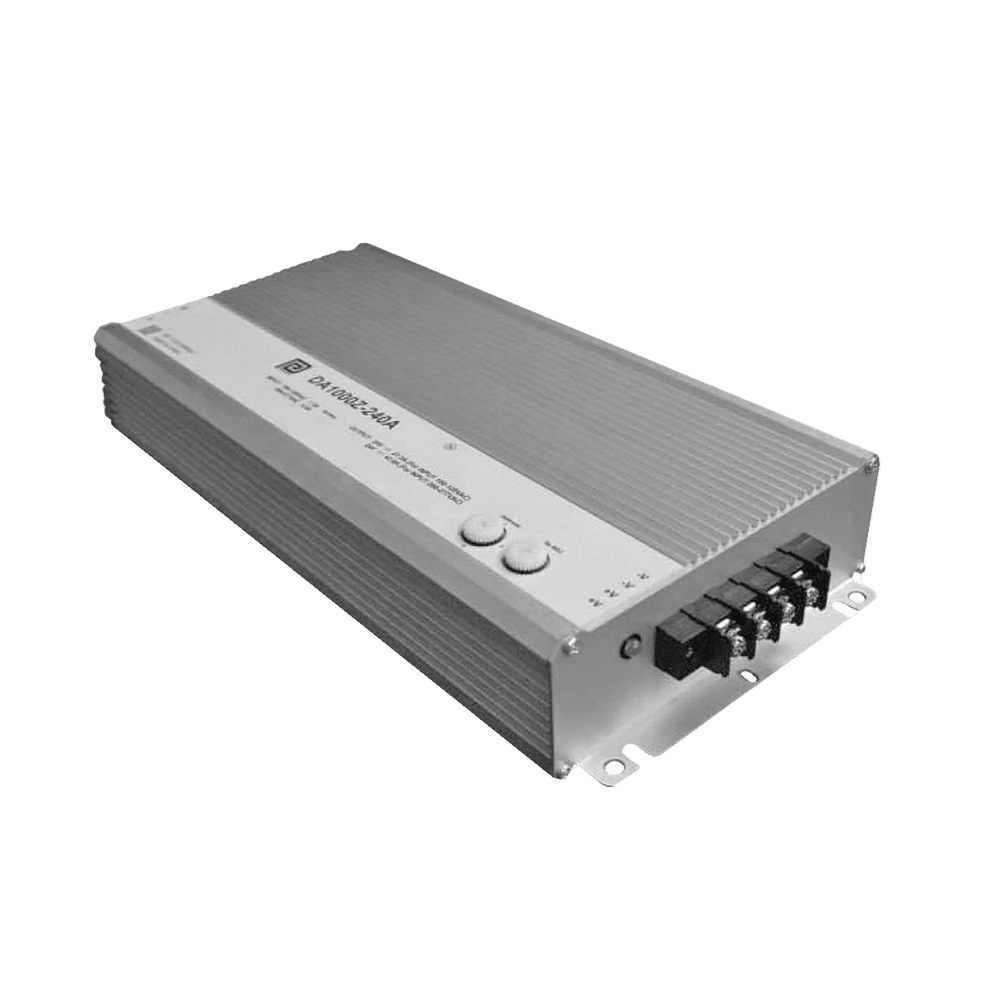
DA1000Z-240AEV-R
- Output Power - 1000W
- Output Volt - 24V
- Output Current - 42A
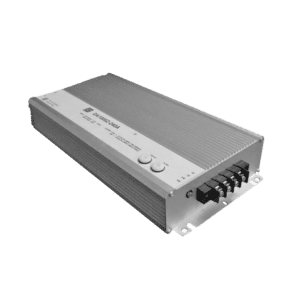
- Features - Extended operating temperature range of -40℃ to 70℃, Fan-less aluminum case filled with heat conductive glue, Able to withstand 10G vibration, Power on LED indicator, Short Circuit, Over Current, Over Voltage, and Over Temperature Protections, & Adjustable output through potentiomete
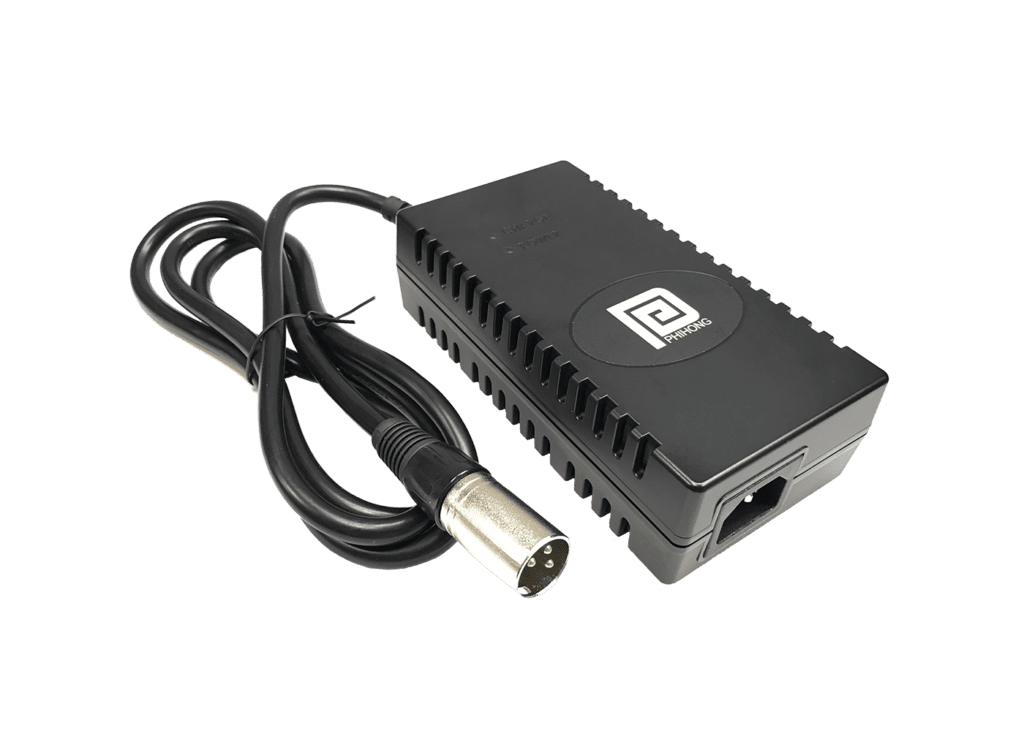
DA60U-240A-R
- Output Power - 60W
- Output Volt - 24V
- Output Current - 2.5A
- # of ports - 1
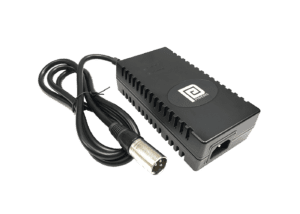
- Features - RESNA Compliant, CEC Compliant, LED Indicators Charge State, OVP, OTP, SCP, Charges AGM Batteries, Max 12hrs Charging Time
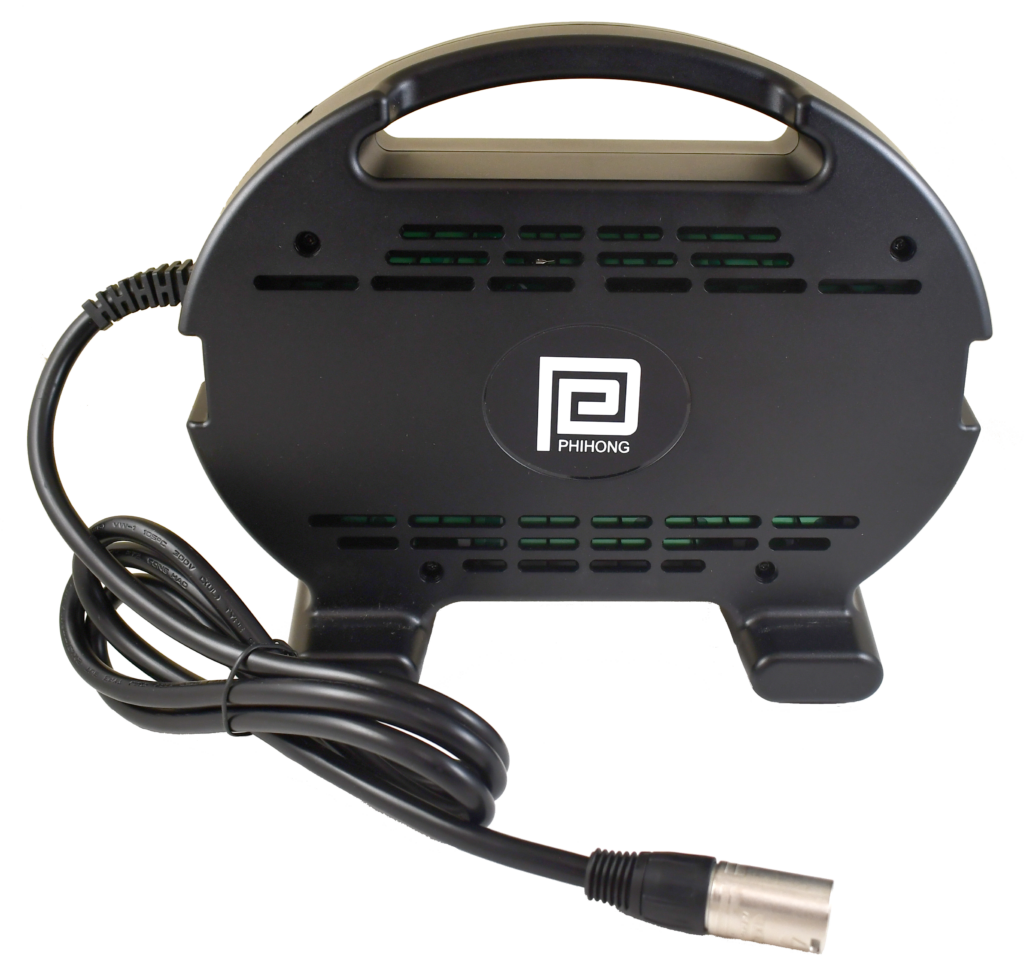
DA200U-250A-R
- Output Power - 200W
- Output Volt - 24V
- Output Current - 8A
- # of ports - 1
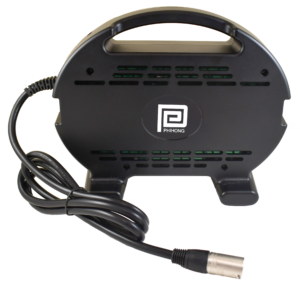
- Features - RESNA Compliant, CEC Compliant, LED Indicators Charge State, OVP, OTP, SCP, Dual-Mode Charger, Charges GEL or AGM batteries, Max 12hrs Charging Time
CLIENT'S QUOTE
Phihong’s custom OEM power solutions have transformed our product development, boosting performance and reducing overhead. Their expert engineering support has simplified both the design and manufacturing phases.
6. DOE Level VI Efficiency Helps the Charger Run Cooler and Waste Less Energy
Efficiency is a practical feature in compact chargers because wasted power becomes heat. The MQ10A-050B-H is marked DOE Level VI compliant on both the product page and the datasheet, and the datasheet also specifies no-load input power saving of 75mW or less.
That combination helps explain why the series is suitable for always-nearby medical use. A cooler-running charger is easier to live with in both home and clinical environments, and lower no-load power supports modern energy expectations. In a small product family like MQ10, efficiency is not just a regulatory line item. It is part of what makes the device feel refined and dependable.
7. Wide AC Input Makes the Series More Flexible for Global Programs
Global input capability is one of the most useful OEM-facing features in the MQ10 Series. The datasheet lists a nominal AC input rating of 100 to 240Vac and an input range of 90 to 264Vac, which means the same core electrical design can operate across common regional grids.
That flexibility supports the export and logistics point in your draft. Instead of redesigning the device-side charging architecture by market, OEMs can match region-specific MQ10 plug variants to the same end product. Since the medical products page shows current US, EU, UK, and AU MQ10 versions, this is not just a theoretical benefit. It is part of the live family structure today.
8. Built-In Protection Features Add Another Layer of Device Safety
The MQ10A-050B-H includes over-voltage protection, over-current protection, and short-circuit protection. The datasheet states OVP at 8V or less, short-circuit protection with auto recovery and no component damage, and over-current protection at 3A max across 90V to 264V AC input.
These protections matter because small external chargers often act as the first defensive layer for the connected device. In low-power medical applications, that helps preserve device reliability and reduces the chance that a simple power anomaly will become a larger product problem. For OEMs, those built-in safeguards strengthen the case for using a purpose-built medical charger family rather than a commodity power accessory.
9. The Series Is Tuned for Real Medical Applications, Not Just Generic Electronics
Another useful feature is how clearly the MQ10 is mapped to actual medical-use categories. The official datasheet explicitly lists blood glucose meters, blood pressure monitors, and wearable monitoring devices among its applications. That specificity supports your draft’s argument that this is a good fit for essential low-power medical electronics rather than an abstract “could be used anywhere” adapter.
For OEM marketers and engineers alike, that kind of application mapping helps. It gives the charger a more credible position in product planning conversations and makes it easier to align the external power choice with the intended end-device class.
10. IP22 Rating and Accessory Cable Support Improve Real-World Usability
The MQ10A-050B-H datasheet lists IP22 rating, which is a meaningful practical feature for medical adapters that may be used in home or light clinical environments where incidental exposure is possible. The same datasheet also lists multiple compatible USB cable options sold separately, including USB-A to Micro-B and Mini-B variants in different lengths and wire gauges.
Taken together, those details make the series more usable as a real product platform. IP22 adds environmental value, while the defined accessory cable ecosystem makes it easier for OEMs to build around standard connectors and shipping options. In a small charger family, that kind of ecosystem support can be just as helpful as the electrical headline specs.
By combining compact size, medical safety approvals, wide-input flexibility, DOE Level VI efficiency, and built-in circuit protection, the MQ10 Series gives OEMs a clean low-power charging option that still feels purpose-built for healthcare use. Your draft’s overall positioning is strong, but the newer official materials sharpen it further by clarifying which features are documented today and how the family is currently sold.
For smaller diagnostic, wearable, and monitoring products, the strongest value of the MQ10 is not that it tries to do everything. It is that it does a focused job well: deliver medically aligned USB-A charging in a compact, globally adaptable form factor that is easy for OEM teams and end users to understand.
Useful Links
- MQ10A-050B-H official datasheet
- MQ10A-050B-H US product page
- Phihong press release on low-cost USB-A medical adapters
Related Articles
- What is IEC 60601 and why it matters for medical power supply design
- Medical power solution: how low leakage current affects medical power supply selection
- Medical power supply: how to choose the best solution for safe, reliable medical devices
How Phihong Can Help OEMs Use the MQ10 Series More Effectively
Phihong is in a strong position to support OEMs that need simple, medically aligned low-power charging because it offers both the current MQ10 family and a broader medical content base around IEC 60601, leakage current, architecture selection, and application-fit decisions. The live product ecosystem shows multiple MQ10 regional variants, while the datasheet and medical catalog provide enough technical detail for early design and sourcing evaluation.
For OEM teams working on glucose meters, blood pressure products, wearables, or other compact devices in the 5V USB range, the MQ10 can serve as a practical, ready-to-integrate external power option. The value is not only the charger itself. It is the ability to use a medically documented, globally deployable platform that keeps the device-side design simpler and the compliance conversation more grounded.
As low-power medical devices continue to expand across clinical and home settings, compact medically qualified USB charging will likely remain a useful category. The MQ10 Series is a good example of why older connector formats can still be the right answer when the application, power level, and user expectations all line up.

CONTACT US TODAY
From concept to production, Phihong delivers custom OEM power solutions tailored to your specifications.
POE technology supports the centralization of power

AC Adapter Guide: Everything You Need to Know
Moreover, PoE technology supports the centralization of power management. By powering devices through a PoE-enabled network …
AC DC Power Chargers and How They Work: A Comprehensive Technical Breakdown
Moreover, PoE technology supports the centralization of power management. By powering devices through a PoE-enabled network …

USB-C Charger: Shaping the Future of the Tech World
Moreover, PoE technology supports the centralization of power management. By powering devices through a PoE-enabled network …

AC Adapter Guide: Everything You Need to Know
Moreover, PoE technology supports the centralization of power management. By powering devices through a PoE-enabled network …

AC DC Power Chargers and How They Work: A Comprehensive Technical Breakdown
Moreover, PoE technology supports the centralization of power management. By powering devices through a PoE-enabled network …

USB-C Charger: Shaping the Future of the Tech World
Moreover, PoE technology supports the centralization of power management. By powering devices through a PoE-enabled network …