










BLOG
Top 10 Advantages of Using 2″ x 4″ Open-Frame Medical Power Supplies
QUICK LINKS
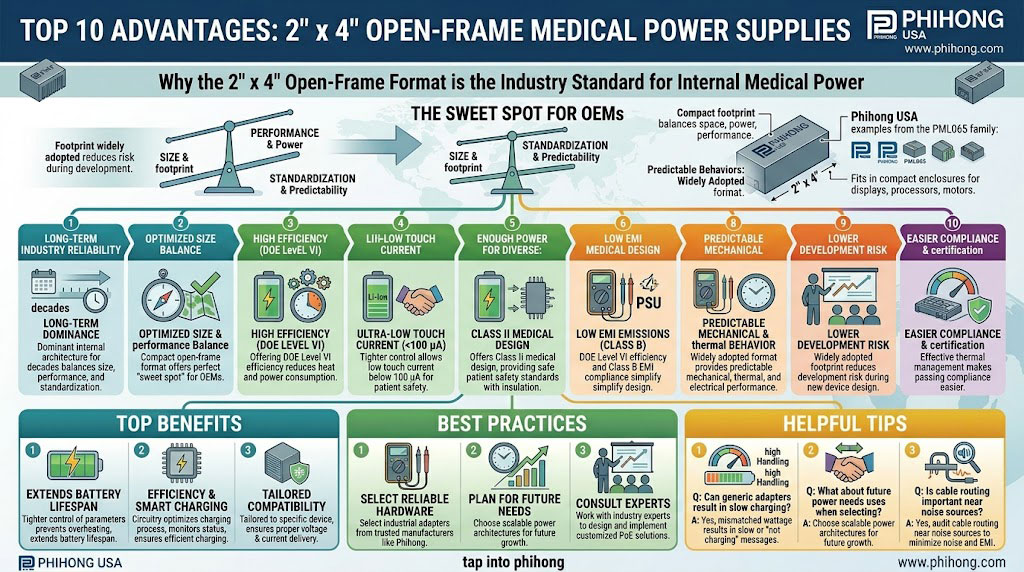
Why Is the 2″ x 4″ Open-Frame Format Still the Industry Standard for Internal Medical Power?
The 2″ x 4″ open-frame power supply has remained the dominant internal power architecture for decades because it balances size, performance, and standardization in a way that very few other formats can match. Your uploaded draft positions this footprint as a “sweet spot” for OEMs, and that holds true today across many categories of medical equipment.
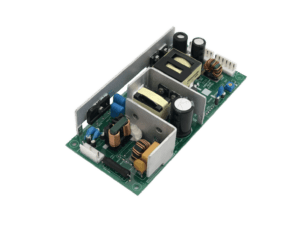
Phihong’s current medical product lineup supports that position clearly. Its PML065 family represents the 60W–65W class in a compact open-frame format, offering Class II design, DOE Level VI efficiency, Class B EMI, and low touch current below 100 µA. That combination shows why this footprint works so well in real devices. It delivers enough power for displays, processors, and moderate motor loads while still fitting inside compact enclosures. (phihong.com)
From an engineering perspective, the real advantage is predictability. Because the 2″ x 4″ footprint is widely adopted, mechanical, thermal, and electrical behaviors are well understood across the industry. That reduces risk during development and makes it easier to design devices that pass compliance, manage heat effectively, and remain serviceable over time.
Useful Links
- 65W 15V open-frame medical power supply (PML065 series)
- Phihong medical open-frame and adapter product catalog
- Adapter and power supplies catalog with 2×4 open-frame listings
Related Articles
- How to choose an open-frame medical power supply for embedded healthcare equipment
- How to design internal medical power systems: isolation, EMC, and compliance explained
- How thermal design affects open-frame medical power supply performance
When Does a 2″ x 4″ Open-Frame PSU Make More Sense Than Other Power Options?
The 2″ x 4″ format is most useful when the device is designed for internal integration rather than external power. It works especially well in equipment that has a defined enclosure, controlled airflow, and a need for efficient space utilization. Your source document compares this approach to custom-sized PSUs and highlights the long-term flexibility of sticking with a standard footprint.
Phihong’s recent medical articles reinforce that same decision-making process. Its content around internal power design and open-frame selection emphasizes how thermal behavior, EMI control, and enclosure-level integration affect performance. That aligns directly with the strengths of the 2″ x 4″ format, which allows engineers to design the power system as part of the overall product rather than as an external accessory. (phihong.com)
In practice, this format is chosen when OEMs want tighter control over thermal paths, internal layout, and EMI grounding. It is also preferred in products where external adapters would introduce clutter, extra cabling, or less predictable environmental behavior.
Useful Links
- Open-frame vs. external medical power comparison
- How to validate thermal performance of open-frame power supplies in real enclosures
- Medical power supply selection guide for OEMs
Related Articles
- Best guide to medical power supplies for modern medical devices
- What is IEC 60601 and why it matters for medical power supply design
- Medical power supply vs. medical power adapter: what’s the difference and which one do you need
Before getting into the list, the key takeaway is that the 2″ x 4″ open-frame PSU is not just a size standard. It is a design strategy that supports consistency, flexibility, and long-term reliability across many types of medical devices.
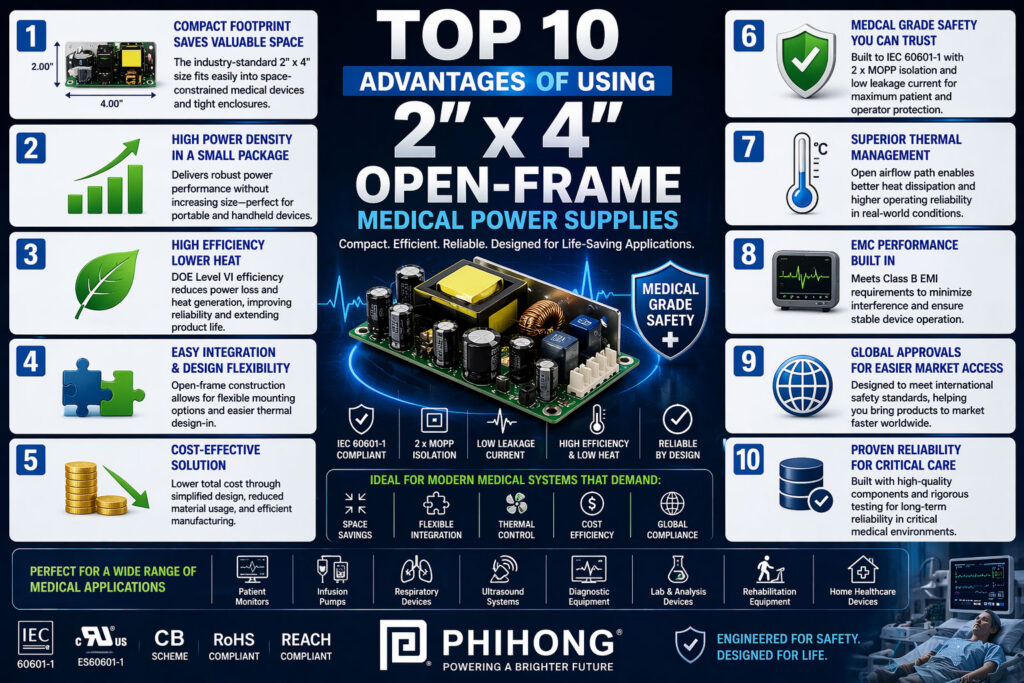
Top 10 Advantages of Using 2″ x 4″ Open-Frame Medical Power Supplies
1. The Standard Footprint Makes Sourcing and Replacement Much Easier
One of the biggest advantages of the 2″ x 4″ format is that it is widely standardized. Your draft correctly highlights this as a major benefit because it allows OEMs to design around a known geometry and maintain flexibility over the product lifecycle.
This is especially useful when dealing with supply chain changes or component lifecycle management. If a specific model becomes unavailable, it is often easier to find a compatible replacement within the same footprint than to redesign the enclosure. That makes the format a practical hedge against supply disruption.
2. High Power Density Allows More Room for Core Device Components
The 2″ x 4″ form factor is known for delivering relatively high power output within a compact board area. Phihong’s PML065 series demonstrates this clearly by providing up to 65W in this footprint. (phihong.com)
For OEMs, that means more internal space can be allocated to sensors, processors, and user interfaces. In modern medical design, where miniaturization and portability are increasingly important, that space efficiency is a major advantage.
3. Open-Frame Design Enables Better Thermal Control
Thermal management is one of the most important aspects of internal power design. Open-frame PSUs allow engineers to manage airflow more directly by positioning fans, vents, or heat paths exactly where they are needed.
Phihong’s thermal design article reinforces that real-world enclosure behavior can differ significantly from bench testing. The open-frame format allows engineers to tune thermal performance based on the actual device layout, which helps improve reliability and prevent overheating under continuous use. (phihong.com)
4. Internal Integration Simplifies Cable Routing
Using an open-frame PSU internally eliminates the need for bulky external cables and adapters. Your draft calls out improved cable management, and that benefit becomes more significant as device complexity increases.
Clean internal routing reduces assembly complexity and improves long-term reliability by minimizing loose connections and mechanical stress points. It also contributes to a more compact and professional device design.
5. Chassis Grounding Helps Improve EMI Performance
One of the strongest technical advantages of open-frame integration is the ability to use the device chassis as part of the EMI control strategy. When properly grounded, the chassis can act as a shield and noise sink.
Phihong’s internal design content emphasizes EMC and grounding as key parts of medical power integration. This is especially important for devices with sensitive measurement electronics, where noise control directly affects performance. (phihong.com)
FEATURED PRODUCTS
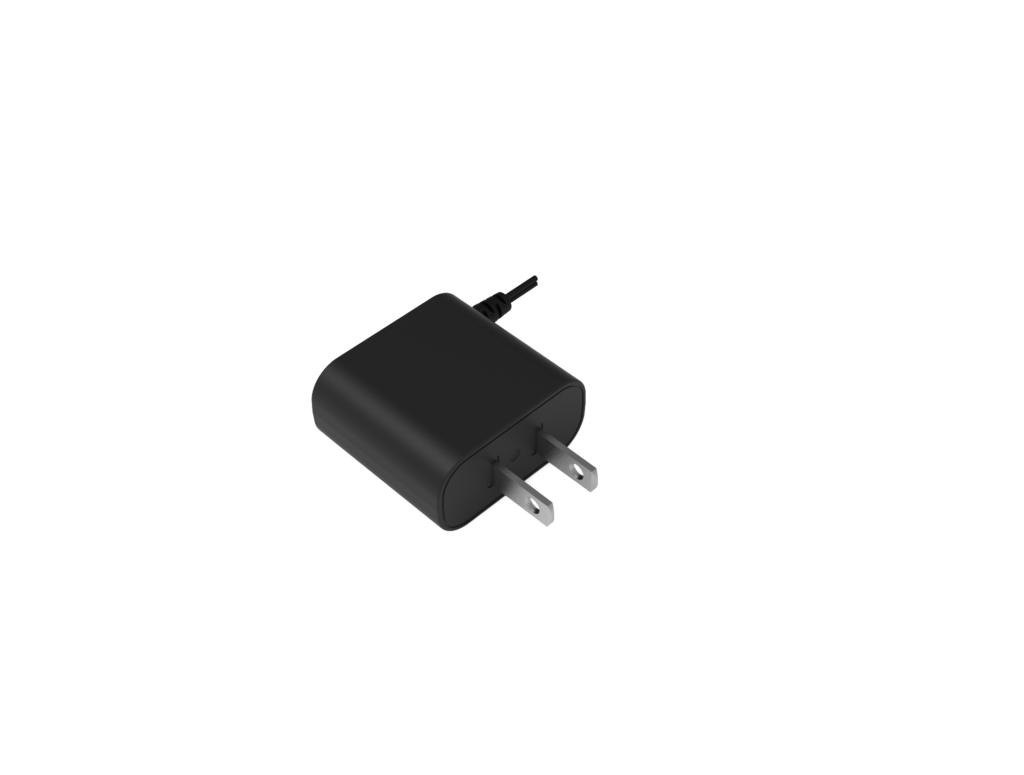
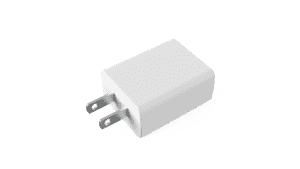
AA03A-075A-R
- Output Power - 2.75W
- Output Volt - 7.5V
- Output Current - 0.366A
- Features - Fixed Blade AC Input, Limited Power Source, Class B EMI, Level VI Efficiency, Standard Barrel Connector
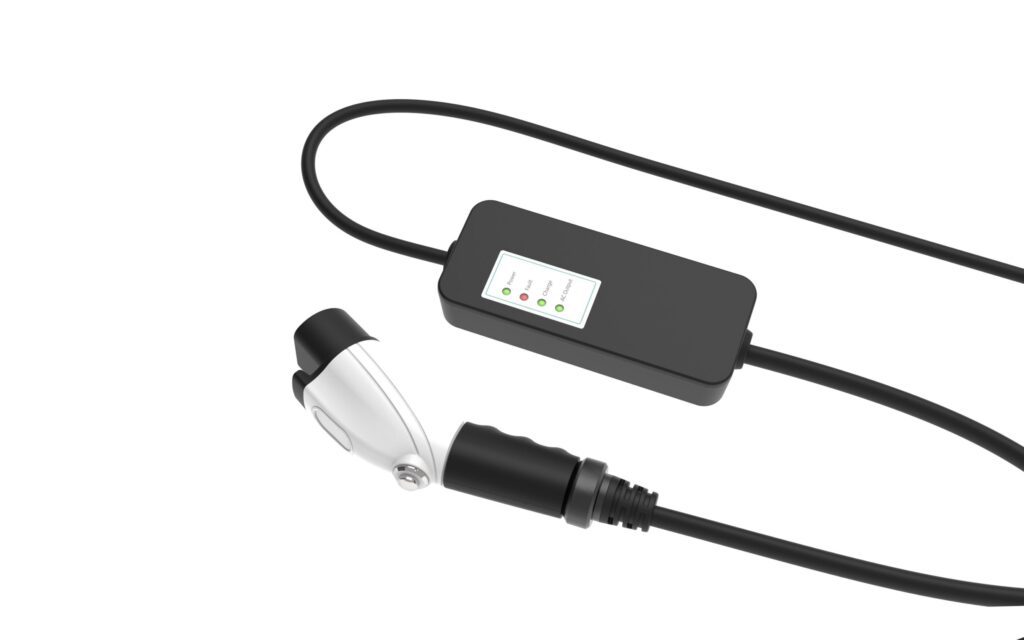
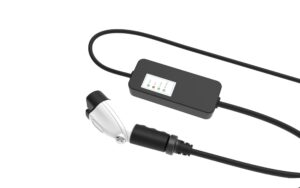
AC Series
- Output Current - 16A
- Features - Mode 2-chargers can use a circuit ranging from 8Amp to 16Amp with a local standard AC input plug installed for operation, Provides overcurrent, over voltage and short circuit protection, Protected against strong jets of water from all directions, Continuously monitors/supervises the ground connection between the AC supply and EV to ensure safe and reliable charging
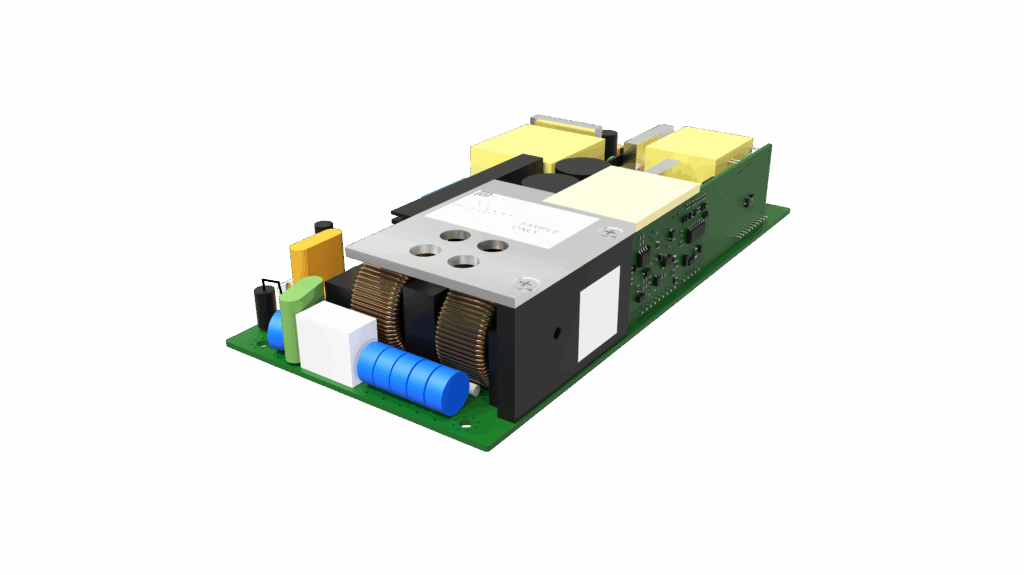
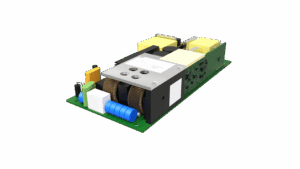
BF550-234B-R
- Output Power - 550W
- Output Volt - 12Vdc / 54.5Vdc
- Features - Universal AC Input range, Class I Design , Class B EMI , High Efficiency Performance , OVP, OCP, SCP, OTP Protections , Operating Altitude: 5,000M
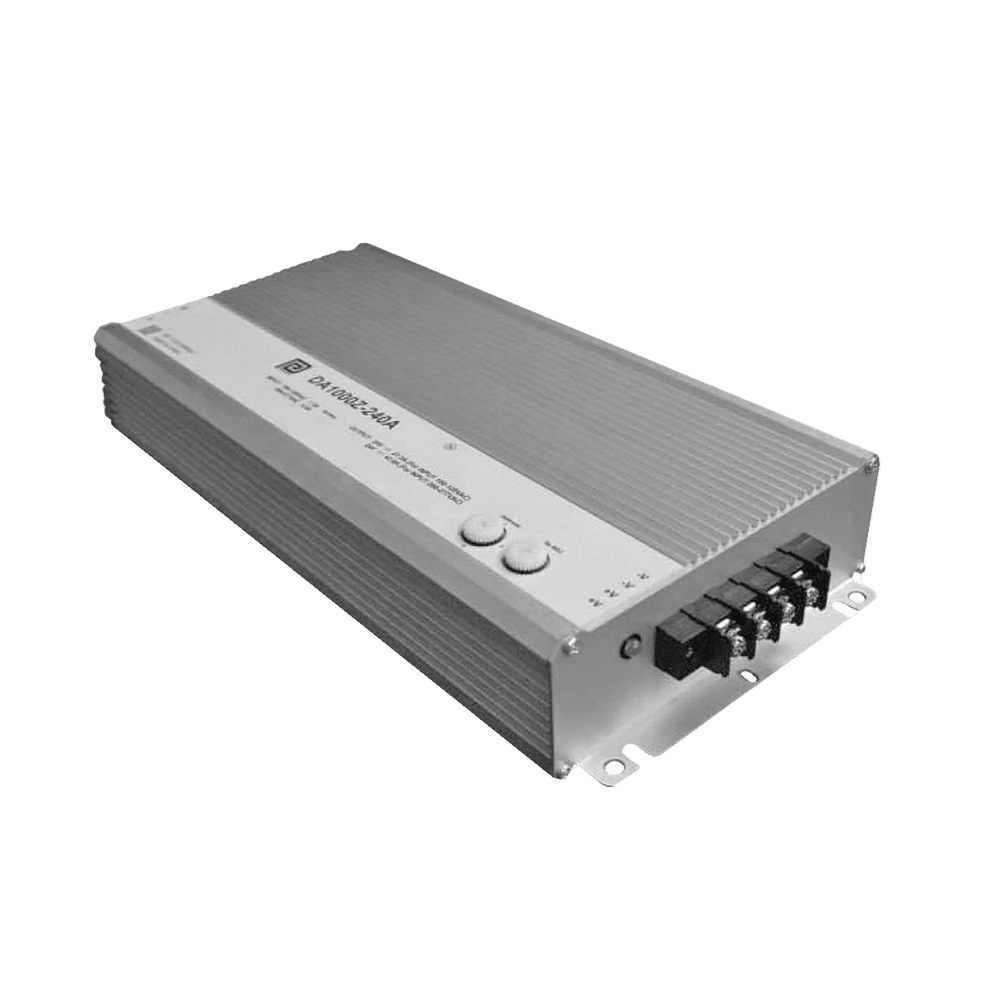
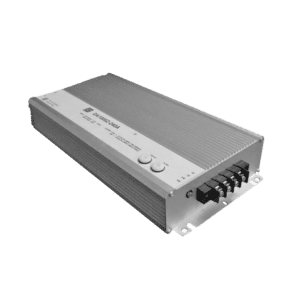
DA1000Z-240AEV-R
- Output Power - 1000W
- Output Volt - 24V
- Output Current - 42A
- Features - Extended operating temperature range of -40℃ to 70℃, Fan-less aluminum case filled with heat conductive glue, Able to withstand 10G vibration, Power on LED indicator, Short Circuit, Over Current, Over Voltage, and Over Temperature Protections, & Adjustable output through potentiomete
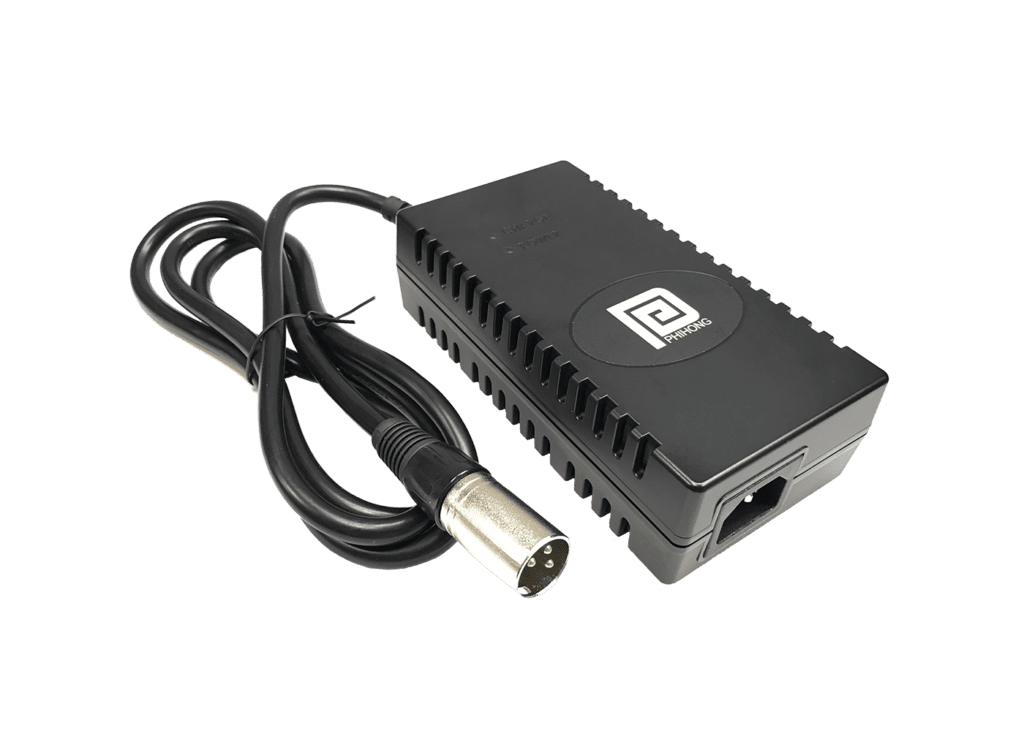
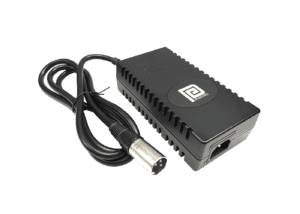
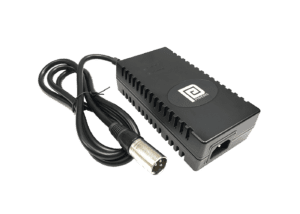
DA60U-240A-R
- Output Power - 60W
- Output Volt - 24V
- Output Current - 2.5A
- # of ports - 1
- Features - RESNA Compliant, CEC Compliant, LED Indicators Charge State, OVP, OTP, SCP, Charges AGM Batteries, Max 12hrs Charging Time
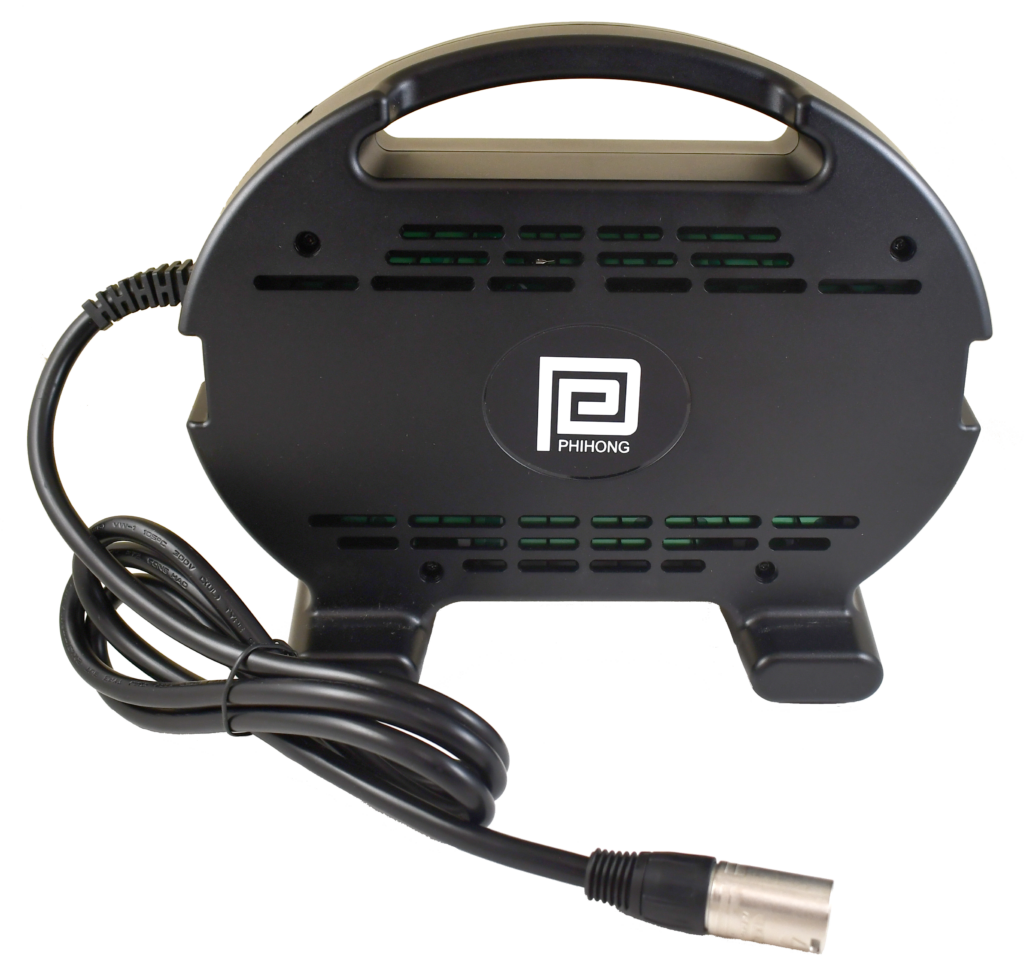
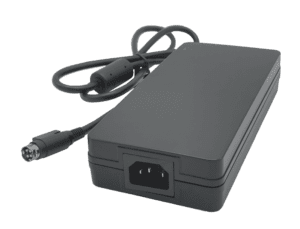
DA200U-250A-R
- Output Power - 200W
- Output Volt - 24V
- Output Current - 8A
- # of ports - 1
- Features - RESNA Compliant, CEC Compliant, LED Indicators Charge State, OVP, OTP, SCP, Dual-Mode Charger, Charges GEL or AGM batteries, Max 12hrs Charging Time
6. Lower Overall System Weight Compared to External Adapters
Because open-frame supplies do not require a separate housing or external cabling, they can reduce the overall system weight. Your draft highlights this benefit for cart-based and mobile equipment.
In applications where mobility matters, reducing weight can improve usability and transport efficiency. It also simplifies system design by integrating power directly into the device.
7. Cost Efficiency Improves at Scale
Open-frame designs typically have fewer materials than enclosed adapters, which can reduce cost at higher production volumes. Your draft correctly positions this as a scaling advantage for OEMs.
For large production runs, even small cost differences per unit can have a significant impact. Using a standardized open-frame format helps control those costs while maintaining compliance.
8. Easier Integration of 2 x MOPP Safety Requirements
Phihong’s medical open-frame supplies are designed to meet 2 x MOPP requirements, which are critical for patient safety. Internal integration allows engineers to validate isolation and safety within a controlled environment.
This makes it easier to manage safety design compared to external systems where multiple components interact across different boundaries. For medical OEMs, that can simplify certification efforts.
9. Flexible Output Options Support Different Device Architectures
The 2″ x 4″ category supports a wide range of output voltages, such as 12V, 15V, and 24V, as shown in Phihong’s PML065 series. (phihong.com)
This flexibility allows OEMs to choose a supply that matches their system requirements without major redesign. It also supports customization where needed, which is important for specialized medical equipment.
10. Easier Serviceability and Maintenance for Technicians
Open-frame power supplies are easier to access for testing and replacement. Your draft highlights direct access as a benefit, and this is particularly important in clinical environments where downtime must be minimized.
Standard mounting and accessible test points make troubleshooting more straightforward for technicians. That helps keep equipment operational and reduces service complexity over the product lifecycle.
The 2″ x 4″ open-frame format continues to be one of the most practical and widely used internal power solutions in medical device design. It combines standardization, flexibility, and performance in a way that supports both engineering and operational goals.
For OEMs, the real advantage is not just the footprint itself. It is the ecosystem built around it, including standardized mounting, predictable thermal behavior, and compatibility with a wide range of applications.
Useful Links
- 65W open-frame medical power supply (PML065 series)
- Phihong medical power supply catalog
- Adapter and power supply catalog
Related Articles
- How to choose an open-frame medical power supply for embedded healthcare equipment
- How thermal design affects open-frame medical power supply performance
- Medical power supply selection guide for OEMs
How Phihong Helps OEMs Maximize the Benefits of 2″ x 4″ Open-Frame Power Supplies
Phihong’s current product lineup and medical content provide a strong foundation for OEMs working with 2″ x 4″ open-frame designs. The PML065 family demonstrates how this footprint can deliver reliable power with Class II design, low touch current, and integrated protection features.
Phihong’s recent articles also support the broader design process by addressing internal integration, EMC behavior, and thermal performance. This helps OEMs not only select the right power supply but also integrate it effectively into their devices.
As medical devices continue to evolve toward more compact and efficient designs, the 2″ x 4″ open-frame format will remain a key option for engineers looking to balance performance, safety, and flexibility.
CLIENT'S QUOTE
Phihong’s custom OEM power solutions have transformed our product development, boosting performance and reducing overhead. Their expert engineering support has simplified both the design and manufacturing phases.

CONTACT US TODAY
From concept to production, Phihong delivers custom OEM power solutions tailored to your specifications.
POE technology supports the centralization of power

AC Adapter Guide: Everything You Need to Know
Moreover, PoE technology supports the centralization of power management. By powering devices through a PoE-enabled network …
AC DC Power Chargers and How They Work: A Comprehensive Technical Breakdown
Moreover, PoE technology supports the centralization of power management. By powering devices through a PoE-enabled network …

USB-C Charger: Shaping the Future of the Tech World
Moreover, PoE technology supports the centralization of power management. By powering devices through a PoE-enabled network …

AC Adapter Guide: Everything You Need to Know
Moreover, PoE technology supports the centralization of power management. By powering devices through a PoE-enabled network …

AC DC Power Chargers and How They Work: A Comprehensive Technical Breakdown
Moreover, PoE technology supports the centralization of power management. By powering devices through a PoE-enabled network …

USB-C Charger: Shaping the Future of the Tech World
Moreover, PoE technology supports the centralization of power management. By powering devices through a PoE-enabled network …