









BLOG
Best Guide to Ultra-Slim 460W Power Adapters: High Power Density, Thermal Design, and Coreless DC Cord Innovation
QUICK LINKS
What makes a 460W external power adapter difficult to design?
A 460W external power adapter is difficult to design because it must deliver high output power while still meeting real-world expectations for size, weight, thermal behavior, efficiency, EMI performance, mechanical durability and user handling. As wattage increases, the adapter can no longer be evaluated like a basic laptop charger or low-power accessory. OEM teams need to think about power density, peak-load behavior, cable design, surface temperature, surge immunity, standby power and system-level integration.
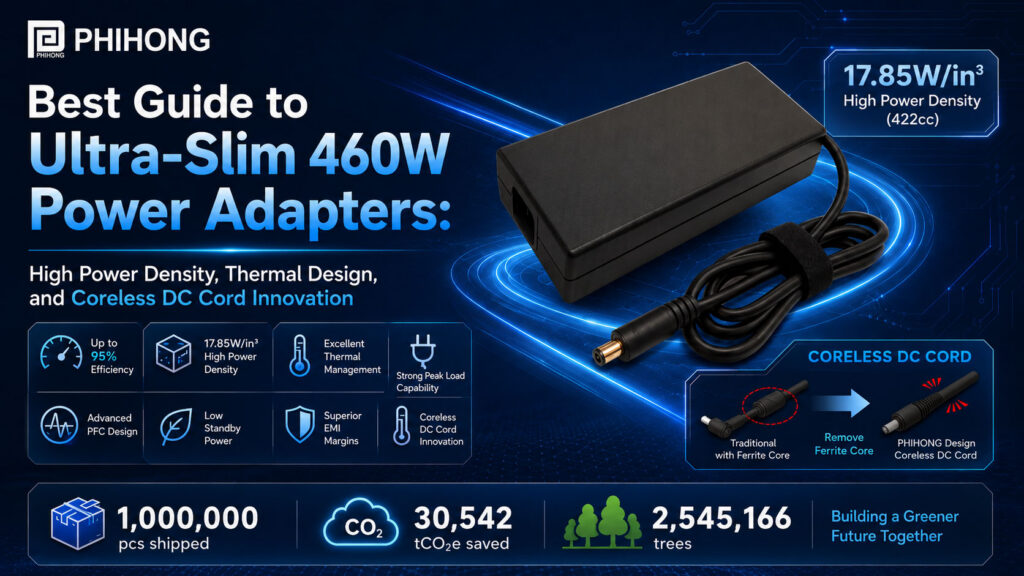
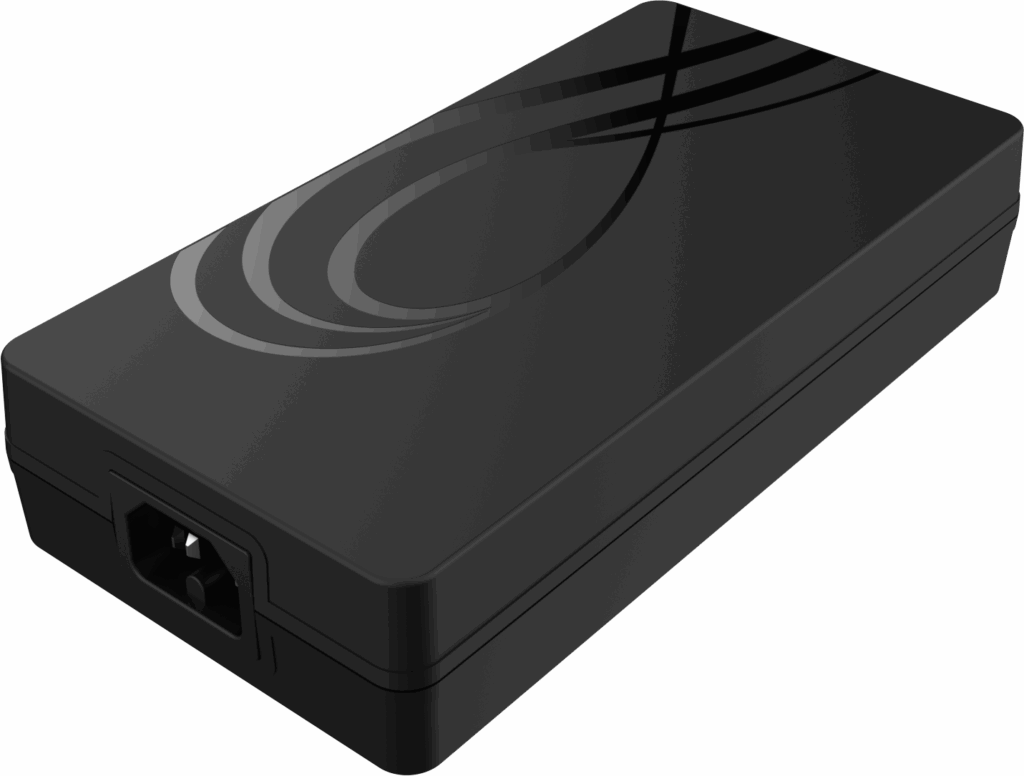
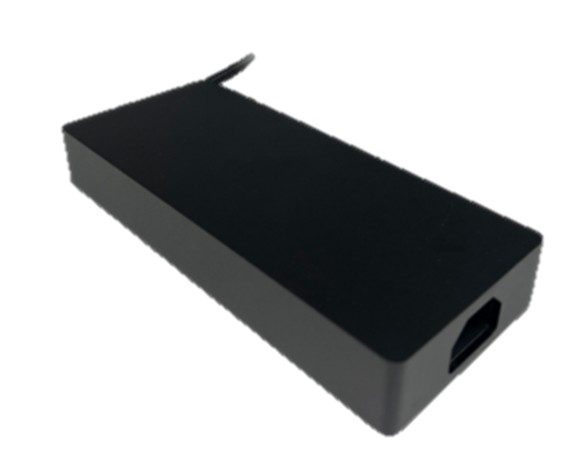
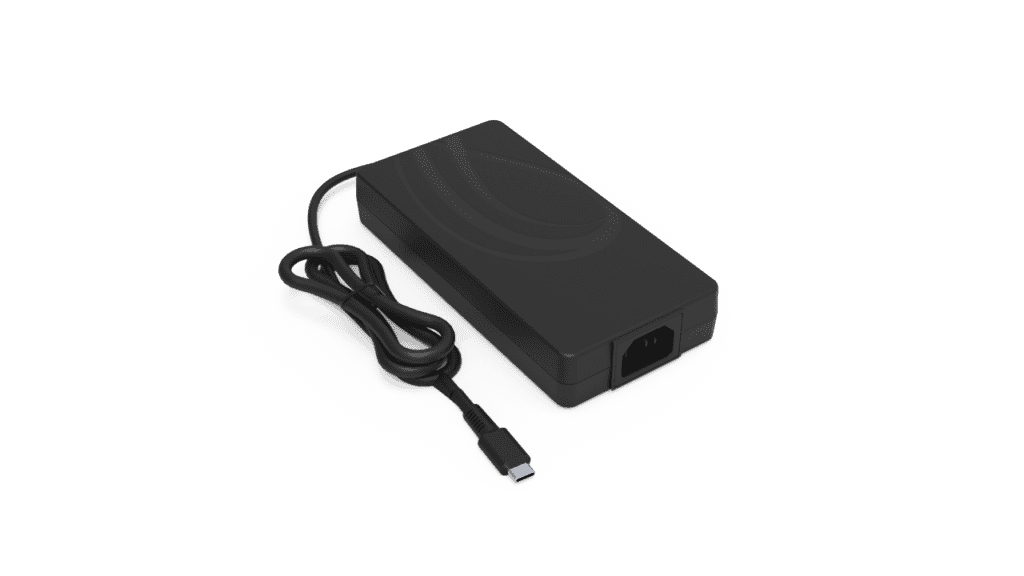
Phihong’s AA460U-205A-R is a useful real-world example for this category. According to Phihong’s supplied product development materials, the AA460U-205A-R is an ultra-slim 460W external power adapter with a coreless DC cord design, stated power density of 17.85W/in³, approximate case volume of 422cc and product weight under 750g. Those figures show why high-wattage adapter design is not only about reaching the required output. It is about delivering that power in a compact package that OEMs can realistically integrate into high-performance equipment.
| 460W Adapter Challenge | Why It Matters for OEMs | What Teams Should Review |
|---|---|---|
| High output power | 460W external power must support demanding equipment loads. | Continuous load, peak load, voltage profile, connector strategy and power margin. |
| Compact enclosure | Smaller case volume can increase thermal and layout pressure. | Power density, internal component placement, airflow exposure and surface temperature. |
| Cable design | The DC cord affects weight, handling, appearance and EMI strategy. | Cord construction, ferrite-core removal, wrapping behavior and mechanical durability. |
| Compliance and reliability | Higher power increases the importance of EMI, surge and thermal validation. | EMC/EMI behavior, surge immunity, efficiency, standby power and fault protection. |
Why This Matters
• High-wattage external adapters must balance power, density, temperature, EMI and user handling at the same time.
• A 460W adapter can become a system-design decision for OEM products, not just an accessory selected late in development.
What OEMs Should Do Now
• Define the device’s real continuous and peak-load power needs before selecting a 460W adapter platform.
• Review mechanical size, weight, cord design, thermal limits, EMI requirements and surge conditions together.
Useful Links
Power Adapter Product Line: www.phihong.com/products/adapters/
GaN Power Adapter Guide: www.phihong.com/best-guide-to-gan-power-adapters-what-modern-devices-need-from-compact-high-density-power/
Contact Phihong: www.phihong.com/contact
Related Links
How 330W GaN Power Adapters Support Gaming Laptops and Mobile Workstations: www.phihong.com/how-330w-gan-power-adapters-support-gaming-laptops-and-mobile-workstations/
Why 65W GaN Power Adapters Are Becoming the New Standard for Commercial Laptops: www.phihong.com/why-65w-gan-power-adapters-are-becoming-the-new-standard-for-commercial-laptops/
FEATURED PRODUCTS
AM250U-540AP-R
AA240U-200A-R
AA240U-200B-R
AA280U-200B-R
AA240U-59FKEA-R
AA36U-240B-R
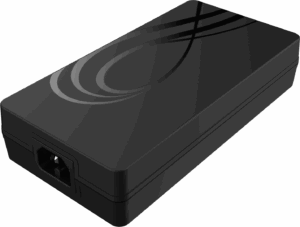

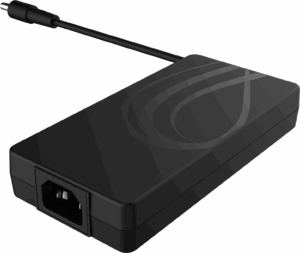
Why does power density matter in an ultra-slim high-wattage adapter?
Power density matters because OEMs increasingly need higher output power without accepting oversized external adapters. In high-performance equipment, industrial systems, portable workstations, computing platforms and other demanding electronics, adapter size can affect product perception, packaging, mobility, cable management and customer experience. A 460W adapter that is too large or heavy may create mechanical and usability problems even if it meets the electrical requirement.
Phihong’s supplied engineering data states that the AA460U-205A-R reaches a power density of 17.85W/in³ with an approximate case volume of 422cc and weight under 750g. Those figures are important because they connect electrical capacity to physical design. In an ultra-slim adapter, the internal power architecture, layout, component selection and thermal strategy all need to support higher power delivery inside a constrained volume. For OEMs, power density should be evaluated alongside operating conditions, surface temperature, cable configuration and device load behavior.
| Power Density Factor | Why It Matters | What OEM Teams Should Review |
| Watts per cubic inch | Shows how much power is delivered relative to enclosure volume. | Stated W/in³, case volume, physical dimensions and product fit. |
| Adapter weight | Higher wattage can make adapters heavy and harder to handle. | Weight target, portability, mounting, cable strain and shipping impact. |
| Slim form factor | A thinner case can improve appearance and handling but raises thermal pressure. | Internal layout, case temperature, material strategy and heat distribution. |
| Product experience | Adapter size can affect customer perception and equipment portability. | Packaging, desk use, travel use, cable storage and service replacement. |
Why This Matters
• Power density helps OEMs compare high-wattage adapters by usable design value, not only by wattage.
• Compact 460W adapter design depends on thermal layout, efficiency and mechanical execution working together.
What OEMs Should Do Now
• Evaluate power density together with thermal data, case volume, weight and intended user environment.
• Avoid choosing a high-density adapter based only on headline wattage without validating real equipment conditions.
Useful Links
Power Adapter Product Line: www.phihong.com/products/adapters/
GaN Power Supply Manufacturing: www.phihong.com/gan-power-supply-manufacturing-how-gallium-nitride-is-revolutionizing-efficiency-and-performance-for-oems/
Contact Phihong: www.phihong.com/contact
Related Links
Best Guide to GaN Power Adapters: What Modern Devices Need From Compact, High-Density Power: www.phihong.com/best-guide-to-gan-power-adapters-what-modern-devices-need-from-compact-high-density-power/
How 330W GaN Power Adapters Support Gaming Laptops and Mobile Workstations: www.phihong.com/how-330w-gan-power-adapters-support-gaming-laptops-and-mobile-workstations/
How can a 460W adapter stay slim without overheating?
A 460W adapter can stay slim only when electrical architecture, efficiency, PCB placement and thermal distribution are designed together. At this power level, heat is one of the central constraints. A compact enclosure gives engineers less room to spread components, manage hot spots or rely on large mechanical mass. That means the adapter’s internal layout must help move heat away from sensitive areas and distribute thermal load more evenly across the case.
According to Phihong’s supplied engineering materials, the AA460U-205A-R uses a front-end Active Bridge Rectifier design and interleaved PFC topology. Phihong also highlights organized PCB placement for thermal distribution. The supplied material states case surface temperature below 70°C at 100Vac, Ta 25°C, and separate supplied material states surface temperature rise below 45°C at 100Vac under full-load conditions. These claims should be understood as Phihong-supplied engineering data, not as a universal result in every OEM installation. Real-world performance still depends on system demand, ambient temperature, cable placement and use conditions.
| Thermal Design Area | Why It Matters in a 460W Adapter | What OEM Teams Should Review |
| Efficiency | Higher efficiency reduces wasted energy that becomes heat. | Efficiency at input voltage, load level and expected operating conditions. |
| PCB placement | Component layout affects hot spots and surface temperature. | Heat-producing components, spacing, thermal paths and case contact points. |
| PFC topology | Power architecture affects conversion behavior and thermal distribution. | Interleaved PFC design, load conditions and input-voltage behavior. |
| Surface temperature | User-facing case temperature affects safety, comfort and product acceptance. | Full-load operation, ambient temperature, placement and airflow exposure. |
Why This Matters
• Thermal design is one of the main constraints in ultra-slim 460W adapter development.
• Phihong’s supplied data should be reviewed as part of OEM validation, not treated as a substitute for application testing.
What OEMs Should Do Now
• Validate adapter surface temperature under the product’s expected input voltage, load profile, ambient temperature and placement conditions.
• Review efficiency, internal layout, cord routing, case temperature and peak-load behavior before integration approval.
Useful Links
Power Adapter Product Line: www.phihong.com/products/adapters/
Thermal Performance Validation: www.phihong.com/how-to-validate-thermal-performance-of-open-frame-power-supplies-in-real-enclosures/
Contact Phihong: www.phihong.com/contact
Related Links
How to Validate Thermal Performance of Open-Frame Power Supplies in Real Enclosures: www.phihong.com/how-to-validate-thermal-performance-of-open-frame-power-supplies-in-real-enclosures/
What Compliance Engineers Look for in Internal PSUs: EMI, EMS, and Safety Basics: www.phihong.com/what-compliance-engineers-look-for-in-internal-psus-emi-ems-and-safety-basics/
CLIENT'S QUOTE
Phihong’s custom OEM power solutions have transformed our product development, boosting performance and reducing overhead. Their expert engineering support has simplified both the design and manufacturing phases.
What is a coreless DC cord and why remove the traditional ferrite core?
A coreless DC cord is a DC output cable design that eliminates the traditional external ferrite-core component often seen on high-power adapter cables. In many adapter designs, the ferrite core is visible as a cylindrical or block-like component near the cable. It can support EMI management, but it also adds weight, visual bulk, manufacturing steps and cable-handling constraints. Removing that component is not a simple cosmetic decision. It requires the adapter and cable system to address EMI and mechanical behavior through the broader design.
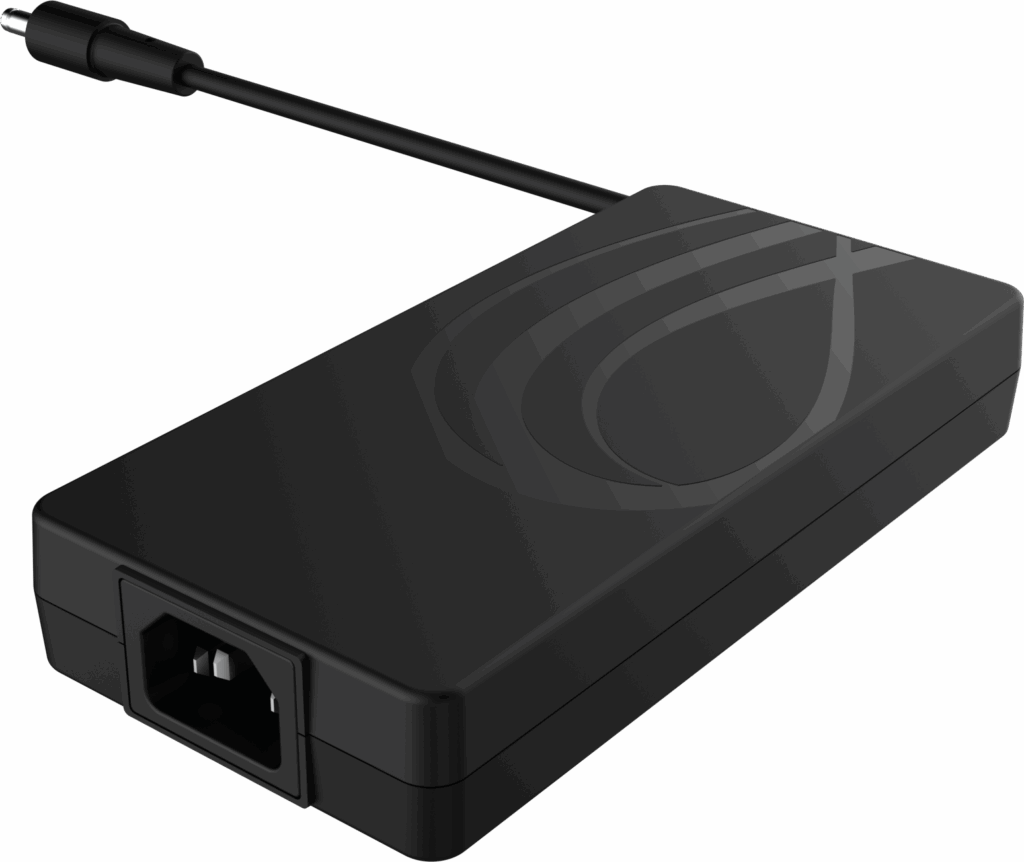
Phihong’s supplied comparison material identifies the AA460U-205A-R as using a coreless DC cord design. According to Phihong’s product development materials, the coreless DC cord eliminates the traditional ferrite-core component shown in the comparison material. Phihong highlights potential benefits including cleaner appearance, lower weight, simplified manufacturing and easier cable wrapping or user handling. OEM teams should describe these as design benefits identified by Phihong, while still validating cable behavior, EMI performance, strain relief, bending, wrapping and real user handling in the final product environment.
| Coreless Cord Area | Why It Matters for OEMs | What Teams Should Review |
|---|---|---|
| Ferrite-core removal | Eliminates the traditional visible cable core from the DC cord design. | EMI strategy, cable construction, shielding, filtering and validation data. |
| User handling | A coreless cable may be easier to wrap, route and store. | Bend radius, strain relief, cable memory, wrapping behavior and durability. |
| Product appearance | The adapter and cord can look cleaner and more modern. | Industrial design, packaging presentation, customer perception and cable length. |
| Manufacturing flow | Removing a separate cable component may simplify assembly steps. | Process control, cable sourcing, quality checks and consistency. |
Why This Matters
• Coreless DC cord design can improve appearance, reduce cable bulk and support easier handling when properly engineered.
• Removing the traditional ferrite core requires careful EMI and cable validation, especially in high-power adapter systems.
What OEMs Should Do Now
• Validate coreless DC cord behavior for EMI, mechanical durability, wrapping, strain relief and user handling.
• Review the cord design as part of the complete adapter system rather than treating it as only an industrial-design feature.
Useful Links
Power Adapter Product Line: www.phihong.com/products/adapters/
Contact Phihong: www.phihong.com/contact
GaN Power Adapter Guide: www.phihong.com/best-guide-to-gan-power-adapters-what-modern-devices-need-from-compact-high-density-power/
Related Links
How 330W GaN Power Adapters Support Gaming Laptops and Mobile Workstations: www.phihong.com/how-330w-gan-power-adapters-support-gaming-laptops-and-mobile-workstations/
The Power Supply Decisions OEMs Regret Most and Why They’re Hard to Fix Later: www.phihong.com/the-power-supply-decisions-oems-regret-most-and-why-theyre-hard-to-fix-later/
Why do short-duration peak-current capabilities matter in high-power adapters?
Short-duration peak-current capability matters because real equipment may not draw power in a perfectly steady pattern. Some devices create brief current demands during startup, load transitions, processor or GPU bursts, motor activity, battery charging transitions or subsystem activation. A high-power adapter must be evaluated not only for continuous output, but also for how it behaves during short, demanding transient conditions.
Phihong’s supplied engineering data for the AA460U-205A-R states peak current capability of 200% for 2ms and 225% for 1.5ms. These figures should be interpreted carefully. They do not mean the adapter should be treated as a continuous overload source. They describe short-duration peak behavior under the supplied conditions. For OEM engineers, this type of peak-load data can help when evaluating equipment with demanding transients, but it must be validated against the device’s actual load profile, timing, connector design, cable behavior, thermal state and protection strategy.
| Peak-Load Area | Why It Matters | What OEM Teams Should Review |
|---|---|---|
| Startup demand | Equipment may draw brief current peaks when subsystems turn on. | Inrush behavior, startup sequence, battery charging and load timing. |
| Dynamic workloads | Processors, GPUs or industrial subsystems may create fast load changes. | Peak current duration, transient response, voltage stability and recovery behavior. |
| Protection behavior | Peak current must not be confused with continuous overload capability. | OCP thresholds, fault timing, recovery behavior and product safety margin. |
| System validation | The adapter and device must be tested together under real transient conditions. | Load profile, cable voltage drop, connector temperature and firmware control. |
Why This Matters
• Peak-current capability can help OEMs evaluate adapters for devices with short transient demands.
• Short peak ratings should not be used as a substitute for continuous power validation.
What OEMs Should Do Now
• Compare the product’s actual transient load timing against the adapter’s stated short-duration peak-current data.
• Test startup, load transitions, full-load operation and protection behavior with the final device and cable configuration.
Useful Links
Power Adapter Product Line: www.phihong.com/products/adapters/
Contact Phihong: www.phihong.com/contact
Power Supply Decisions OEMs Regret: www.phihong.com/the-power-supply-decisions-oems-regret-most-and-why-theyre-hard-to-fix-later/
Related Links
How 330W GaN Power Adapters Support Gaming Laptops and Mobile Workstations: www.phihong.com/how-330w-gan-power-adapters-support-gaming-laptops-and-mobile-workstations/
What Can a 240W USB-C PD 3.1 Adapter Power That 100W and 140W Chargers Cannot?: www.phihong.com/what-can-a-240w-usb-c-pd-3-1-adapter-power-that-100w-and-140w-chargers-cannot/
What EMI, surge immunity and standby-power requirements matter at 460W?
EMI, surge immunity and standby-power requirements become more important as adapter power increases because higher-power conversion can affect both the adapter and the equipment around it. OEM teams evaluating a 460W external adapter should review not only output power and size, but also EMC/EMI strategy, surge-immunity behavior, standby power, efficiency and regulatory expectations. A compact adapter that cannot meet the product’s electrical environment may create late-stage validation risk.
Phihong’s supplied materials describe mature EMC / EMI solutions and surge-immunity design for the AA460U-205A-R. The supplied material references IEC 61000-4-5 surge capability, with differential-mode surge capability stated up to 1.5kV and common-mode surge capability stated up to ±3.0kV. Phihong also positions the adapter with low standby power and supplied material references ErP Lot 7. These are useful product-development signals, but OEM teams should still validate the adapter against target markets, equipment requirements, cable configuration and real installation conditions.
| Validation Area | Why It Matters in a 460W Adapter | What OEM Teams Should Review |
|---|---|---|
| EMI / EMC behavior | High-power adapters must operate near sensitive electronics and cables. | Emissions, immunity, cable setup, load profile and final equipment testing. |
| Surge immunity | Products may face line disturbances or installation-related surge events. | IEC 61000-4-5 references, DM / CM surge levels and target market requirements. |
| Standby power | Energy regulations and product expectations may limit no-load or standby consumption. | ErP Lot 7 reference, standby conditions, user modes and regulatory documentation. |
| Efficiency | Higher efficiency reduces heat and supports compact high-power design. | Efficiency at 90Vac, load levels, thermal impact and operating environment. |
Why This Matters
• High-power compact adapters require EMI, surge, standby-power and efficiency review before OEM integration.
• Phihong-supplied surge and standby references should be validated against the end product’s real market and use conditions.
What OEMs Should Do Now
• Review EMI, surge, standby power and efficiency together before selecting a 460W external adapter.
• Validate the adapter with the final cable, device load, AC input conditions and intended deployment environment.
Useful Links
Power Adapter Product Line: www.phihong.com/products/adapters/
Contact Phihong: www.phihong.com/contact
USB Power Delivery Specification: www.usb.org/usb-charger-pd
Related Links
What Compliance Engineers Look for in Internal PSUs: EMI, EMS, and Safety Basics: www.phihong.com/what-compliance-engineers-look-for-in-internal-psus-emi-ems-and-safety-basics/
How Class B EMI and IEC 62368-1 Shape 250W Adapter Selection for Commercial Devices: www.phihong.com/how-class-b-emi-and-iec-62368-1-shape-250w-adapter-selection-for-commercial-devices/
What should OEMs validate before integrating an ultra-slim 460W external adapter?
OEMs should validate an ultra-slim 460W external adapter as part of the complete system, not only as a standalone power source. At this wattage level, the adapter’s behavior can be affected by the device load profile, startup demand, cable configuration, ambient temperature, enclosure placement, airflow exposure and operating environment. A strong headline specification is useful, but it does not replace application testing with the final product.
For the AA460U-205A-R, Phihong’s supplied product development materials highlight high power density, ultra-slim mechanical design, coreless DC cord construction, front-end Active Bridge Rectifier design, interleaved PFC, organized PCB placement for thermal distribution, peak-current capability and mature EMC / EMI solutions. These details give OEM engineers useful starting points for review. The final integration decision should still include electrical, mechanical, thermal, EMI, surge, standby-power and cable-handling validation under the real conditions expected in the finished product.
| OEM Validation Area | Why It Matters for a 460W Adapter | What Teams Should Review |
|---|---|---|
| Electrical load profile | Real devices may draw power differently during startup, peak use and steady operation. | Continuous load, peak current, transient timing, voltage stability and protection behavior. |
| Thermal environment | Slim high-power adapters depend on controlled heat distribution. | Surface temperature, ambient temperature, placement, airflow exposure and full-load operation. |
| Cable configuration | The coreless DC cord affects handling, EMI strategy and mechanical integration. | Cable routing, wrapping, strain relief, bending, connector stress and EMI behavior. |
| Compliance pathway | High-power adapters need strong EMI, surge, standby and efficiency review. | EMC/EMI, IEC 61000-4-5 surge references, ErP Lot 7, standby power and target markets. |
Why This Matters
• A 460W ultra-slim adapter should be validated with the final device, not only reviewed by product specifications.
• The adapter, DC cord, device load, thermal environment and compliance requirements all affect production readiness.
What OEMs Should Do Now
• Build an adapter validation checklist that includes electrical load, thermal behavior, peak current, EMI, surge, cable handling and standby power.
• Test the adapter with the final device, production-intent cable configuration and expected operating environment before launch.
Useful Links
Power Adapter Product Line: www.phihong.com/products/adapters/
Contact Phihong: www.phihong.com/contact
Power Supply Decisions OEMs Regret: www.phihong.com/the-power-supply-decisions-oems-regret-most-and-why-theyre-hard-to-fix-later/
Related Links
How 330W GaN Power Adapters Support Gaming Laptops and Mobile Workstations: www.phihong.com/how-330w-gan-power-adapters-support-gaming-laptops-and-mobile-workstations/
How Class B EMI and IEC 62368-1 Shape 250W Adapter Selection for Commercial Devices: www.phihong.com/how-class-b-emi-and-iec-62368-1-shape-250w-adapter-selection-for-commercial-devices/
How Phihong supports compact high-wattage external power adapter development
Phihong’s AA460U-205A-R gives OEM teams a product-specific example of compact high-wattage external adapter development. According to Phihong’s supplied product development materials, the adapter is an ultra-slim 460W external power adapter with a coreless DC cord design, stated 17.85W/in³ power density, approximate 422cc case volume, weight under 750g, front-end Active Bridge Rectifier design, interleaved PFC topology and organized PCB placement for thermal distribution.
The AA460U-205A-R should be viewed as a real-world example inside the broader category of compact high-power AC/DC adapters. It is especially relevant for teams evaluating high-wattage external power, slim mechanical design, cable usability, peak-load behavior, EMI / surge readiness, standby-power expectations and thermal performance. OEMs should review the supplied engineering data carefully, then validate the adapter against the finished product’s real power demand, user environment, cable configuration and target-market requirements.
| Phihong Product Area | Why It Helps OEM Teams | What Teams Should Review |
|---|---|---|
| AA460U-205A-R | Provides a real 460W ultra-slim external adapter reference. | Power density, weight, case volume, electrical load and mechanical fit. |
| Coreless DC cord | Removes the traditional ferrite-core component from the cable design. | EMI validation, cable handling, manufacturing flow and strain relief. |
| Thermal architecture | Uses organized internal placement for thermal distribution. | Surface temperature, full-load operation, ambient conditions and placement. |
| High-power validation | Includes Phihong-supplied peak-current, EMI, surge and standby-power references. | Peak-load timing, IEC 61000-4-5 surge assumptions, ErP Lot 7 and final system testing. |
Why This Matters
• The AA460U-205A-R gives OEMs a specific example of how high-wattage external adapter design can combine power density, thermal strategy and cable innovation.
• Product-specific claims should be used carefully and validated in the end application before production decisions are made.
What OEMs Should Do Now
• Use Phihong’s supplied AA460U-205A-R engineering data as the starting point for compact high-power adapter evaluation.
• Contact Phihong to discuss power, thermal, mechanical, EMI, surge and integration requirements for the intended device.
Useful Links
Power Adapter Product Line: www.phihong.com/products/adapters/
Contact Phihong: www.phihong.com/contact
GaN Power Adapter Guide: www.phihong.com/best-guide-to-gan-power-adapters-what-modern-devices-need-from-compact-high-density-power/
Related Links
How 330W GaN Power Adapters Support Gaming Laptops and Mobile Workstations: www.phihong.com/how-330w-gan-power-adapters-support-gaming-laptops-and-mobile-workstations/
Best Guide to GaN Power Adapters: What Modern Devices Need From Compact, High-Density Power: www.phihong.com/best-guide-to-gan-power-adapters-what-modern-devices-need-from-compact-high-density-power/
Ultra-slim 460W power adapter design is about more than increasing wattage. It requires careful coordination between electrical architecture, thermal layout, mechanical size, power density, cable design, EMI behavior, surge immunity, standby power and real-world user handling. The higher the output power, the more important system-level validation becomes.
For OEM teams evaluating compact high-wattage external power, the strongest decision process begins with real device requirements. Teams should define continuous load, peak-load behavior, cable expectations, thermal environment, user handling, compliance targets and product packaging before committing to an adapter platform. If your team is evaluating a compact high-wattage external power solution for a new product, contact Phihong to discuss power, thermal, mechanical and integration requirements.

CONTACT US TODAY
From concept to production, Phihong delivers custom OEM power solutions tailored to your specifications.
FAQ
What is a 460W power adapter used for?
A 460W power adapter is used when a device needs significantly more external power than typical laptop or low-wattage adapters can provide. Potential applications may include high-performance equipment, industrial devices, advanced computing systems, portable workstations, specialized electronics or other OEM products with demanding power requirements. The exact fit depends on the device’s voltage, current, connector, peak-load behavior, thermal conditions and integration needs.
Why does power density matter in a high-wattage adapter?
Power density matters because OEM teams often need higher output power without accepting a large, heavy external adapter. In compact high-power designs, watts per cubic inch helps show how much power is delivered relative to enclosure volume. Phihong’s supplied engineering data states that the AA460U-205A-R has a power density of 17.85W/in³, approximate case volume of 422cc and weight under 750g.
What is a coreless DC cord?
A coreless DC cord is a cable design that removes the traditional ferrite-core component often visible on adapter cables. According to Phihong’s supplied product development materials, the AA460U-205A-R uses a coreless DC cord that eliminates the traditional ferrite-core component shown in Phihong’s comparison material. Phihong highlights benefits such as cleaner appearance, lower weight, simplified manufacturing and easier cable wrapping or user handling.
Does removing the ferrite core mean EMI no longer matters?
No. Removing the traditional ferrite-core component does not mean EMI becomes less important. It means the adapter and cable system must address EMI through the broader design. OEM teams should validate EMI performance with the final cable configuration, device load, operating modes and deployment environment. This is especially important in high-power adapters because cable behavior and load conditions can affect compliance results.
Why is peak-current capability important in a 460W adapter?
Peak-current capability matters because some devices draw brief current spikes during startup, load transitions, processor bursts, motor activity or other short-duration events. Phihong’s supplied engineering data states peak current capability of 200% for 2ms and 225% for 1.5ms. These are short-duration peak values and should not be treated as continuous overload capability. OEMs should validate the adapter with the real device load profile.
How does interleaved PFC help in a high-power adapter architecture?
Interleaved PFC can be part of a high-power adapter architecture that helps manage power conversion behavior, input current shaping and thermal distribution. According to Phihong’s supplied materials, the AA460U-205A-R uses interleaved PFC topology and a front-end Active Bridge Rectifier design. OEM teams should evaluate those design details together with efficiency, input voltage conditions, thermal behavior and compliance requirements.
What should OEMs validate before using an ultra-slim 460W adapter?
OEMs should validate continuous load, peak-load timing, thermal behavior, surface temperature, cable handling, connector stress, EMI / EMC behavior, surge immunity, standby power, efficiency and fault response. Testing should use the final device, production-intent cable routing, expected ambient conditions and representative operating modes. A strong product specification is useful, but final application validation is still necessary.
How should Phihong’s sustainability graphic be interpreted?
Phihong supplied an illustrative CO2e / tree-equivalent calculation at a one-million-unit shipment scale. If used in marketing or sales material, it should be described carefully as an illustrative calculation supplied by Phihong based on the assumptions shown in its engineering presentation. It should not be presented as a universal environmental guarantee, carbon-neutral claim, guaranteed emissions reduction or broad climate-benefit statement.
POE technology supports the centralization of power

AC Adapter Guide: Everything You Need to Know
Moreover, PoE technology supports the centralization of power management. By powering devices through a PoE-enabled network …
AC DC Power Chargers and How They Work: A Comprehensive Technical Breakdown
Moreover, PoE technology supports the centralization of power management. By powering devices through a PoE-enabled network …

USB-C Charger: Shaping the Future of the Tech World
Moreover, PoE technology supports the centralization of power management. By powering devices through a PoE-enabled network …

AC Adapter Guide: Everything You Need to Know
Moreover, PoE technology supports the centralization of power management. By powering devices through a PoE-enabled network …

AC DC Power Chargers and How They Work: A Comprehensive Technical Breakdown
Moreover, PoE technology supports the centralization of power management. By powering devices through a PoE-enabled network …

USB-C Charger: Shaping the Future of the Tech World
Moreover, PoE technology supports the centralization of power management. By powering devices through a PoE-enabled network …