









BLOG
Interchangeable Power Adapters: What Plug-Clip Durability Evidence Should OEMs Request?
QUICK LINKS
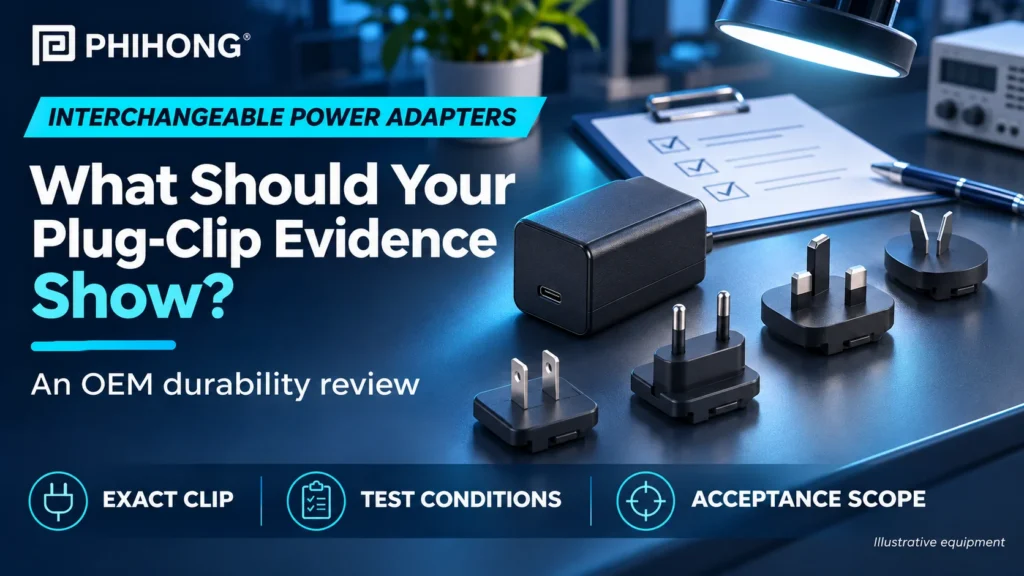
Quick Answer: Ask for mechanical evidence that identifies the exact adapter, compatible regional clip, test method, sample configuration and acceptance result. Drop, tumbling and clip-mating tests address different questions. Do not present a tumbling count as the number of times a clip can be attached, or assume evidence for one regional configuration covers every permitted combination.
A regional packaging trial can reveal a missing detail long after the adapter itself has been selected: the clip is a separate part, and the team has not defined which mechanical evidence applies to that combination. A familiar interchangeable format does not close that documentation gap.
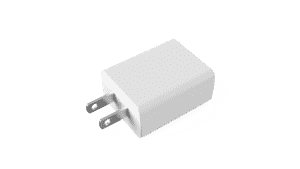
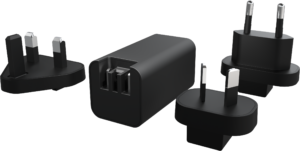
Phihong’s AQ65R-59FKA-R is a 65W GaN interchangeable USB Type-C adapter whose clips are sold separately. This article focuses on evidence for the selected clip and adapter configuration. It complements the broader format discussion without treating general interchangeability as proof of a particular durability result.
For the complete equipment review, see the 65W OEM qualification guide.
Which adapter-and-clip combination is being evaluated?
Identify the adapter model and compatible regional clip before requesting a test result. Retain the actual part identifiers and the supplied sample configuration. A report labeled only interchangeable adapter may leave the equipment team unable to determine whether the evidence covers the parts procurement intends to order.
The AQ65R product record states that clips are supplied separately. Confirm which clip parts are compatible and which are included in a particular sample or commercial arrangement. Keep those details in the bill of materials and qualification record. A regional plug description alone should not silently stand in for an exact component selection.
Use the existing fixed-blade and interchangeable comparison for the architecture decision. Once an interchangeable candidate is selected, move to the actual parts, installation arrangement and supporting documentation. The format’s distribution convenience is a separate question from whether a specific combination has the required evidence.
Record any difference between the test sample and proposed equipment package. If the supplier report uses another clip revision or an undefined assembly, ask for clarification rather than assuming equivalence. A clear configuration record makes later mechanical and purchasing discussions more productive.
Why This Matters
- Mechanical evidence must be connected to the exact parts being selected.
- A separately supplied clip needs its own defined place in the equipment package.
What OEMs Should Do Now
- Confirm compatible clip identifiers and the supplied adapter-and-clip configuration with Phihong.
- Retain the evaluated part revisions and identify any mismatch with the proposed bill of materials.
FEATURED PRODUCTS

AQ65R-59FKA-R
- Output Power - 65W
- Output Volt - 5V/9V/15V/20V
- Output Current - 3A/3A/3A/3.25A
- # of ports - 1
- Features - GaN Technology, Interchangeable USB Type-C ,DoE Level VI Compliance, 5,000 Meters Operating Altitude, Suitable for commercial and consumer electronic products
- Note: Clips are sold separately
Why are drop, tumbling and mating-cycle tests different?
A drop test describes a defined impact arrangement. A tumbling test describes repeated movement and impacts under its stated method. A clip-mating test concerns repeated attachment and removal under a different method. These descriptions should not be substituted for one another when discussing durability.
The AQ65R datasheet identifies a 91cm drop-test reference and separate regional tumbling conditions. Its tumbling entries specify 0.5m with 500 repetitions for EU and AU configurations and 50 for UK. Those are the document’s stated test conditions, not a clip insertion-cycle rating or a service-life guarantee.
Keep the method and acceptance criteria together. A count without the event definition cannot tell the equipment team what was evaluated. Likewise, a test description does not replace the result for the exact sample configuration. Ask which report supports the claim and whether it covers the proposed parts.
If the equipment requirement includes repeated clip changes, request evidence addressing that use explicitly. Do not derive a mating-cycle number from the published tumbling entries. Where a durability condition is not documented, retain it as an open question rather than filling the gap with a plausible-sounding estimate.
| Evidence type | Question it addresses | Avoid relabeling it as |
|---|---|---|
| Defined drop test | Response to the stated impact arrangement | A general service-life guarantee |
| Defined tumbling test | Response to the specified repeated-impact method | Clip attachment and removal cycles |
| Clip-mating evaluation | Behavior during a defined attachment/removal method | Every mechanical or regional approval |
Why This Matters
- Different mechanical methods address different equipment questions.
- A test count loses meaning when separated from its method and configuration.
What OEMs Should Do Now
- Retain the method, regional configuration and acceptance criteria beside every durability statement.
- Request specific mating evidence if repeated clip changes are part of the intended equipment use.
What should a supporting mechanical report contain?
A useful report lets the reviewer identify the sample, procedure and observed result. Ask for the adapter and clip identities, relevant revisions, sample configuration, method and acceptance criteria. Keep any deviations or limitations visible. The report should make it possible to distinguish a completed evaluation from a planned test description.
Confirm how the supplier connects the tested assembly to the proposed supplied configuration. If the evidence predates a component or assembly change, ask which review supports its continued applicability. Do not assume that an unchanged marketing model name proves the tested and proposed assemblies are identical.
Keep post-test observations connected to the defined criteria. A broad statement such as passed mechanical testing does not explain which conditions were covered or which follow-up checks supported acceptance. Request the information needed by the responsible equipment team without turning the request into an unsupported claim that one report qualifies the complete OEM product.
Use a concise evidence matrix rather than collecting documents without a decision. For each equipment requirement, identify the supporting record, applicable configuration and remaining question. This makes it easier to see where supplier evidence is sufficient for the review and where additional clarification is still needed.
Why This Matters
- A report needs enough configuration detail to support a specific selection decision.
- A planned test description and a completed sample result are different evidence states.
What OEMs Should Do Now
- Link each mechanical requirement to its applicable report or clearly named open question.
- Confirm how the tested assembly relates to the exact parts proposed for supply.
How should assembly, labeling and service use enter the review?
Review the intended equipment package and user-facing arrangement, not just the loose parts on a desk. Identify who assembles the clip, how the correct regional combination is selected and which documentation accompanies it. The equipment team should use the supplier’s applicable instructions rather than inventing an assembly method from appearance.
Consider the actual service arrangement. A product that permits clip replacement has a different documentation need from a package whose configuration is fixed before distribution. Define the permitted parts and process in the equipment record so purchasing and service teams do not broaden the configuration through an informal substitution.
The existing regional plug-system guide provides distribution context. For this qualification decision, connect the regional plan to exact compatible parts and current supporting documents. A mechanical fit does not by itself establish all applicable equipment or market requirements.
Retain assembly and service feedback with the configuration reviewed. If a practical handling concern appears during a packaging or service trial, record the specific combination and observed event. This gives Phihong a concrete question rather than an ambiguous report that the interchangeable design seems loose or inconvenient.
Why This Matters
- The permitted assembly and service arrangement determines which evidence questions matter.
- Clear part and process definitions reduce ambiguity during regional packaging and replacement.
What OEMs Should Do Now
- Define the compatible parts and applicable assembly information for the released package.
- Capture specific configuration and event details from packaging or service trials.
How should later clip substitutions be approved?
Treat a proposed clip substitution as a configuration change. Identify the old and new parts, the equipment package affected and the evidence supporting equivalence. Some previous results may remain relevant, but the record should explain why. Similar appearance or a matching regional plug shape is not a complete justification.
Review mechanical evidence and current supporting documentation together. Determine whether the proposed change alters any condition used in the earlier qualification. Ask Phihong to clarify compatibility and the applicable report coverage before procurement treats the substitute as an approved interchangeable part.
Keep sample and commercial availability separate from technical acceptance. A clip that is available quickly still needs to fit the approved configuration, while a technically appropriate part may have ordering details that require confirmation. Retain the supplier’s dated response with the specific part request.
The final record should identify the approved adapter, clip options, evidence and unresolved limitations. That definition lets another team assess what may be shipped or serviced without reconstructing the original discussion. It also prevents a narrowly defined mechanical result from becoming a broader durability claim during marketing or purchasing handoffs.
Why This Matters
- A substitution can change the configuration covered by the existing evidence.
- A traceable approval makes the permitted equipment package clear across teams.
What OEMs Should Do Now
- Review clip substitutions against compatibility, evidence coverage and current documentation.
- Retain the approved options and the rationale for carrying earlier results into the changed configuration.
Frequently Asked Questions
Does the AQ65R tumbling count describe clip insertion cycles?
No. Tumbling and clip attachment/removal are different test methods. Keep the datasheet’s regional tumbling entries connected to their stated method and configuration. If repeated clip changes are part of the equipment requirement, ask Phihong for evidence addressing that use rather than converting a tumbling count into a mating-cycle rating.
Does evidence for one regional clip cover all other clips?
Do not assume that it does. Identify the actual adapter-and-clip combination and the configurations covered by the report. Regional entries can have different stated conditions. Ask Phihong to clarify applicability where the equipment package or proposed clip differs from the documented sample.
Are the AQ65R regional clips included with the adapter?
The product record states that clips are sold separately. Confirm compatible part identifiers and the exact contents of the sample or commercial supply arrangement. Include the selected clips in the equipment bill of materials and qualification record so the regional configuration is defined before ordering or packaging.
Does a published drop-test description prove the complete equipment package is qualified?
No. A test description identifies a method and conditions; the responsible equipment team still needs the applicable result and configuration information for its decision. It should also distinguish adapter evidence from the requirements of the complete OEM equipment and its intended packaging or use arrangement.
What should we request when a compatible clip changes revision?
Ask for the old and proposed part identifiers, compatibility confirmation and the evidence connecting the revised configuration to the qualification requirements. Determine which earlier results remain representative and why. Retain any additional evaluation or documentation question before treating the new revision as an approved substitute.