










BLOG
Industrial Open-Frame Power Supplies: How Should OEMs Choose Between 300W and 600W Models?
QUICK LINKS

Quick Answer: Choose between a 300W and 600W open-frame power supply by matching the equipment load, output voltage, enclosure, cooling arrangement and AC input conditions. Screen the exact model rather than the family name. Phihong’s PBL300M and PBL600L documentation provides different physical and cooling references, so a larger nominal wattage should not be treated as a drop-in replacement or a guarantee of usable output in your equipment.
The practical OEM question is rarely whether more power is available. It is whether the proposed supply can support the planned equipment configuration without creating a new enclosure, harness or qualification problem. A team may initially reserve a rectangular space for a power board, only to discover that connector access, airflow or load behavior changes the actual integration decision.
This guide compares the decision process for the PBL300M and PBL600L families. It focuses on equipment integration rather than repeating a general introduction to internal PSUs. Use the current model documents as inputs to your review and ask Phihong to clarify missing installation conditions. A catalog entry or published product page does not by itself establish sample stock, an orderable configuration or a final equipment approval.
Define the equipment load before choosing a wattage
Start with the operating combinations the equipment must support. List the processing hardware, displays, network interfaces, actuators and accessories that can run at the same time. Distinguish normal operation from startup and short changes in demand. Record which values were measured on representative hardware and which remain estimates. Procurement should be able to see the same load assumptions that engineering used.
Locate the requirement at the point where the equipment needs it. Power delivered by a supply is not identical to the power reaching every load after terminals, cables and distribution. The receiving circuit may have limits that matter before the overall wattage is exhausted. Define the acceptable input behavior at that circuit and include the intended distribution path in testing.
Keep continuous demand and dynamic demand separate. Do not use a brief operating average to represent a demanding mode, or treat an undocumented overload as available headroom. A product name containing 300W or 600W does not establish the duration or repetition of a permissible peak. If the application depends on a transient capability, obtain the model-specific conditions rather than borrow a statement from another Phihong family.
For broader selection background, the published internal PSU selection guide explains architecture-level considerations. Here, the next step is narrower: decide whether either of these two families can meet the equipment requirement under a documented installation and test plan. If the requirement is still moving, keep the supply choice provisional instead of freezing an unsupported assumption into the bill of materials.
| Requirement | Record | Decision it supports |
|---|---|---|
| Operating combinations | Which functions and accessories run together | Normal power budget |
| Startup and changing load | Event, duration and measurement location | Dynamic evaluation plan |
| Distribution path | Terminals, cable routing and receiving circuit | Device-side voltage review |
| Evidence state | Measured, estimated or unresolved | Confidence in the selection |
Why This Matters
- A family wattage cannot describe every operating event in the equipment.
- A shared load record prevents sourcing and engineering from selecting against different requirements.
What OEMs Should Do Now
- Create a continuous and dynamic load table for the actual equipment configuration.
- Define the receiving-circuit measurement point and identify unmeasured operating cases.
FEATURED PRODUCTS

PBL300M-120
- Output Power - 300W(with Fan)
- Output Volt - 12Vdc
- Features - Class I Design , High Efficiency Performance , OVP, OCP, SCP, OTP Protections , Operating Altitude: 5,000M
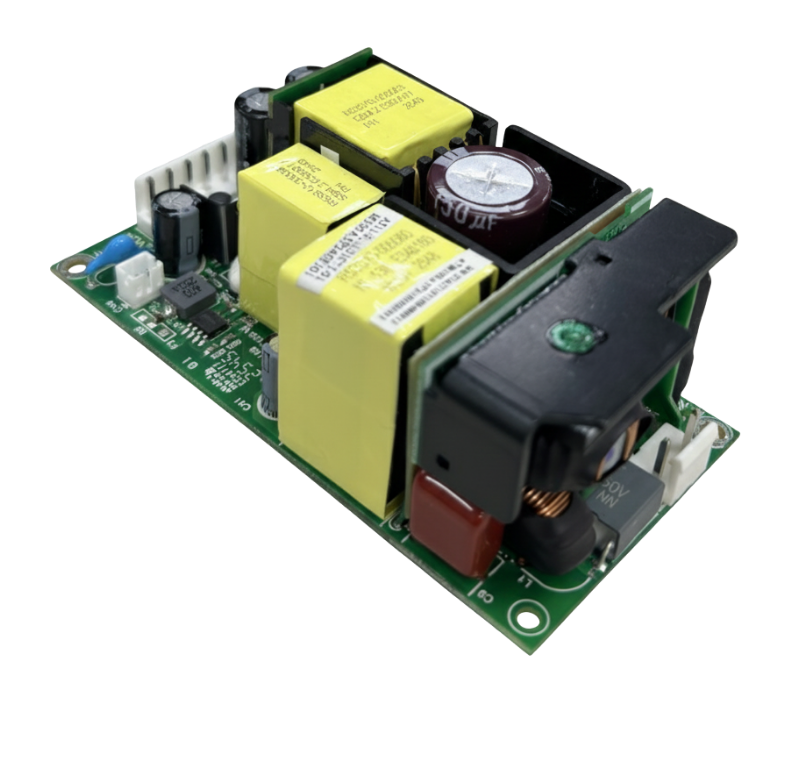
PBL300M-240
- Output Power - 300W(with Fan)
- Output Volt - 24Vdc
- Features - Class I Design , High Efficiency Performance , OVP, OCP, SCP, OTP Protections , Operating Altitude: 5,000M

PBL600L-240
- Output Power - 600W(with Fan)
- Output Volt - 24Vdc
- Features - Class I Design , High Efficiency Performance , OVP, OCP, SCP, OTP Protections , Operating Altitude: 5,000M
PBL600L-480
- Output Power - 600W(with Fan)
- Output Volt - 48Vdc
- Features - Class I Design , High Efficiency Performance , OVP, OCP, SCP, OTP Protections , Operating Altitude: 5,000M
Match the output variant to the equipment architecture
Select the exact output variant before comparing the remaining specification rows. The PBL300M datasheet identifies 12V and 24V variants. The PBL600L datasheet identifies 24V and 48V variants. Those are distinct options, not a statement that one unit provides every listed voltage. A shared family prefix should not be used to infer a different model’s output or accessory configuration.
A higher nominal voltage is not automatically the better engineering choice. The downstream equipment, converters, interfaces and permitted voltage range determine what can be used. Similarly, a shared 24V requirement does not make the two families mechanically or thermally interchangeable. Compare the power path, installed current demand and acceptable behavior for the actual candidate.
Use power divided by nominal voltage only as an initial arithmetic check. It helps explain why a larger power budget at the same voltage places different demands on a distribution path. It does not establish a model’s released current rating, a terminal’s suitability or a wire size. Obtain the exact ratings and installation instructions for the supplied configuration before choosing the harness and mating parts.
The existing output-voltage selection article is a useful reference for keeping voltage choice separate from wattage choice. An OEM comparing these newer families should add a model-to-load matrix: one row per candidate, one identified output variant and a clear list of downstream devices. Any converter losses or auxiliary loads belong in the equipment budget rather than remaining outside the comparison.
Why This Matters
- An output-voltage mismatch cannot be solved by choosing more nominal watts.
- Different variants require their own documentation and integration review.
What OEMs Should Do Now
- Identify the exact voltage variant and equipment revision on every comparison row.
- Ask for released current and connector information rather than deriving assembly ratings from arithmetic.
Review the complete physical envelope, not only the footprint
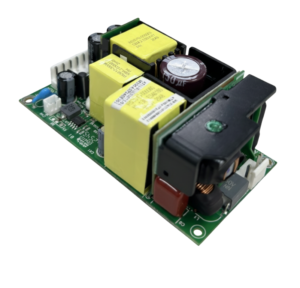
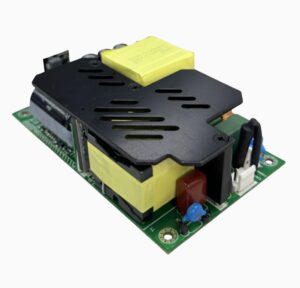
The published dimensional references distinguish a 4×2-inch PBL300M format from a 5×3-inch PBL600L format. That is useful for early space planning, but it is only the beginning of a mechanical review. Height, connector access, cable bends, neighboring parts and the intended mounting arrangement can determine whether the supply fits the complete equipment assembly.
Reserve space for the installed configuration, not just the board outline. A cable must reach its termination, a connector must be accessible for assembly and service, and a cover or bracket may change the surrounding space. Do not infer mounting-hole geometry, component keep-out areas or electrical clearances from a marketing image. Request the controlled mechanical drawing and installation guidance for the candidate.
Review enclosure changes with the people who assemble and service the product. A supply that fits in a CAD rectangle may require an impractical sequence to connect or remove it. Record which nearby parts must be present during fit verification and retain that configuration. If a bracket or protective cover is added later, assess its effect instead of assuming the original review remains representative.
A useful decision record states why the larger footprint is acceptable or why the smaller one is necessary. It should also identify the consequences of changing the enclosure. The open-frame versus enclosed comparison addresses the broader architecture choice; this review concerns how the selected open-frame model fits and can be installed inside the OEM’s actual product.
| Area | Evidence needed | Avoid assuming |
|---|---|---|
| Outer envelope | Current model dimensions and drawing | A nominal footprint includes every installed item |
| Mounting | Hole pattern and permitted mounting arrangement | A photograph defines mounting requirements |
| Connections | Mating parts, routing and access | A connector can be serviced in the available space |
| Surroundings | Installed covers, brackets and adjacent parts | Open-bench fit represents the final enclosure |
Why This Matters
- Board dimensions alone do not establish a buildable installation.
- Mechanical changes can affect cable routing, service access and the cooling path together.
What OEMs Should Do Now
- Request a controlled model drawing and review the assembled envelope.
- Include covers, connectors and neighboring hardware in the fit check.
Separate the cooling basis from the family wattage
Cooling is a selection input, not a detail to add after the nominal power is chosen. Each family document distinguishes convection and forced-cooling operation. Keep those references attached to the exact candidate and ask which airflow and temperature conditions define the applicable output. The presence of a fan somewhere in the enclosure does not establish the local conditions at the supply.
Compare the equipment’s operating load against the cooling arrangement intended for sale. If the design depends on forced air, account for the actual path through inlet restrictions, filters, brackets and nearby hardware. Do not substitute a fan’s isolated catalog airflow for evidence at the installed supply. Where the supplier document does not give the required airflow arrangement, leave that question open and request clarification.
Define what happens if cooling degrades. The equipment may need a load reduction or controlled shutdown strategy, but that behavior must be designed and validated by the OEM. A listed protection function is not a complete system response. Nor should a stopped fan be treated as an automatic transition to a qualified lower-power product configuration.
The published enclosure thermal validation guide explains the value of testing representative installations. The smaller-family 200W cooling article is another useful conceptual reference. Neither document establishes the new families’ installation limits. Retain the exact model, mounting, airflow, load and ambient conditions used for the new equipment evaluation.
Why This Matters
- Usable output depends on the documented cooling arrangement and installed conditions.
- A cooling-loss event requires an equipment-level decision and evidence.
What OEMs Should Do Now
- Confirm the supplier’s applicable airflow and derating basis before finalizing a fan arrangement.
- Evaluate the complete enclosure under the operating cases that govern the design.
Compare AC input and efficiency under like conditions
A common AC input range does not mean all performance statements apply identically at every line condition. Read the conditions attached to efficiency, input current, startup and related parameters. For equipment intended for different regions, identify the input cases that belong in the evaluation instead of using a single convenient bench point as the release evidence.
Keep efficiency comparisons on the same basis: exact model, output condition, AC input and measurement boundary. If two figures use different loads or line conditions, do not rank the candidates by the percentages alone. Typical values, minimum statements and measured equipment results answer different questions and should remain labeled accordingly.
An efficiency figure is also not a system energy-saving claim. Equipment losses include the chosen power supply and the downstream distribution and conversion path. Fans and other auxiliaries may affect the total. A calculation can help identify a case worth testing, but it should be labeled as an estimate until supported by representative measurements and defined operating time.
Phihong’s efficiency-rating comparison covers a separate standards-label question, while the adapter datasheet guide explains why conditions matter when interpreting specifications. For this selection, keep a simple comparison sheet with the line and load conditions beside each figure. Where the PBL documents leave a test condition unclear, obtain confirmation before treating a difference as an equipment advantage.
Why This Matters
- Unequal comparison conditions can make a nominal efficiency ranking misleading.
- A model’s published efficiency is not proof of a particular customer saving.
What OEMs Should Do Now
- Retain line, load and measurement conditions with every comparison value.
- Evaluate the intended low-line and high-line equipment cases rather than extrapolating from one point.
Build a sample evaluation plan that follows the real equipment
Choose acceptance criteria before the first sample test. Specify the hardware revision, enclosure, output variant and equipment operating combinations. Assign an owner to the mechanical, electrical and thermal decisions. A plan should make it possible to distinguish a passed check from an untested condition, rather than reducing the whole evaluation to a single approved checkbox.
Use repeatable records for changing loads and startup behavior. Retain measurement location, instrument setup and the event being exercised. Texas Instruments AN-1733 provides useful background on load-transient measurement practice. It is not a Phihong qualification report or an acceptance limit for an unspecified device. The equipment team must define its relevant criteria.
Keep the sample’s supplied configuration connected to the records. If a cable, connector, enclosure or cooling arrangement changes after evaluation, identify which results may no longer represent the released product. This is particularly relevant when a higher-power supply is introduced to support a new equipment variant while the existing chassis is retained.
A practical closeout identifies accepted conditions, unresolved supplier questions and any tests still required. An unresolved question does not automatically make a candidate unsuitable, but it should remain visible to the person authorizing release. Procurement can then discuss samples and production planning with a clear record of the technical decisions that remain open.
Why This Matters
- A defined test plan separates equipment evidence from assumptions about a product family.
- Traceable configurations make later changes easier to assess.
What OEMs Should Do Now
- Record the candidate model and representative equipment setup before testing.
- Close or assign every outstanding requirement before production release.
How Phihong supports a model-specific power discussion
Use the current internal power supply product range to identify the PBL300M and PBL600L records, then bring the equipment requirement to Phihong. State the output voltage, continuous and changing loads, available envelope, intended cooling and target installation environment. Ask which current model configuration and documentation should be used for evaluation.
Confirm sample and commercial availability directly. A product may have a published record while its release timing, sample supply or ordering details still need discussion. Do not use an estimated date on a coming-soon page as a commitment. Keep the received supplier response with the model and project revision it addresses.
The most useful inquiry is specific enough to expose the remaining integration questions. For example, ask for the airflow basis that accompanies the required operating point or the controlled drawing needed to complete the enclosure. This keeps the discussion connected to an engineering decision rather than asking the supplier to select against an undefined wattage alone.
Why This Matters
- A specific inquiry helps identify the documents and configuration relevant to the equipment.
- Current availability and technical suitability are separate questions.
What OEMs Should Do Now
- Send the equipment requirement and a short list of unresolved installation questions.
- Confirm the documentation revision and sample configuration proposed by Phihong.
Frequently Asked Questions
Is a 600W open-frame supply automatically a better choice than a 300W model?
No. A larger nominal power class may address a different load requirement, but the output voltage, installed current path, enclosure and cooling basis still need to fit the equipment. Choosing excess nominal wattage does not remove those checks. Compare the exact candidate against a common equipment requirement and use the same operating conditions when reviewing the evidence.
Can the same 24V equipment design use either family without changes?
A shared nominal output voltage is not enough to establish interchangeability. Compare the exact released output and connection information, physical arrangement, cooling requirements and equipment behavior. If a supply is substituted, review which earlier tests remain representative and which need repeating. Do not assume that an unchanged device connector means the entire installation is equivalent.
Does an open-frame PSU include the cooling fan required for its nominal rating?
Do not assume that it does. Establish the supplied assembly and the cooling arrangement required for the intended operating point. The equipment designer needs the relevant airflow and derating basis, then must verify how the actual installation provides those conditions. A picture of a fan or a fan somewhere inside the product is not evidence of the required local cooling.
Should these supplies be selected from typical efficiency alone?
No. Efficiency is one input and must be read with its model, line, load and measurement conditions. It does not establish mechanical suitability, transient performance or the final enclosure temperature. Compare candidates on the same basis and retain any uncertainty in the review record. Avoid presenting a difference between unrelated specification points as a measured system advantage.
What should an OEM send when asking Phihong about samples?
Provide the exact voltage requirement, representative load profile, available dimensions, cooling approach and installation environment. Add the equipment revision and questions that control the selection, such as a missing drawing or airflow condition. Ask Phihong to confirm the proposed model, current documentation and supplied sample configuration. Retain availability and lead-time responses as dated project information rather than general product guarantees.